Current energy-related projects
Danish Flats wastewater evaporation pond
Grand County, home to Arches and Canyonlands National Parks, got its first oil and gas wastewater evaporation pond in 2008 at Danish Flats, a private property in the Cisco desert. The Trust has been monitoring this project since it was first proposed. We advised the Department of Air Quality when the facility opened that it, by our calculations, would not be a di minimus operation and should require an air quality permit. To our knowledge, the facility violated state and county codes for hazardous air pollutant emissions for over a year; as of April 2012 we are still awaiting action by the Utah Department of Air Quality. The agency has not settled on an agreement with Danish Flats and Westwater Farms operators on a system for measuring air emissions.
Danish Flats Environmental Services, the largest facility of its kind in the region, has also been noticed by the EPA for federal violations involving overspraying to enhance the pond’s evaporation rates, which distributed toxic materials onto adjacent BLM lands. The Trust continues to closely monitor the operation of this facility. In 2011, we reported incidents of wastewater trucks leaving the Danish Flats facility with their drains open spilling wastewater onto the unpaved BLM access road and the freeway, I-70. Grand County then informed the facility operators they must bring their transport contractors into compliance with laws and stop illegal dumping practices.
Westwater Farms injection well
Grand County also approved a conditional use permit in March 2011 for the Westwater Farms oil and gas wastewater injection well operation — one of two injection well projects in the Harley Dome area, 5 miles from the Colorado River. Most County council members were assured by their expert witness, geologist Wayne Downs, that injected waters would not reach the Colorado River. The state agency permitting Class II injection wells, the Utah Division of Oil, Gas & Mining, was petitioned for a rehearing to install monitoring wells between the operation and the Colorado River based on new geologic information from another expert witness, but the agency denied the request.
None of the professional geologists weighing in on the project addressed the issue of radionuclides or fracking chemicals in the injection waters, both of which are extremely harmful to human health at very small quantities. The U.S. Fish & Wildlife Service also initially protested the permit application for this operation because endangered fish species live in nearby Westwater Canyon. The agency’s concerns were subsequently quelled by geologist reports and it withdrew its protest. The Trust will be monitoring springs in Ruby Canyon for evidence of increased flows from injection well activity and possible contamination from wastewater. We will also track the operator’s self-monitoring plan, which was approved by Grand County. Grand County’s compliance officer will also test spring waters in Ruby Canyon. Grand Canyon Trust has consulted with other geologists who hold the opinion that injected waters will reach the Colorado River. In 2012, the operator of Westwater Farms put part of their real estate holdings at the facility site on the market, apparently to raise funds for operating costs. Most of the oil and gas wastewater coming to the area is being dumped at the Danish Flats facility.
La Sal uranium mine complex
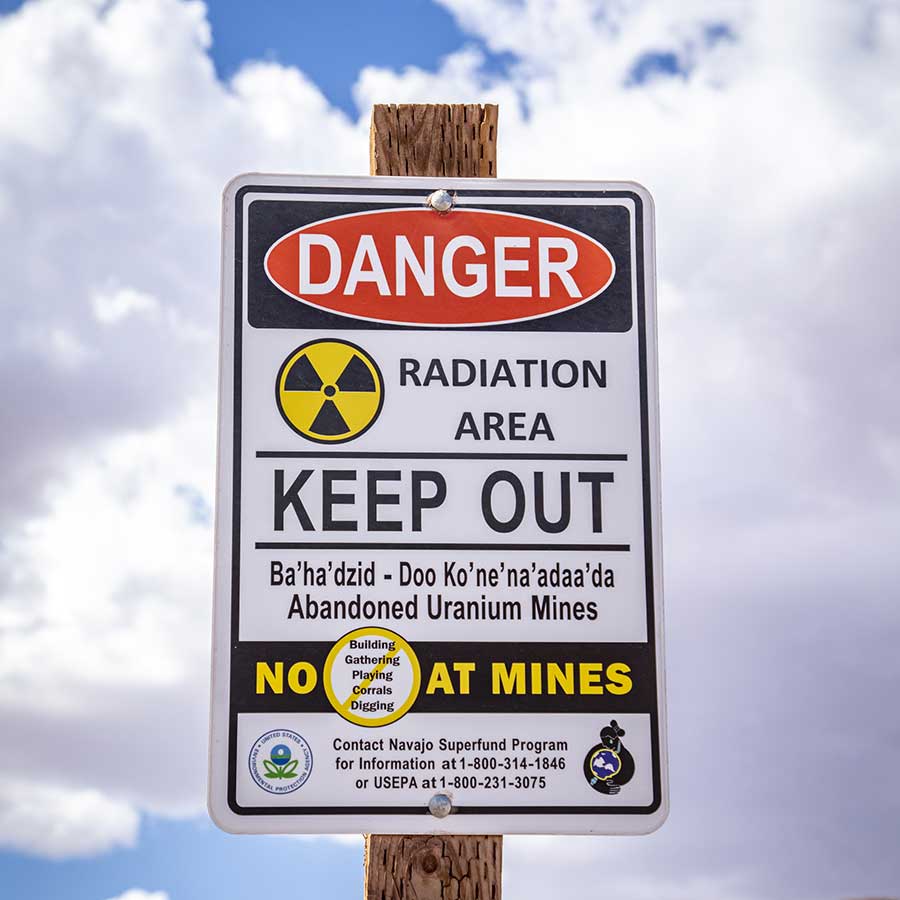
Working with a partner organization Uranium Watch, the Trust presented scoping comments to the BLM and U.S. Forest Service for an environmental assessment addressing the expansion of the La Sal, Utah, uranium mine complex and we continue to work with the agencies to develop their plan for this study. We gave the agencies an environmental protection alternative to be considered in their assessment and are advocating for development of an EIS because of the scope of the proposed expansion, extensive impacts from past mining activity, and because the operator, Denison Mines Corporation, has received numerous violation notices from the EPA and Mine Safety and Health Administration. The operator cannot control carcinogenic radon emissions from mine vents, one of which is located directly behind the elementary school in La Sal.