
Post-Wildfire Restoration Intern
Help advocate for responsible restoration of burned landscapes.
About the position
Wildfire is a natural part of many ecosystems across the Colorado Plateau; however, wildfires today are burning hotter and longer than ever before. The aftermath of intense wildfires presents many restoration challenges, including erosion. To stabilize soils after severe burns, land managers will sometimes plant (or “seed”) non-native species — a practice that can have long-lasting ecological consequences for native species.
To help inform the Grand Canyon Trust’s advocacy around post-wildfire seeding practices and to safeguard native species diversity, we are looking for an intern to compile a report of post-fire restoration practices and recommendations based on the best available science.
You will additionally gather on-the-ground vegetation data in post-fire seeded areas. This data will be compiled into a database that you will help design. Your field work and report will inform the Trust’s restoration efforts across current and future fire-affected landscapes on the Colorado Plateau.
Application deadline: Feb. 24, 2026 at 5 p.m. MST
Anticipated start date: May 18, 2026
What does this position entail?
- Familiarize yourself with post-wildfire restoration and seeding practices across the Colorado Plateau.
- Extract clear summaries and recommendations out of dense scientific literature and other relevant information.
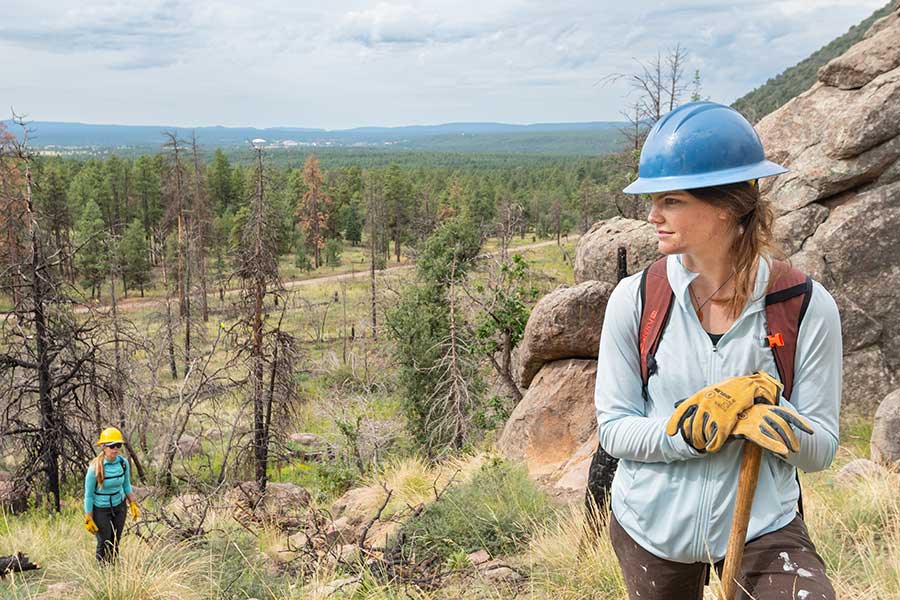
- Help collect vegetation data in remote and beautiful areas of northern Arizona and southern Utah.
- Organize ecological data into a spreadsheet database for use by other Trust staff.
- Understand the effects of seeding non-native species on ecosystems across the Colorado Plateau.
- Present your work to Trust staff at the intern symposium.
What might you learn along the way?
- Deepen your knowledge of how seeding decisions affect plant communities, post-fire recovery, and ecosystem resilience.
- Increase your understanding of post-wildfire restoration strategies.
- Understand complexities and challenges associated with public lands management.
Do you have what it takes?
- Passionate about the landscapes of the Colorado Plateau.
- Knowledge of botany and ecology of the Colorado Plateau’s upland ecosystems.
- General understanding of wildfire ecology.
- Ability to efficiently review documents and find useful information.
- Experience with independent research and writing.
- Capable of directing your own tasks, with minimal guidance from your supervisor.
- Ability to give and receive feedback and ask for help when needed.
- Ability to communicate complex data effectively and succinctly in written and visual materials.
- Ability to write clear, concise, and compelling summary reports.
- Desire to see science inform public lands management.
- Proficient with Microsoft Excel and spreadsheet database design.
- Comfort with and desire to work and camp outdoors (approximately three-seven days during the internship).
- Willingness to work independently on assignments.
*Note that experience includes lived experience, traditional knowledge, volunteer experience, school or coursework, work experience, and other related qualifications, skills, and experience.
No candidate will meet every requirement. If you’re excited about the position and think you may be a good candidate, we encourage you to apply.
The nitty-gritty
Location
Southern Utah, northern Arizona, or remote, but the intern must reside in Arizona, Utah, Colorado, or New Mexico. If remote, the intern would need the ability to travel to Utah and northern Arizona at least three times for ecological data collection trips.
Compensation and benefits
$25.00 per hour. This is not a benefits-eligible position, but interns accrue sick leave during their internships (about two days), and receive a $500 housing stipend, $250 travel allowance, and $200 professional development stipend.
Employment term
This is a 12-week internship, beginning May 18, 2026, and ending on August 7, 2026. The intern is expected to work an average of 40 hours per week. There is some flexibility in start and end dates, if needed.
Supplies needed
If based remotely, the intern must have reliable internet access and the ability to travel to southern Utah and northern Arizona.
Some travel will be required during this internship. To drive a Trust rental vehicle, you must be at least 20 years old with a driver’s license, car insurance, and clean driving record. Or, you must be willing to drive a personal vehicle for work travel (mileage would be reimbursed; 4WD not required, but preferred).
The intern will need to camp out for about two to six days at a time during the internship. The Trust can provide some camping gear.
The Trust will provide the necessary technology for the duration of the internship.
Who would my supervisor be?
Kaya McAlister, land conservation manager
Grand Canyon Trust internships are managed by the Rising Leaders Program. Interns are expected to communicate regularly with Rising Leaders staff about progress and any support needed along the way.
How do I apply?
Please answer the application questions and upload your resume (pdf or word.doc format) titled LastName_FirstName_PostWildfireRestorationIntern.
The application deadline is Feb. 24, at 5 p.m. MST. If you need a reasonable accommodation, contact risingleaders@grandcanyontrust.org
Application deadline: Feb. 24, 2026 at 5 p.m. MST
The Grand Canyon Trust is an equal opportunity employer, and we are committed to justice, equity, diversity, and inclusion in every aspect of our organization. We work actively to ensure against discrimination in employment, recruitment, advertisements for employment, compensation, termination, upgrading, promotions, and other conditions of employment against any employee or job applicant on the basis of identity including but not limited to: Race, ethnicity, gender, parental status, national origin, age, religion, disability, veterans’ status, sexual orientation, gender identity, or gender expression. We actively seek diversity in our candidate pools. Applicants of all identities are encouraged to apply.