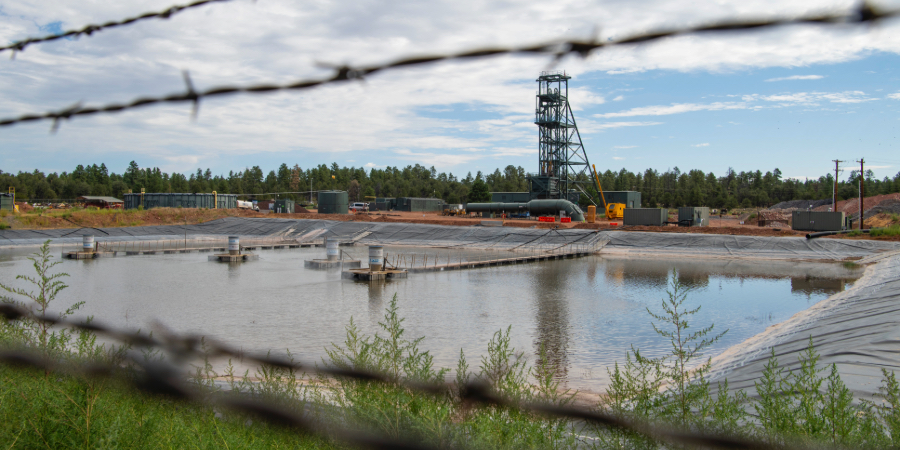

Forty wells and springs across the Grand Canyon region were tested for arsenic. The results at Pinyon Plain uranium mine are striking.
There’s something in the water at Pinyon Plain uranium mine (formerly Canyon Mine). Average arsenic levels above the EPA safe drinking-water limit have been found in three of the mine’s monitoring wells, which are drilled into the Coconino Aquifer. These arsenic levels appear to be uncharacteristic of the Coconino Aquifer across the Grand Canyon region.
The Pinyon Plain Mine sits just south of Grand Canyon National Park. It is located inside the boundaries of Baaj Nwaavjo I’tah Kukveni – Ancestral Footprints of the Grand Canyon National Monument.
New analysis shows Pinyon Plain Mine arsenic levels seem uncharacteristically high
A new Grand Canyon Trust analysis looked at Coconino Aquifer groundwater data from 40 well and spring sites across the Grand Canyon region that had been tested for arsenic between 1993 and 2025. Only 10% (four sites) had average arsenic levels above the safe drinking-water limit of 10 micrograms per liter. Of those four, three are at Pinyon Plain Mine.
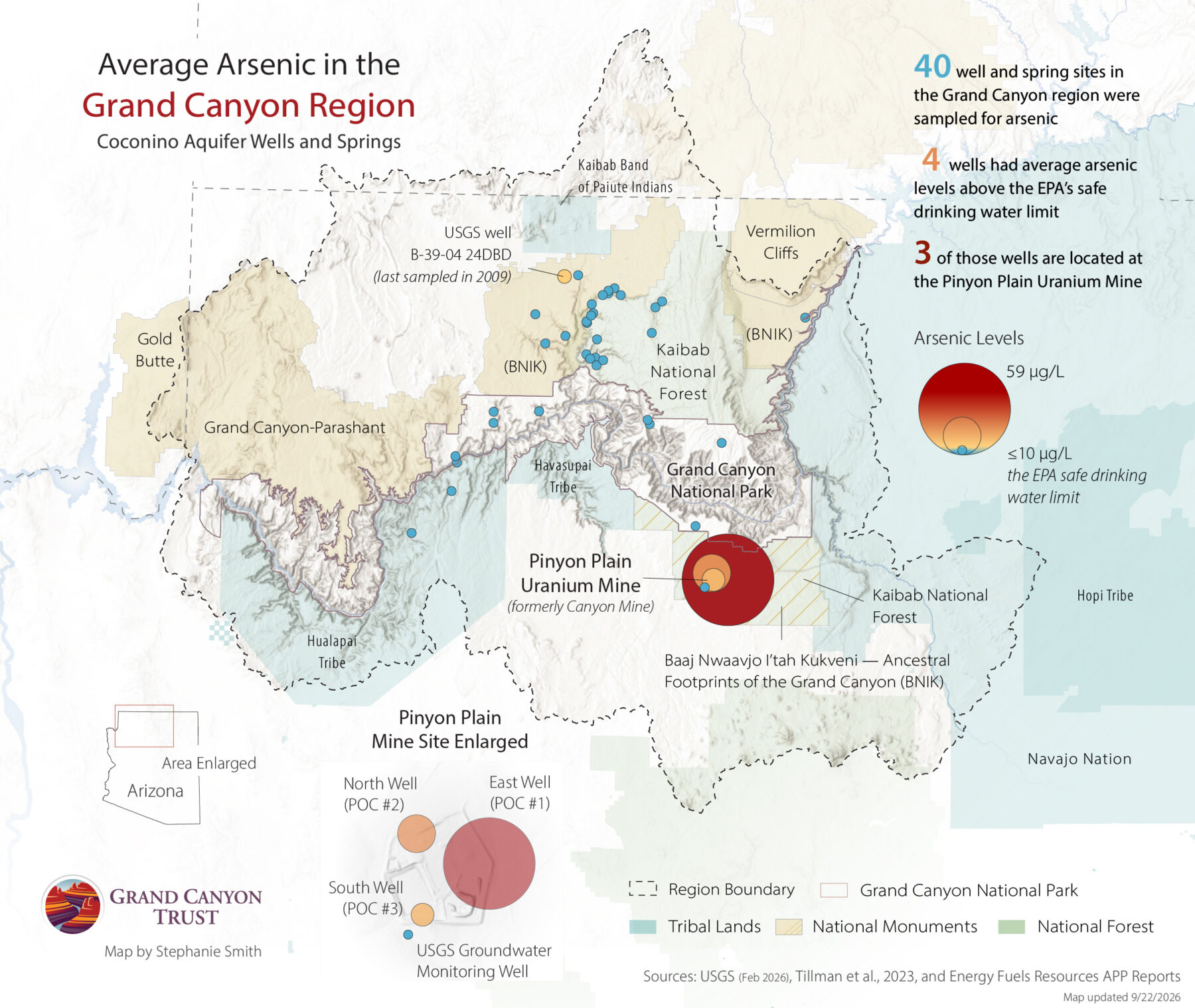
WHAT DOES THE DATA SAY? An interactive map shows average arsenic levels in Coconino Aquifer wells and springs across the Grand Canyon region. See the map
Average arsenic levels up to nearly six times the safe drinking-water limit
At Pinyon Plain Mine, the East Monitoring Well (Well 1) had the highest average arsenic level of all 40 sites sampled. Average arsenic in the well was more than 58 micrograms per liter, 5.8 times the safe limit. The mine’s nearby North Monitoring Well (Well 2) had the second-highest average arsenic level among the 40 sites, at 26.9 micrograms per liter, or more than 2.6 times the safe limit. And the mine’s South Monitoring Well (Well 3) had the third-highest average arsenic level at 18 micrograms per liter, or 1.8 times the safe limit.
The only other Coconino Aquifer site in the Grand Canyon region with an average arsenic level above the drinking-water limit was a USGS well on the Kanab Plateau, north of the Grand Canyon. That well had an average arsenic level of 12.7, about 1.2 times the safe limit.
Havasupai Tribe silenced
In 2026, the Arizona Department of Environmental Quality approved an amendment to the mine’s aquifer protection permit to allow higher arsenic in the mine’s North Monitoring Well (Well 2). The decision to raise the arsenic limit for the well was based on mine owner Energy Fuels Resources’ assumption that arsenic increases were “natural” and coming from off the mine site. Scientists suggested reasonable ways that hypothesis could be tested. The agency chose not to take their suggestions. The Havasupai Tribe, the Grand Canyon Trust, and others believe there is not adequate scientific evidence to back up the uranium company’s assumption that arsenic increases at the mine are “natural.”
The Havasupai Tribe appealed the Arizona Department of Environmental Quality’s decision. Rather than debate the science, the agency sought and received dismissal of the appeal on the grounds that the Havasupai Tribe lacked standing.
According to Havasupai Tribal Chairwoman Melinda Yaiva, the decision to allow higher arsenic levels in the monitoring well “raises a very basic question: Why should the state allow arsenic levels to rise higher before requiring monitoring, investigation, and protective action?”
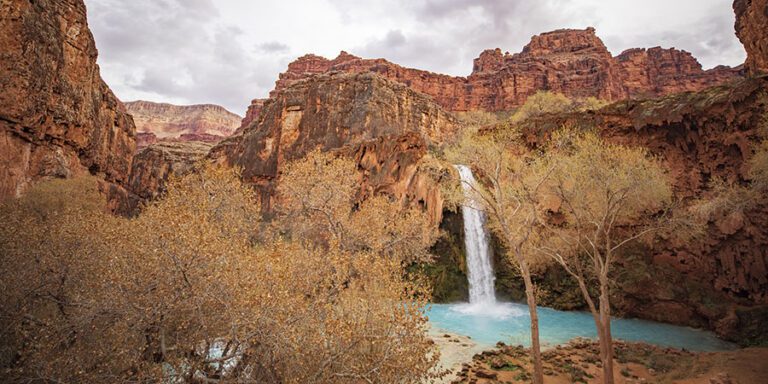
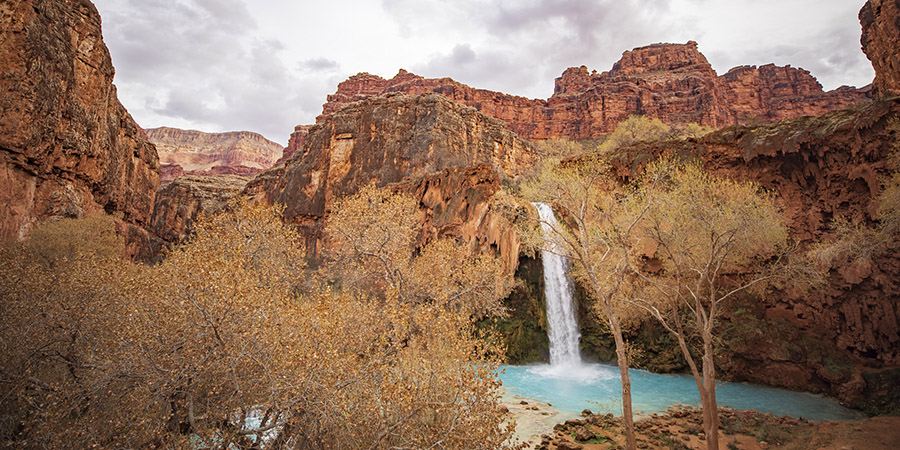
The Havasupai Tribe has opposed the mine since the 1980s. The mine sits in a meadow on the tribe’s ancestral lands, near the Havasupai people’s sacred mountain, Red Butte. The tribe is concerned that water contamination at the mine could migrate into the deeper Redwall-Muav Aquifer, which supplies the tribe’s drinking water and feeds the iconic blue-green waterfalls along Havasu Creek.
“If Havasu Creek is contaminated, there is no backup water system waiting for us,” said Yaiva. “There is no second river we can turn to. There is no municipal pipeline that can simply replace what we lose. The consequences would be immediate and profound. It would affect the water our families drink. It would affect the ability to live in Supai Village. It would also affect our animals, our gardens, our traditional practices, our ceremonies, and our connection to our homeland,” Yaiva added.
Pinyon Plain Mine’s ongoing water issues
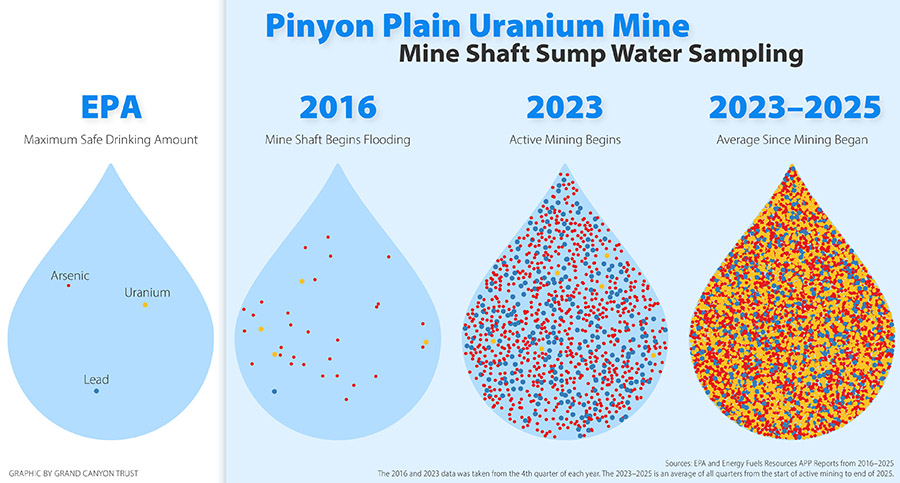 Possible groundwater contamination has long been a concern at Pinyon Plain uranium mine. Mine operator Energy Fuels Resources punctured a groundwater aquifer at the mine while drilling the mine shaft in 2016. By the end of 2025, more than 80 million gallons of groundwater, showing higher and higher levels of uranium and arsenic, had been pumped out of the sump at the bottom of the mine.
The three mine-operated Coconino Aquifer monitoring wells weren’t installed until 2021, five years after mine development first significantly disturbed groundwater. The single USGS well located just outside the mine site was drilled in 2017.
The company started commercially extracting uranium ore from the mine in December 2023. Since then, arsenic levels in the mine shaft’s sump have skyrocketed.
Based on the Grand Canyon Trust’s analysis of existing sampling data from Coconino Aquifer wells and springs in the Grand Canyon region, the elevated average arsenic levels in Pinyon Plain Mine’s monitoring wells seem unusual. The Arizona Department of Environmental Quality should get to the bottom of what is really causing these elevated levels before approving any more amendments to the mine’s permit.