

Ready to set some new year’s hiking goals? Here are some great ideas for new year’s hikes in the Southwest.
We’re ringing in the new year with hiking resolutions! Whether you are determined to get in shape or spend more time with your family, here are a few new year’s hiking goals to hold yourself to this year.
1. Go someplace new
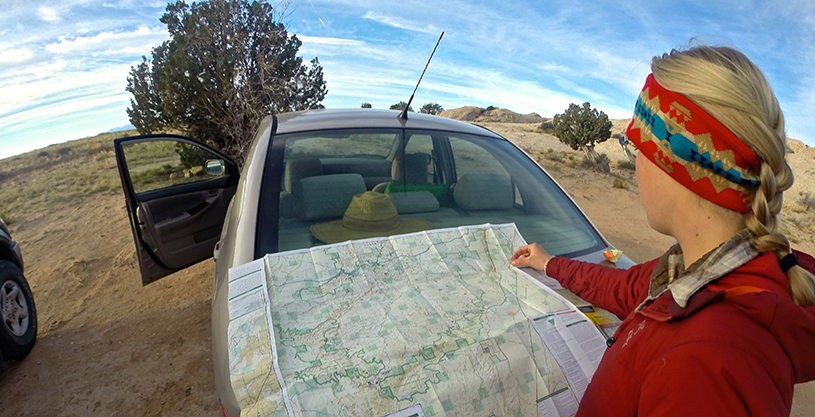
The Colorado Plateau boasts the greatest concentration of parks and monuments in the United States, racking up more than 30 “national something” designations on its scorecard.
Any one of these alone offers a lifetime of experiences—but add the lattice of unsung public lands that lie in-between, and the trip possibilities stretch to infinity.
Our picks:
- Spectra Point/Ramparts Overlook: This citadel of crumbling pinnacles attracts only a quarter of the visitors that nearby Zion National Park sees.
- Long Willow Bottom Reservoir: When summer temperatures push you to higher ground, this obscure hike in Dixie National Forest offers a great escape from the heat.
2. Push your limits
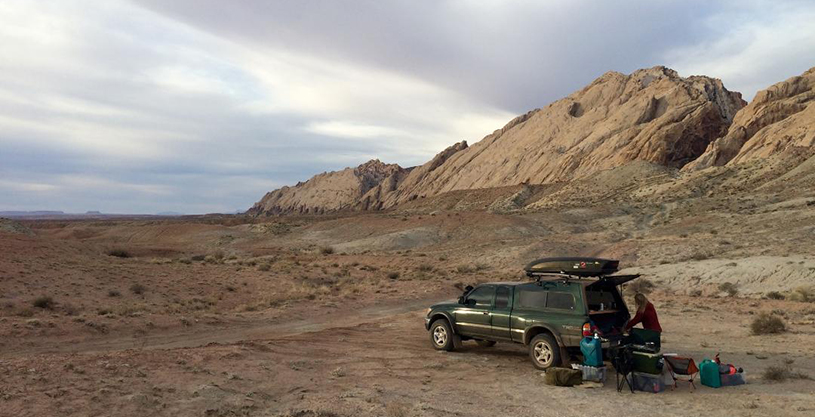
The high desert is a land of extremes. Just look at the spikes and spines that adorn almost every plant — the desert means business.
Temperatures soar into the triple digits, flash floods scour canyon walls. Vistas stretch to massive proportions.
But for those of us drawn to the desert, the rawness of the Colorado Plateau reflects back on ourselves. The exposed landscapes strip down our egos, cut through our insecurities, and put us to the test.
Our picks:
- Boulder Mail Trail: This 15-mile hike crosses some of southern Utah’s most rugged terrain. Sprawling slickrock basins, precipitous descents, and quicksand make for a challenging hike.
- Clear Creek Trail: There’s no place like the Grand Canyon to humble your sense of fitness! This 3–4 day backpacking trip will leave you — literally and figuratively — breathless.
3. Sleep outside more
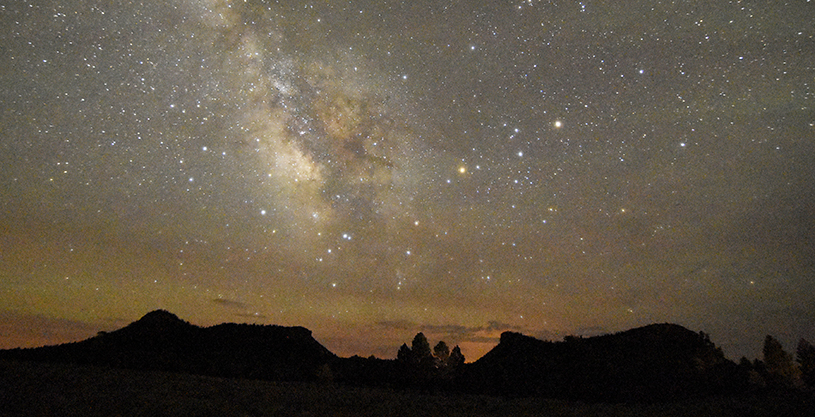
Given the earth’s 4.5 billion year track record of taking a daily spin, it seems strange to think of darkness as a diminishing resource. But if you look at a light pollution map of the United States, you see that dark skies are diappearing. One of the few dark splotches left covers the Colorado Plateau, whose high elevation, low population density, and cloudless nights make for some of the darkest, clearest, and starriest night skies in the world.
Since the electric lightbulb was invented, we’ve progressively lit up the night, and have gotten rid of it. Now 99 percent of the population lives under skies filled with light pollution.
—Tyler Nordgren, Astronomer (“Falling in Love With the Dark,” Nautilus)
In 2001, Flagstaff, Arizona became the world’s first “International Dark Sky City.” Since then, Sedona, Arizona, Canyonlands, Capitol Reef, Chaco Canyon, Grand Canyon-Parashant, Hovenweep, Natural Bridges, and most recently the Kaibab Paiute Reservation, have followed suit.
So lay out your sleeping bag, and enjoy the view!
Our Picks:
- Temple Mountain Campground: Located at the base of the San Rafael Swell, the only lights you’ll likely see here are headlamps from other campers!
- Goosenecks State Park Campground: Bordered by the Navajo Reservation, Goosenecks State Park sees almost no light pollution, a picnic area and an incredible overlook its only amenities.