
How much precious Grand Canyon region groundwater was pumped out of Pinyon Plain Mine in 2024? More than 7.8 million gallons, company data shows.
When the company that owns Canyon Mine, near the Grand Canyon, changed the mine’s name to Pinyon Plain Mine in 2020, some saw it as an attempt to distance the controversial uranium mine from its namesake. And from concerns that the mine, which has been constantly taking on groundwater since 2016, could contaminate or dry up seeps and springs in the Grand Canyon. But despite its new name, the mine’s water problems continue. As do fears about the mine’s possible effects on the region’s groundwater.
In the arid Grand Canyon region, water is precious. Since Pinyon Plain Mine unexpectedly hit groundwater in 2016, millions of gallons have flooded into the mine shaft each year.
According to data submitted by the mine’s owner, Energy Fuels Resources, and posted on the Arizona Department of Environmental Quality’s website, more than 7.8 million gallons of water were pumped out of the mine in 2024 alone. That brings the grand total to nearly 74 million gallons as of the end of 2024.
Water pumped out of the mine has been shown to have high levels of arsenic and uranium. It’s piped into a large open-air evaporation pond. A rare source of surface water, wildlife is drawn to it. Despite the chain-link fence surrounding the site, birds are often observed drinking and bathing in the pond.
Where is Pinyon Plain Mine?
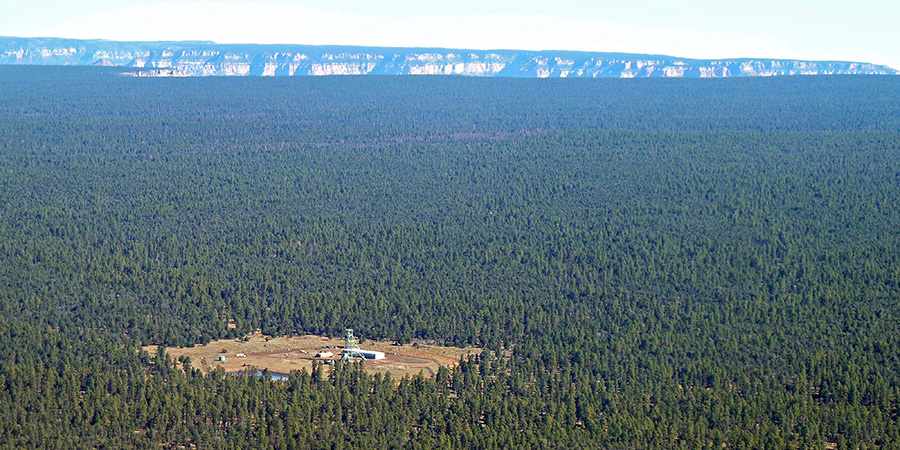
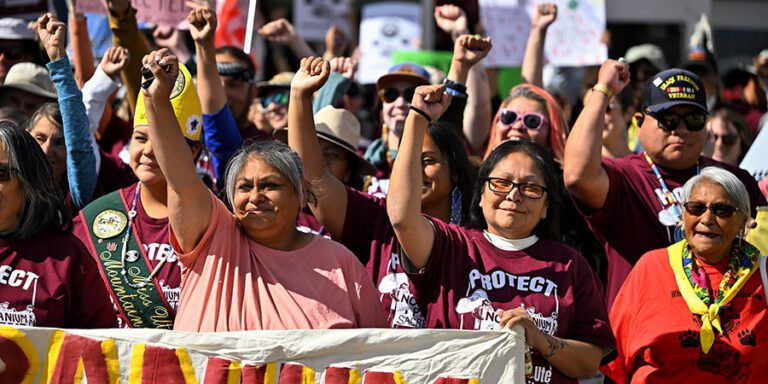
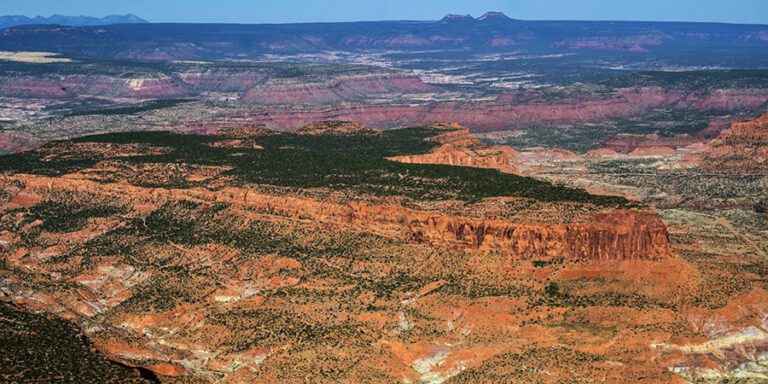
Located fewer than 10 miles south of Grand Canyon National Park, the mine sits in a formerly peaceful meadow on national forest land. It’s inside Baaj Nwaavjo I’tah Kukveni – Ancestral Footprints of the Grand Canyon National Monument. It’s also not far from Red Butte, the Havasupai Tribe’s sacred mountain. The Havasupai Tribe and many other tribal nations have long opposed the mine, which they fear will contaminate soil and groundwater and put their ways of life at risk.
How much groundwater has Pinyon Plain Mine pumped out?
When the mine hit groundwater in 2016, water began to flow into the mine shaft. Every year, the Arizona Department of Environmental Quality publishes data submitted by the mine’s owner about how much water has been pumped out of the mine shaft the previous year. Here’s what Pinyon Plain Mine’s water problem looks like, by the numbers, according to data provided by the mining company.
2016: 1.4 million gallons
2017: 8.7 million gallons
2018: 9.6 million gallons
2019: 10.6 million gallons
2020: 9.4 million gallons
2021: 8.2 million gallons
2022: 8.4 million gallons
2023: 9.3 million gallons
2024: 7.8 million gallons
Grand total, that’s nearly 74 million gallons.
Does Pinyon Plain Mine threaten groundwater?
It depends who you ask. The mine’s owner denies any risk of the mine contaminating groundwater. But scientists who study groundwater in the region have found groundwater flow in the Grand Canyon region to be highly complex. According to researcher Dr. Laura Crossey, “the idea that the water flow from the surface of the Grand Canyon is somehow going to stay confined up in an upper unit is just not realistic when you look at the complex hydrology and the three-dimensional picture. This has bearing on activities like mining.”
Pinyon Plain Mine sits above the deep Redwall-Muav Aquifer, which feeds seeps and springs in the Grand Canyon. The Redwall-Muav Aquifer also flows into Havasu Creek, the sole source of drinking water for the Havasupai people, who live in a remote side canyon at the bottom of the Grand Canyon. Tribes and others are concerned that contamination from the mine could migrate down from the mine shaft and ultimately reach the aquifer.
What do scientists say about Pinyon Plain Mine?
A Grand Canyon groundwater study published in 2024 found that data show the potential for contamination from Pinyon Plain Mine to reach springs on the south rim of Grand Canyon National Park and Havasu Springs near Supai Village. The study advised that further tracer studies are needed to see how water flows. It also called for additional monitoring wells at the mine to test for contaminant changes.
Dye tracer studies at the Grand Canyon have shown that water can flow long distances, vertically and horizontally, in unexpected ways and sometimes quite quickly.
As groundwater researcher Crossey explains: “I don’t think that a reasonable response is to say, ‘let’s wait and see,’ because cleaning up an aquifer that’s kilometers deep in the earth is simply not going to happen. It’s a one-way street. What we should do is prevent the possibility that those precious places become contaminated.”
What’s happening at Pinyon Plain Mine now?
The mine began digging up uranium ore commercially for the first time in December 2023, more than three decades after it first broke ground.
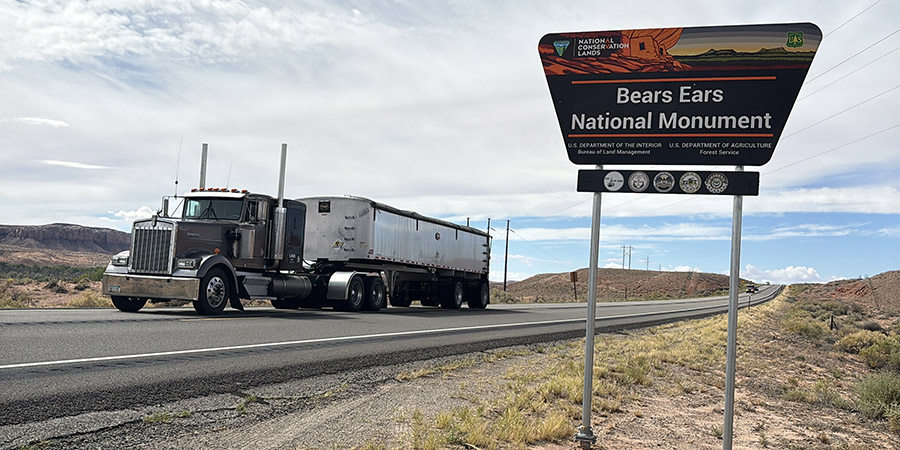
Since early 2024, the mine’s owner has been trucking that uranium ore over 300 miles to the White Mesa uranium mill, near Bears Ears National Monument. The haul route passes through the Navajo Nation, the Hopi Reservation, and the Ute Mountain Ute Reservation. Many communities along the haul route are concerned about contamination and possible accidents. Especially since the haul trucks are covered with industrial tarps. Some have said it’s hard to spot the trucks’ “radioactive” placards. Up to 12 of these trucks head from the mine to the mill nearly every weekday and are expected to continue.
Does the U.S. need this uranium?
In a word: No. The uranium in the Grand Canyon region is relatively low grade compared to uranium deposits in Canada and other countries. And there’s not much of it. Only 1.3% of U.S. uranium reserves and estimated additional resources are found in the Grand Canyon region.
In general, U.S. uranium is lower grade and more expensive to mine compared to uranium deposits elsewhere in the world. And even an Energy Fuels’ spokesman and other mining experts have acknowledged in the media that the U.S. doesn’t have enough domestic uranium resources to meet domestic uranium demand. That means that despite claims that Pinyon Plain and other U.S. mines are necessary to combat the need for foreign uranium, the U.S. will always have to import uranium from abroad. And Pinyon Plain Mine’s uranium is a drop in the bucket compared to the U.S.’s annual uranium demand.
In short, this is the wrong place to mine uranium. There’s very little to be gained. And the Grand Canyon’s groundwater simply isn’t worth the risk.