
A year after the Dragon Bravo Wildfire burned across the north rim of the Grand Canyon, volunteers are helping the landscape recover.
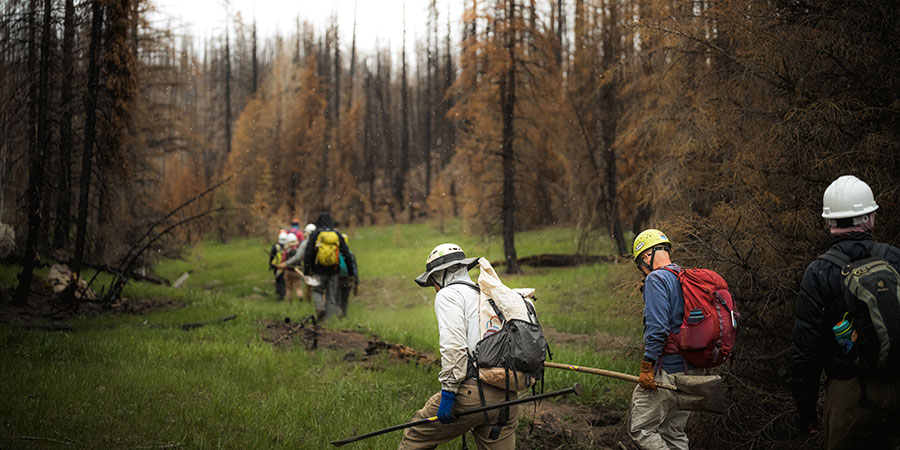
It’s the last Thursday in May, and it’s snowing on the north rim of the Grand Canyon. Gentle flurries land on hard hats and soot-marked arms. The crew keeps working — arranging Kaibab limestone rocks they rolled down from the scorched hillside into neat crescents across a dry streambed. While a saw operator carefully fells charred snags into a ravine, volunteers from the Arizona Mountaineering Club pull burned branches into a tangle to help stabilize an eroding bank.
The crew is working in the headwaters of North Canyon Wash, a drainage that feeds into the Grand Canyon. This was one of the hardest-hit areas of the 2025 Dragon Bravo Fire, which burned 145,504 acres across the north rim of the Grand Canyon. The fire torched the surrounding spruce, fir, and aspen forest, leaving behind bare, raven-black trunks that jut up from the ash like spears. Ignited on July 4, 2025, the fire burned until the end of September 2025, feeding on a dry forest unquenched by the mild winter and fueled by the intense drought.
Now, a year later, these volunteers are working with the Grand Canyon Trust and the U.S. Forest Service to help restore the North Rim. And, they aren’t letting a little surprise weather slow them down.
Meadows are essential for forest recovery
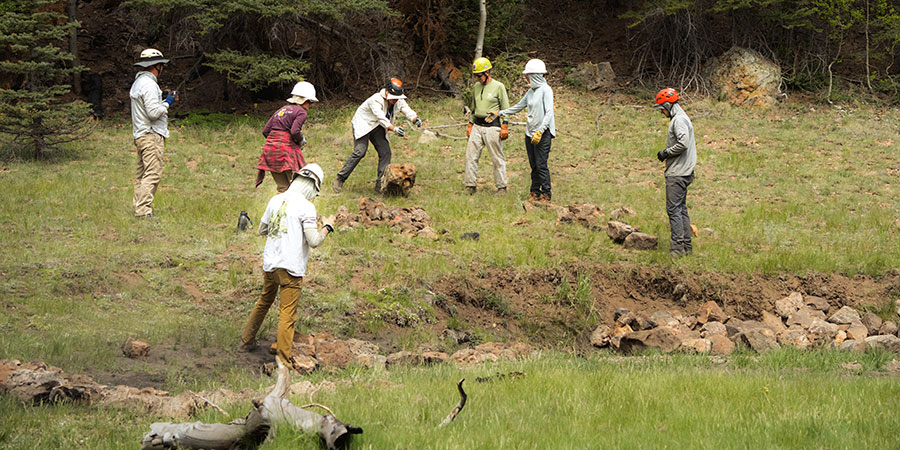
The cold clouds mute the sky, making this green valley stand in even starker contrast against the blackened hillsides. The meadow we’re working in, with its sponge-like soils that soak up snowmelt and runoff, burned far less severely than the forest around it. Because it continues to provide habitat for plants and wildlife, this meadow — and others like it — can help the forest recover after fire.
But the real test is still to come. In the Southwest, summer monsoon storms can unleash intense downpours that send water, mud, and rocks rushing down burned hillsides. Without living roots to hold the soil in place, those slopes can quickly erode, threatening the meadows below. That’s why crews are working to stabilize the landscape before this year’s monsoon rains arrive.
Placed at key points along North Canyon Wash, the wood and rock structures act like stitches after an injury, holding the land together while it heals. They slow and spread out flowing water, giving it time to soak into the soil instead of carving deep channels. The structures also help keep soil and native plant seeds in place, while catching wildfire ash before it washes downstream and impairs aquatic habitat.
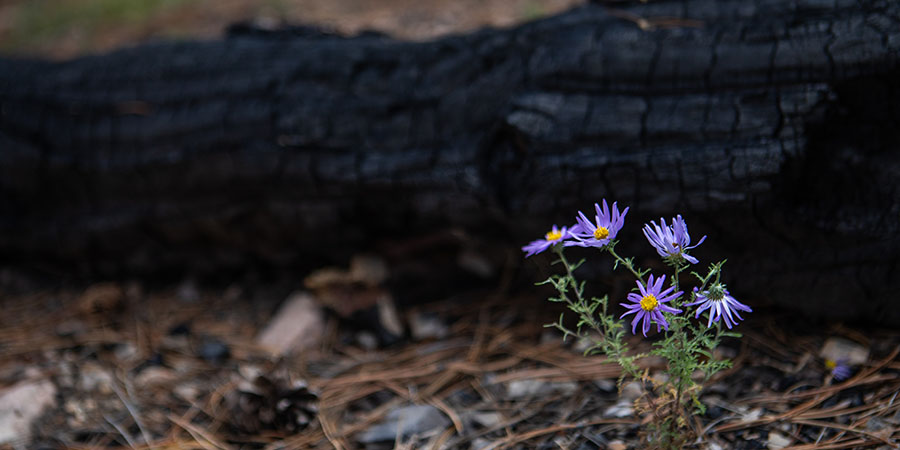
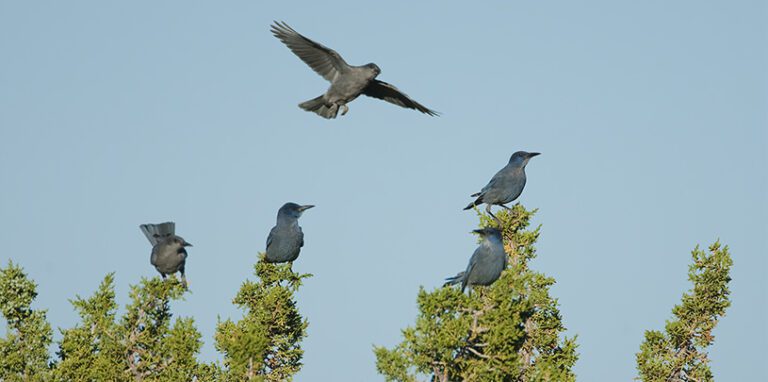
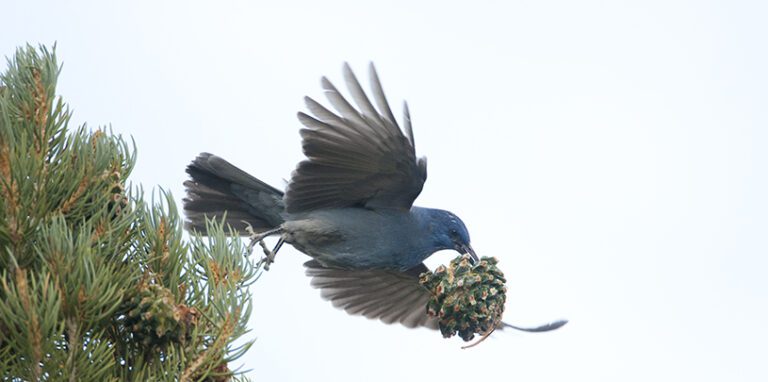
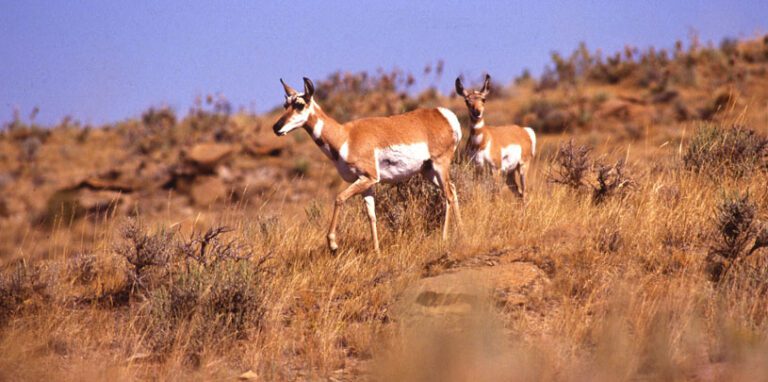
These benefits extend far beyond the meadow. Water from here flows through North Canyon Wash into the Saddle Mountain Wilderness, where it joins springs to form a perennial creek. This rare desert oasis supports plants and wildlife, with biodiversity ten times greater than that of the surrounding forest. Together, these waters provide habitat for many species, from tiger swallowtail butterflies and purple monkshood flowers to pine siskins and mule deer.
North Canyon and other drainages have already experienced post-fire flooding, sending dark flows of mud, ash, and debris across House Rock Valley and toward the Colorado River. With stronger storms expected – and needed – this summer, erosion-control work like this can help reduce the risk of destructive floods that could permanently damage this rare habitat.
A pathway to post-fire recovery
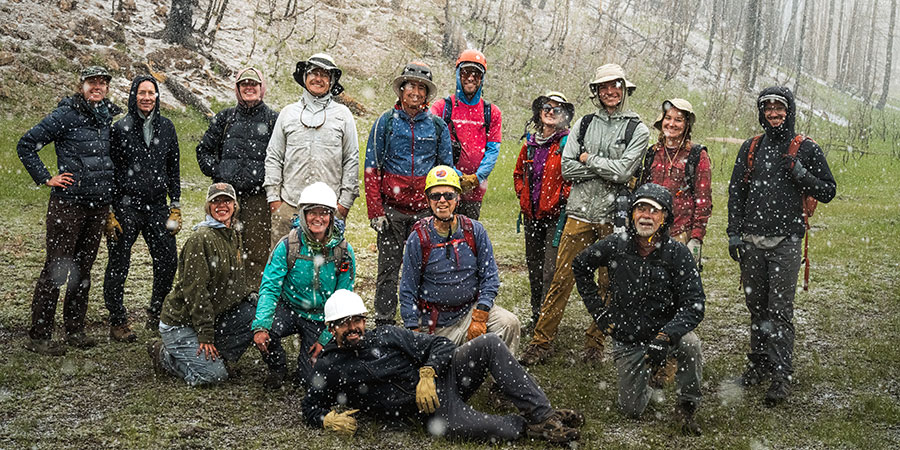
As the crew works through the surprise spring snow, they know that each and every erosion-control structure in North Canyon plays a key role in safeguarding waters and supporting habitat regrowth. Over just two days, the group builds more than a dozen wood and rock structures, helping to kickstart recovery in North Canyon.
In the coming months, the Forest Service aims to team up with more crews to build additional erosion-control structures across the impacted watershed. Long-term monitoring will track how water flow and plant life change as the area recovers.
Collaborative conservation remains central to the Trust’s work across the north rim of the Grand Canyon. Later this summer, Grand Canyon Trust volunteers will help with even more recovery work, removing hazardous fences and helping native plants take root in the Dragon Bravo burn scar. We also continue to engage with land managers, tribes, and other local stewards and experts to understand what the North Rim could look like in this post-fire future.
As wildfires burn hotter and longer across the Colorado Plateau, we continue to advocate for the knowledge and resources for climate-informed forest management and seek out opportunities to get our hands in the soil, ash and all, to help build healthier, more resilient forests.
Please sign up for our volunteer newsletter to learn about volunteer opportunities on the North Rim and beyond.