Charity Navigator rates us as a four-star charity

Contact Us
2601 N. Fort Valley Rd
Flagstaff, AZ 86001
Phone: 928.774.7488
Fax: 928.774.7570
E-mail Us

Grand Canyon and Colorado Plateau conservation advocates : Grand Canyon Trust

Home » Grand Canyon » Colorado River Management » Issues » Resource Issues


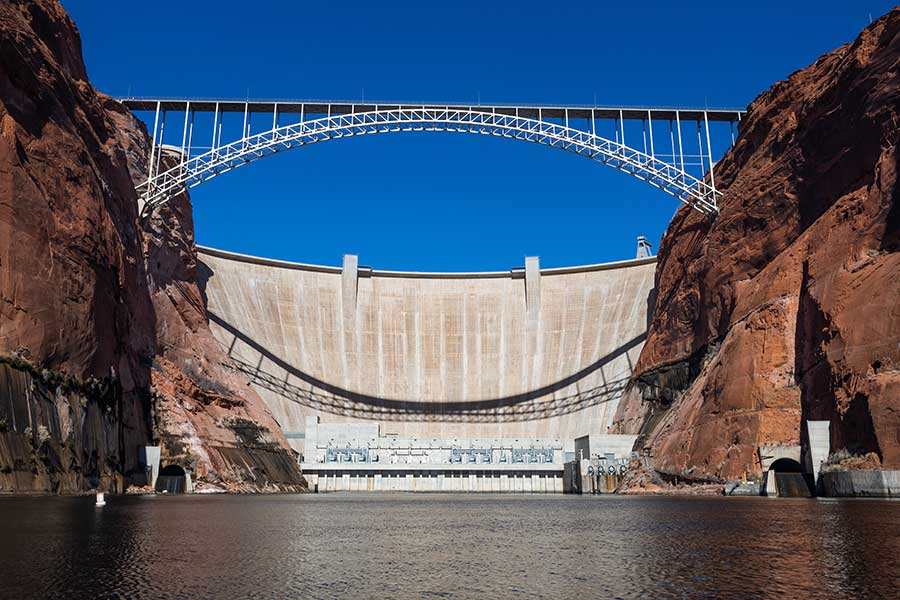
Fast facts about Glen Canyon Dam

Sediment accumulation. Ninety-five percent of the nutrient-rich sediment that would normally deposit in Grand Canyon has accumulated behind the dam, eliminating food for native species and sand for beaches.

Temperature changes. Cold water released from the depths of Lake Powell has eliminated reproductive triggers for native species and spawned large populations of nonnative species that prey on the vulnerable natives.

Static flow regime. Natural, periodic high flows are necessary to build beaches for native species and to trigger seed germination; however, such flows have been replaced by a near-static flow regime.

The effects of dam operations: Extinction of native species

Adult humpback chub. Photo courtesy of USFW.
Adult humpback chub

Changes in river morphology have resulted in the extinction of native species — river otters, muskrats, and four of the eight Colorado River fish. Two of the remaining native fish species are in steep decline, and native vegetation is disappearing because of the lack of nutrients and the invasion of non-native plants. The Grand Canyon Trust has identified four areas of resource decline that must be improved to restore the Colorado River to a healthy condition: native fish, native riparian communities, sediment, and archaeological resources.

Native fish. The humpback chub, an endangered 4-million-year-old fish found only in the Colorado River, is down from 1989 population levels of 9,300 to a current population of 6,000. Other native fish have suffered similar declines. Releases of cold, clear water create unfavorable habitat conditions for the chub — but favorable ones for its nonnative predators.

Native riparian communities. The sand beach community, which consists mostly of grasses and forbs, historically occupied a wide band adjacent to the river. Unfortunately, nonnative tamarisk now overruns this area. Above the sand beach community lays another narrow band of long-lived trees and shrubs that parallel the river. This “old high water zone” community is being degraded by nonnative species and a lack of recruitment to balance mortality.

Sediment. Sediment volumes are declining in the river and on beaches. Grand Canyon now only receives sediment inputs from its tributaries — about 5 percent of historical amounts — and this input is no longer sufficient to balance the natural loss through erosion. This situation is dire because the sediment not only supports habitat for aquatic and riparian species, but it also provides camping sites and protects cultural resources.

Archaeological resources. Because sediment flow is diminished, cultural sites are also in decline. Intermittent flows in tributary drainages create destructive gullies and erode archaeological resources. Before the dam was constructed, flood flows quickly refilled gullies with transported sediment.

Grand Canyon conservation

Support Grand Canyon Conservation

 Your donations and membership dues make our work in Grand Canyon possible.

Become a member of Grand Canyon Trust and support our work in Grand Canyon

Look up acronyms and abbreviationsguide to acronyms and abbreviations