Colorado River Restoration In Grand Canyon (Back to Water Program Index)
 |
 |
| |
Colorado
River at Lee's Ferry
© by
Jim Ruch |
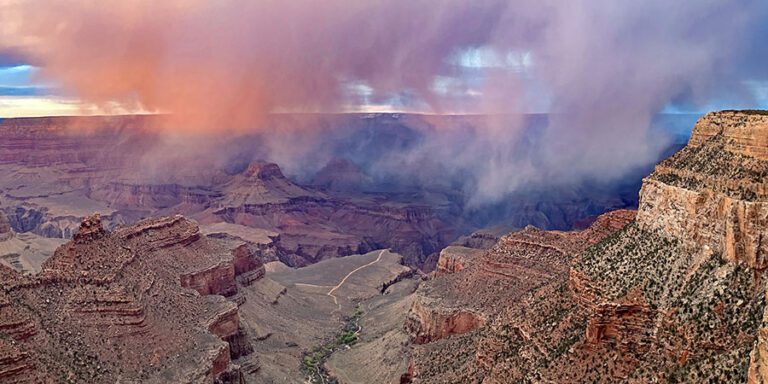
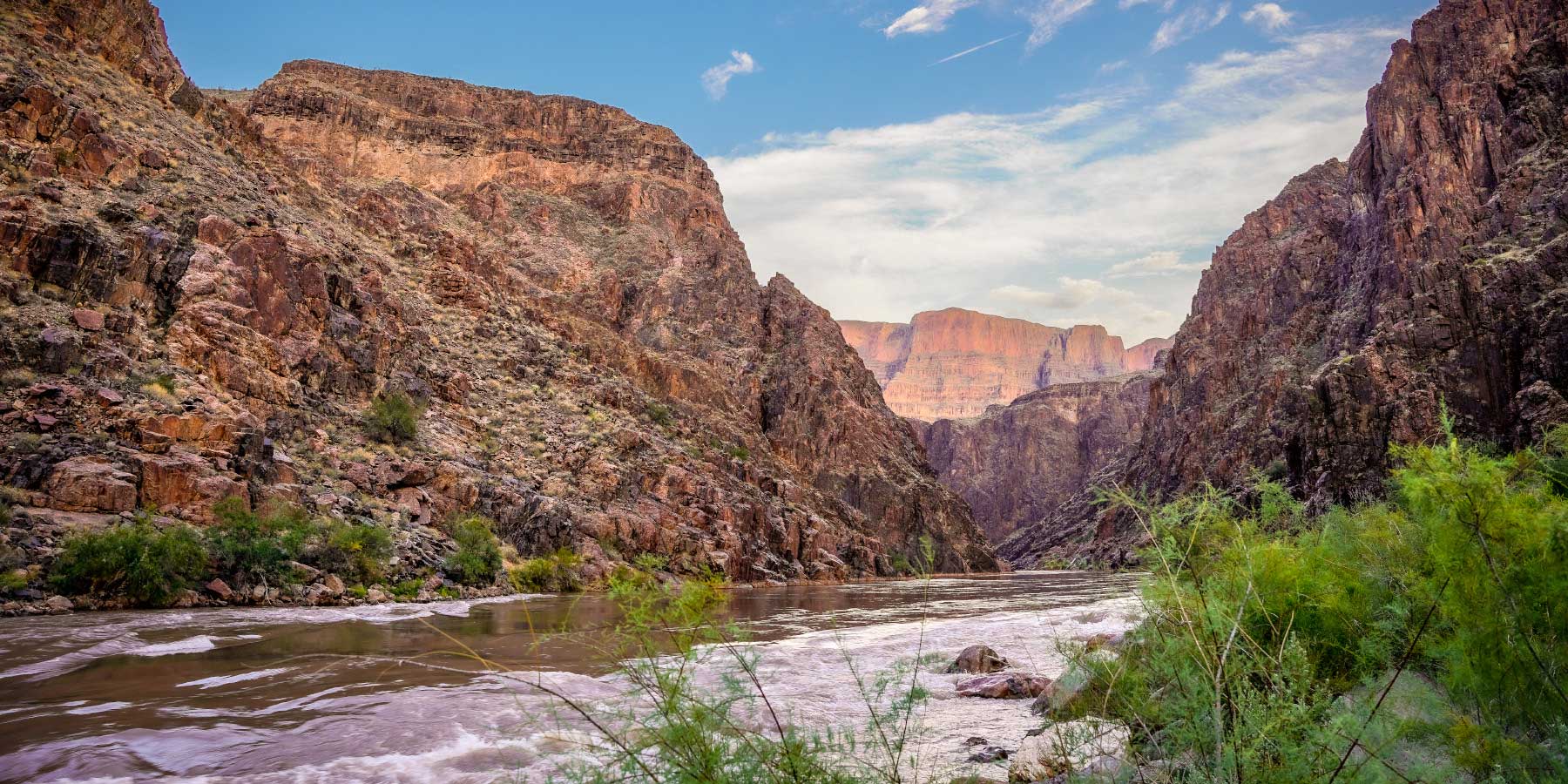
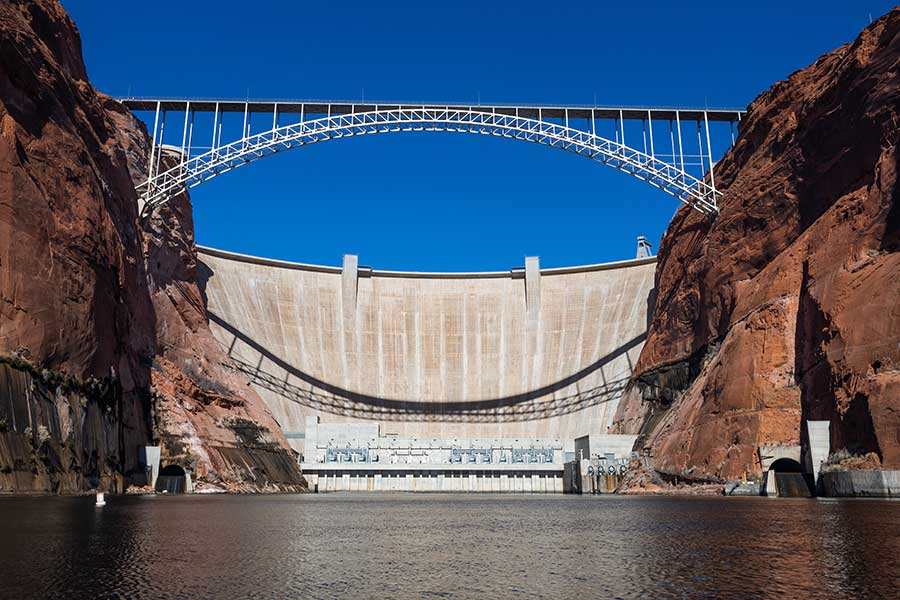
Recent changes in the Colorado River basin - severe drought combined with burgeoning growth - have put intense pressure on the Colorado River and its canyons, species, habitats and communities. But the changing dynamics have also have created an unexpected benefit: a broad vista of new possibilities for restoring health to the Grand Canyon. With Colorado River reservoir levels falling temporarily to historic lows, changes in river management and reconsideration of the operations and utility of dams and diversions have become imperative. Carefully crafted, the solutions for sustainable living in the basin can also revive the river and provide the pathway to restored health for Grand Canyon. Solutions never thought achievable before are now eclipsing the “possible” and becoming necessary.
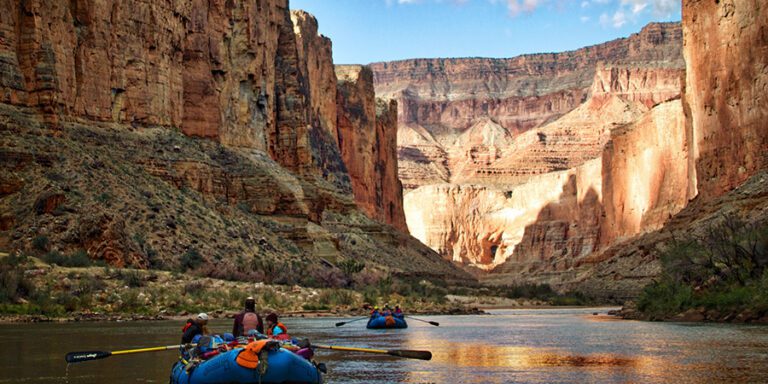
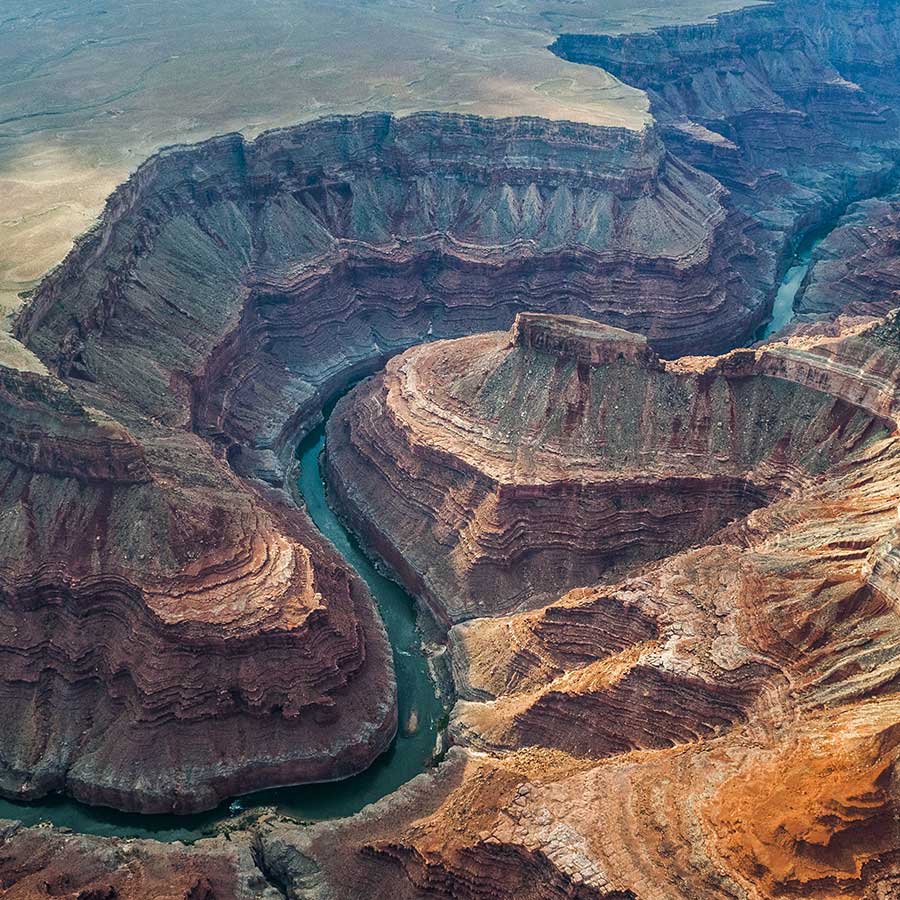
For millions of years, the Colorado River carved its way through the Colorado Plateau, persisting through ice ages, diving underground when necessary to survive, changing course to adapt to continental shift, and burrowing through molten lava dams and walls of granite. According to geologist James L. Powell, “…the Colorado River has triumphed over solid rock of every type.” The Colorado brought life to the ancient civilizations of the canyons; made possible the early European settlements of the Southwest; and finally was captured to create today’s dense urban Sunbelt. Now, 30 million people, 13 Native American tribes, innumerable species and thousands of acres of increasingly rare habitat are dependent on it. But after 15 million years of triumph and generosity, the Grand Canyon’s ecosystem has begun to weaken under the river’s heavy burden.
Resource Declines in Grand Canyon
Here is some of what we know:
-
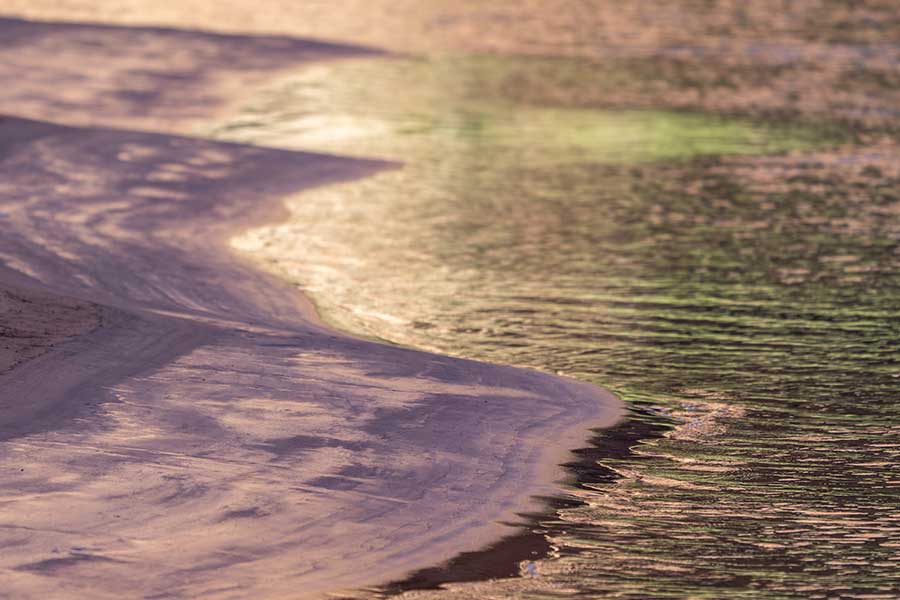
Ninety-five percent of the nutrient-rich sediment that would normally deposit in Grand Canyon has accumulated behind the dam, eliminating food for native species and sand for beaches.
-
Cold water released from the depths of Lake Powell into the Grand Canyon has eliminated reproductive triggers for native species and spawned large populations of nonnative species that prey on the vulnerable natives.
-
Natural periodic high flows necessary to build beaches.
These changes in river morphology have resulted in extirpation of native species including river otters, muskrats, and four of the eight Colorado River fish. Two of the remaining four native fish species are in steep decline, and native vegetation is disappearing from the high water zone due to lack of nutrients and the invasion of competing non-native plants.
The Grand Canyon Trust has identified four areas of resource decline on the Colorado River in Grand Canyon that must be improved in order to restore the river to a healthy condition. These are: native fish, native riparian communities, sediment, and archaeological resources.
The humpback chub, an endangered four-million-year-old fish found only in the Colorado River, is down from 1989 population levels of 12,000 to 5,000 currently. Other native fish have suffered similar declines. Dramatic habitat changes created by Glen Canyon Dam and the proliferation of nonnative fish are the primary suspects in the disturbing decline of the humpback chub population in Grand Canyon. Releases of cold, clear water from the dam continue to create unfavorable habitat conditions for the humpback chub and favorable habitat conditions for the chub’s nonnative predators.
Native riparian communities are also in decline. The sand beach community, composed mostly of grasses and forbs, historically occurred in a wide band adjacent to the river that is now being overrun by the nonnative tamarisk tree. Above the sand beach community is another narrow band of long-lived trees and shrubs that run parallel to the river. Known as the “old high water zone” community, it is being degraded by the invasion of nonnative species and lack of recruitment of new individuals to balance mortality.
Sediment measurements in the river and on beaches show continuing, long-term declines. This is disastrous because river sediment supports habitat for aquatic and riparian species, provides recreational camping sites, and is critical for protecting cultural resources. No longer is there sufficient input and sediment storage to balance the natural loss through erosion. Grand Canyon now only receives sediment inputs from its tributaries—about five percent of the amount of sediment that historically entered Grand Canyon each year.
Because sediment flow is diminished, cultural sites are also in decline. Intermittent flows in tributary drainages create destructive gullies and erode archaeological resources. Before the dam was constructed, flood flows quickly refilled gullies with transported sediment.
 |
 |
| |
Martha Hahn 2007 |
Glen Canyon Dam Adaptive Management Program
In 1988, the Grand Canyon Trust (together with the Western River Guides Association, the National Wildlife Federation, and American Rivers) successfully sued the Western Area Power Association (a federal agency that markets power from Glen Canyon Dam) on the basis that dam releases for hydropower generation were degrading the Colorado River through Grand Canyon. Subsequently, the Trust became actively involved in passing the Grand Canyon Protection Act (GCPA).
Following passage of the GCPA in 1992, the Trust became oneof the original stakeholders in the newly created Glen Canyon Dam Adaptive Management Program (AMP), a 25-interestholder collaborative process that advises the Secretary of the Interior to implement actions that improve Colorado River.
Other Actions
The Grand Canyon Trust has also worked outside the AMP through our successful litigation to withdraw the Recovery Goals for humpback chub. The Recovery Goals developed by U.S. Fish & Wildlife Service in 2002 were declared invalid by a federal district court in Arizona last year. From the court’s judgment: “The Recovery Goals for endangered humpback chub fail to comply with the Endangered Species Act, and accordingly, defendants [Interior] are ordered to withdraw them. We declare them of no force and effect.”
The Recovery Goals were flawed in many ways, but the main flaw was setting 2,100 adults as the minimum viable population—an action that would allow continued degradation of riverine and riparian ecosystems. A revision of the Recovery Goals is slated for 2008.
The Trust has also been active in protecting Grand Canyon resources by providing comments on related federal actions. For example, the Trust has provided comments on the Colorado River Management Plan and on the Long-Range Operating Criteria (LROC). Our comments on the LROC resulted in the Secretary of Interior acknowledging that the Grand Canyon Protection Act is part of the Law of the River. This recognition provides additional leverage in advocating changes in dam operations to benefit park resources and values.
Long-Term Experimental Plan EIS
The Department of Interior has initiated an EIS process to develop a Long-Term Experimental Plan for Glen Canyon Dam operations to improve resources in Grand Canyon.
The intent of the Long-Term Experimental Plan is stated in the Federal Register notice as follows:
- The purpose of the Long-Term Experimental Plan is to increase understanding of the ecosystem downstream from Glen Canyon Dam and to improve and protect important downstream resources.
- The proposed Long-Term Experimental Plan is intended to ensure a continued, structured application of adaptive management in such a manner as to protect, mitigate adverse impact to, and improve the values for which Grand Canyon National Park and Glen Canyon National Recreation Area were established, including, but not limited to natural and cultural resources and visitor use, consistent with applicable Federal law.
The need for the LTEP is clear—park resources and values have continued to decline under the Modified Low Fluctuating Flows (MLFF) alternative selected in the 1995 Record of Decision (ROD) on the operation of Glen Canyon Dam.
Grand Canyon Trust’s Comments on the LTEP EIS
On August 1, 2007, Grand Canyon Trust submitted to the Bureau of Reclamation an alternative hydrograph for Glen Canyon Dam flows. Reclamation is preparing a Long-Term Experimental Plan EIS that will direct dam operations for 8 to 10 years. A draft EIS is expected April 2008; the final EIS, October 2008; implementation of the LTEP to begin in 2009.
The alternative just submitted by the Trust will be considered by Reclamation as one of the EIS alternatives. Labeled as “Alternative E,” the GCT alternative sets as a goal a “substantially restored ecosystem” in Grand Canyon. It aims to identify the closest approximation of natural patterns and processes that is possible given the presence of Glen Canyon Dam and other human impacts.
Alternative E represents park resources and values as identified in the 2006 NPS Management Policies and various NPS management plans, at the same time meeting the intent of Congress when they passed the Grand Canyon Protection Act. Besides a hydrograph that mirrors pre-dam flows, our alternative includes other experimental actions such as a Temperature Control Device, sediment augmentation, and nonnative fish removal.
The Grand Canyon Trust also provided scoping comments for the Long-Term Experimental Plan EIS. Below are excerpts from these comments. (Our comments in their entirety are provided in a link below this article.)
Development of legally and scientifically defensible alternatives in the Long-Term Experimental Plan (LTEP) will not be an easy task of short duration. However, park resources continue to decline under current dam operations and a change is needed now. It is critical that the LTEP alternatives consist of alternative dam operating criteria (in concert with other management actions) designed to meet the intent of the Grand Canyon Protection Act (GCPA).
In addition to the GCPA, alternatives must be consistent with the many laws and policies that govern water releases, park resources and values, and hydropower production. Because of the trade-offs inherent in managing these resources, Congress has established priorities by enacting the GCPA. The GCPA makes it clear that dam operations must be guided first by meeting the legal requirements for water delivery to the lower basin, and then by the need for protecting park resources and values. All other considerations, including hydropower production, are a lower priority.
The Colorado River Ecosystem (CRE) has been drastically altered by the presence and operation of Glen Canyon Dam and other changes, and achieving the resource objectives for the CRE will require bold action. Thankfully, there is a tremendous pool of scientific information from the CRE and other river systems that is available for developing and testing alternative dam operations and other management actions to meet the intent of the GCPA.
The Grand Canyon Trust has been involved with the management of Grand Canyon since the Trust’s founding on a Colorado River trip twenty years ago. The Trust was instrumental in passage of the GCPA and has been involved in the Glen Canyon Dam Adaptive Management Program (AMP) since its inception ten years ago. As stakeholders in the AMP, and as concerned citizens, we offer our time and expertise to assist in any way possible. We fervently hope that this process can develop and implement an alternative that will demonstrate leadership in environmental stewardship, and meet the AMP’s vision of, “a stewardship worthy of the Grand Canyon.”
The alternatives must be consistent with the Grand Canyon Protection Act.
The Grand Canyon Protection Act was signed into law on 30 October 1992. The GCPA states: “The Secretary shall operate Glen Canyon Dam in accordance with the additional criteria and operating plans specified in section 1804 and exercise other authorities under existing law in such a manner as to protect, mitigate adverse impacts to, and improve the values for which Grand Canyon National Park and Glen Canyon National Recreation Area were established, including, but not limited to natural and cultural resources and visitor use.”
The intent of the GCPA is unambiguous: to operate the dam in a manner that protects park resources and values. On the floor of the Senate, Senator McCain stated: “The erratic release of water from the dam to meet peak electric power demands [has] destroyed Colorado River beaches, and harmed other natural, cultural, and recreational resources. Somewhere along the line, we forgot our obligation to the canyon and to [t]he future
generations for whom we hold it in trust. In response, I introduced the Grand Canyon Protection Act to reorder those priorities—to stop the damage and legally require the dam to be operated in a manner which will protect park resources (Congressional Record—Senate).”
Making clear Congress’ intent to prioritize Grand Canyon resources over power generation, Senator McCain had the following exchange with Senator Bill Bradley on the floor of Congress. Senator McCain asked, “Is it the Senator’s understanding that the Grand Canyon Protection Act rejects the policy that power generation has any priority or primacy over protection of downstream environmental, recreation, or cultural values?”
Senator Bradley replied, “Yes” and clarified by stating, “Under the Grand Canyon Protection Act, all aspects of Glen Canyon Dam operations should be governed by the goal of protecting the downstream resources so long as those operations do not interfere with the allocation, apportionment, and deliveries provided for in the Colorado River compact resources (Congressional Record—Senate).”
Completion of the Environmental Impact Statement (EIS) on the Operations of Glen Canyon Dam was mandated by the GCPA, and the Record of Decision (ROD) was signed in October 1996. The ROD was intended to implement: “… an alternative dam operating plan that would permit recovery and long-term sustainability of downstream resources while limiting hydropower capability and flexibility only to the extent necessary to achieve recovery and long-term sustainability.”
Research and monitoring during the last decade of ROD operations clearly demonstrate that the current ROD flows (i.e., MLFF) do not meet the intent of the GCPA (Gloss, et al. 2005). MLFF has been implemented since 1996, and the relatively similar Interim Flows were in effect from 1991 to 1996. Throughout this time, there has been a large number of research and monitoring projects, and numerous independent and in-house reviews and assessments. Although our knowledge of the CRE is certainly incomplete, and always will be, it is clear that new operating criteria are needed. MLFF did not go far enough to “stop the damage” and bring about the predicted “recovery and long-term sustainability” of park resources and values.
Alternatives should focus primarily on priority park resources and values.
There is no end to the potential research that could be conducted on park resources and values. The priority, however, should be on park resources and values that are declining (e.g., sediment, humpback chub, and archaeological resources). Focus on improving these three resources may have a positive influence on several other park resources and values as well.
Sediment
The overall mass balance of sediment in Grand Canyon is negative due to a reduction in mainstem sediment supply and an increase in sediment transport. The majority of the sediment supplied to the CRE was historically derived from the watershed above the dam. That sediment is now being trapped in Lake Powell. The rate of sediment transport in the CRE has increased due to clear water releases from Glen Canyon Dam and the high daily fluctuations in dam releases as compared to pre-dam conditions.
The alternatives should attempt to:
- Maintain a positive mass balance of sediment in Marble and Grand canyons over annual and longer time periods.
- Provide the sediment distribution needed to restore near-shore native fish habitat and native sand beach community.
- Determine whether sediment augmentation can significantly mitigate for the reduced sediment supply (by supplying sediment for building beaches and near-shore habitat, and providing a level of turbidity that may increase the survival of native fish in the mainstem).
Humpback Chub
The distribution and abundance of humpback chub has been sharply curtailed. Historically, the vast majority of humpback chub in the Grand Canyon area probably occurred in the Colorado River mainstem throughout Marble and Grand Canyons, and in the Little Colorado River within the Little Colorado River Canyon. Humpback chub probably also occurred to a limited extent in the mainstem above Marble Canyon and below Grand Canyon, in the Little Colorado River as far upstream as Grand Falls, and (at least seasonally) in tributaries other than the LCR.
 |
 |
| |
USFWS photo |
Today, humpback chub are distributed mainly in the LCR and LCR inflow reach, and the abundance of humpback chub has declined. Although monitoring data only go back as far as 1989, the population has decreased from perhaps 12,000 adults in 1989 to about 5,000 today. Although the decline in distribution and abundance is certainly due to several factors, the main factors are probably the loss of mainstem spawning and rearing habitat, and an increase in predation rates.
The alternatives should attempt to:
- Restore an abundant and widely distributed population of humpback in the mainstem.
- Provide mainstem flow and sediment conditions that are likely to provide appropriate near-shore spawning and rearing habitat.
- Provide the combinations of reservoir level, flow regime, and Temperature Control Device (TCD) operation that are likely to result in temperatures needed for native fish rearing.
- Provide the level of non-native species (e.g., trout, catfish) control that is likely to allow native fish rearing in the mainstem.
Archaeological Resources
Archaeological resources are often located in the terrace zone and have survived throughout the years by being buried in sediment. Although incipient gullies (naturally formed by runoff during thunderstorm events) have always had the potential to erode archaeological sites, gully erosion was historically counteracted by infilling from aeolian (i.e., wind) transport of high and dry sediments deposited during flood events.
Today, archaeological resources are being lost at an increased rate in Grand Canyon. The supply of high and dry sediment needed for aeolian transport has been reduced mainly because these deposits are no longer being created by flood events during sediment-enriched conditions. In addition, beach sediments have been colonized by vegetation (e.g., tamarisk) that reduces aeolian transport rates.
The alternatives should attempt to:
- Preserve, in situ, all archaeological resources.
- Provide the high and dry sediment needed to counteract arroyo formation (through subsequent wind transport).
Other Park Resources and Values
Although the focus of the LTEP should be on the high priority resources, opportunities to simultaneously gather information that would aid in the eventual restoration of lower priority park resources and values should not be overlooked. Park resources that would benefit from additional research include extirpated species (e.g., river otter (Lutra canadensis), razorback sucker (Xyrauchen texanus), Colorado pikeminnow (Ptychocheilus lucius), bonytail (Gila elegans)), terrace zone riparian communities (i.e., Old High Water Zone), and water quality (e.g., mercury, salinity, selenium).
Summary
It is critical that the LTEP alternatives consist of alternative dam operating criteria (in concert with other management actions) designed to meet the intent of the Grand Canyon Protection Act while being consistent with other laws including those regarding water delivery, endangered species, cultural resources, wilderness, and water quality. The alternative selected as best meeting these criteria should then be tested for the appropriate number of years to achieve the desired level of confidence in the results.
The LTEP provides a very public opportunity for Interior and the responsible agencies to rectify the on-going failure to meet the intent of the Grand Canyon Protection Act. To do this, the LTEP must be intellectually honest, legally defensible, scientifically credible, and reflect the high value the public places on the integrity of the natural, cultural, and recreational resources in our National Parks.
For more information:
Grand Canyon Protection Act (pdf)
Grand Canyon Trust scoping comments on the Long-term Experimental Plan EIS (pdf)
Glen Canyon Dam Adaptive Management Program - Strategic Plan (pdf)
Re-opening Glen Canyon's floodgates, High Country News, 7/8/02
Land Letter News Story on ESA litigation (Microsoft Word Doc)
Grand
Canyon Trust's full CRMP comment
letter to GCNP Superintendent
Alston (10/30/2002) (pdf)
Comments on Final EIS for the Colorado River
Management Plan (Microsoft Word Doc)
(Back to Water Program Index)
More About PDF Files
Depending on how your browser and other software are configured, left-clicking the above link will produce different results. Such a click may result in the file being viewed within a new browser window. To ensure a download, using Windows, right-click (Mac - Command-click) the link and choose 'Save Target As...'. To get Adobe Acrobat Reader software for free,
Click Here. |
|