
In the summer of 2025, fires raged across the north rim of the Grand Canyon. Now that the smoke has lifted, what does the future hold for the national park and the North Rim?
The far side
The Grand Canyon is really two distinct national parks, whatever the lines on the map say. The better-known South Rim receives most of the park’s nearly 5 million annual visitors; it’s bustling with hotels and restaurants.
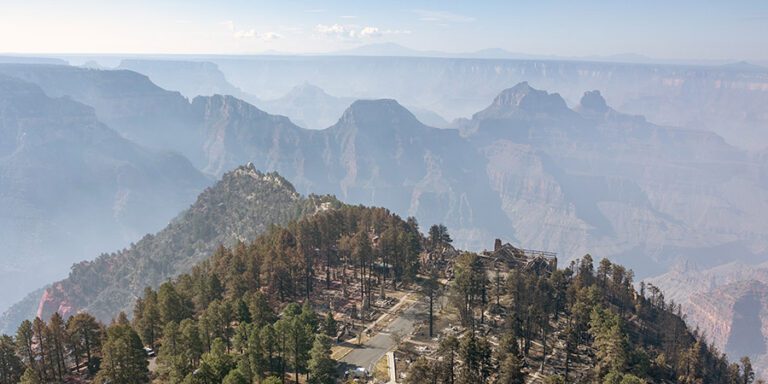
The North Rim is different. A thousand feet higher, it cuts through the Kaibab Plateau, which is covered in conifers and swallowed by snow each winter. The sense of solitude is enhanced by the short tourist season, only May to October, and the long drive from any city.
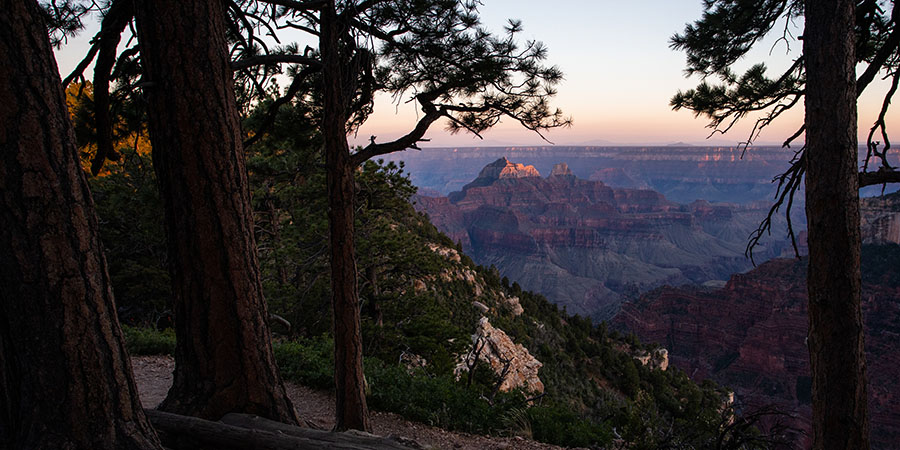
The views are no more spectacular than those on the South Rim — you can’t improve on perfection — but those who prefer a quieter backcountry experience know the north side is worth the trip.
“To me,” says Ethan Aumack, the Grand Canyon Trust’s executive director, “it feels like a much more remote and wilder part of the park.”
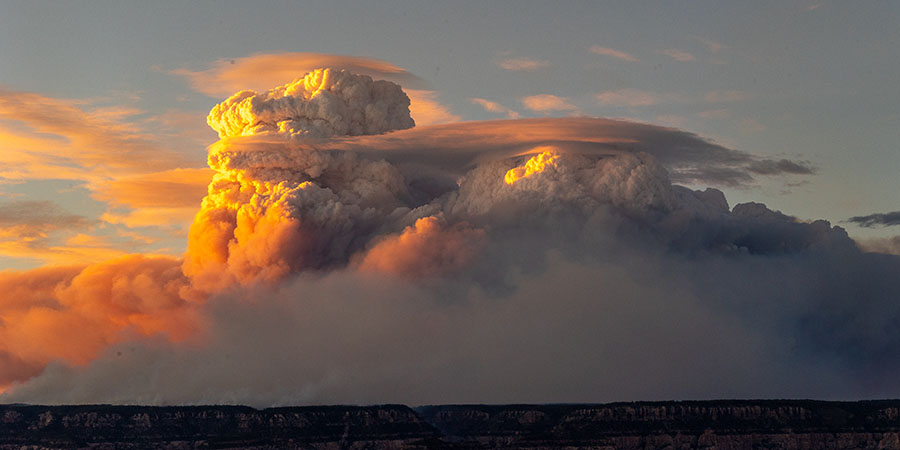
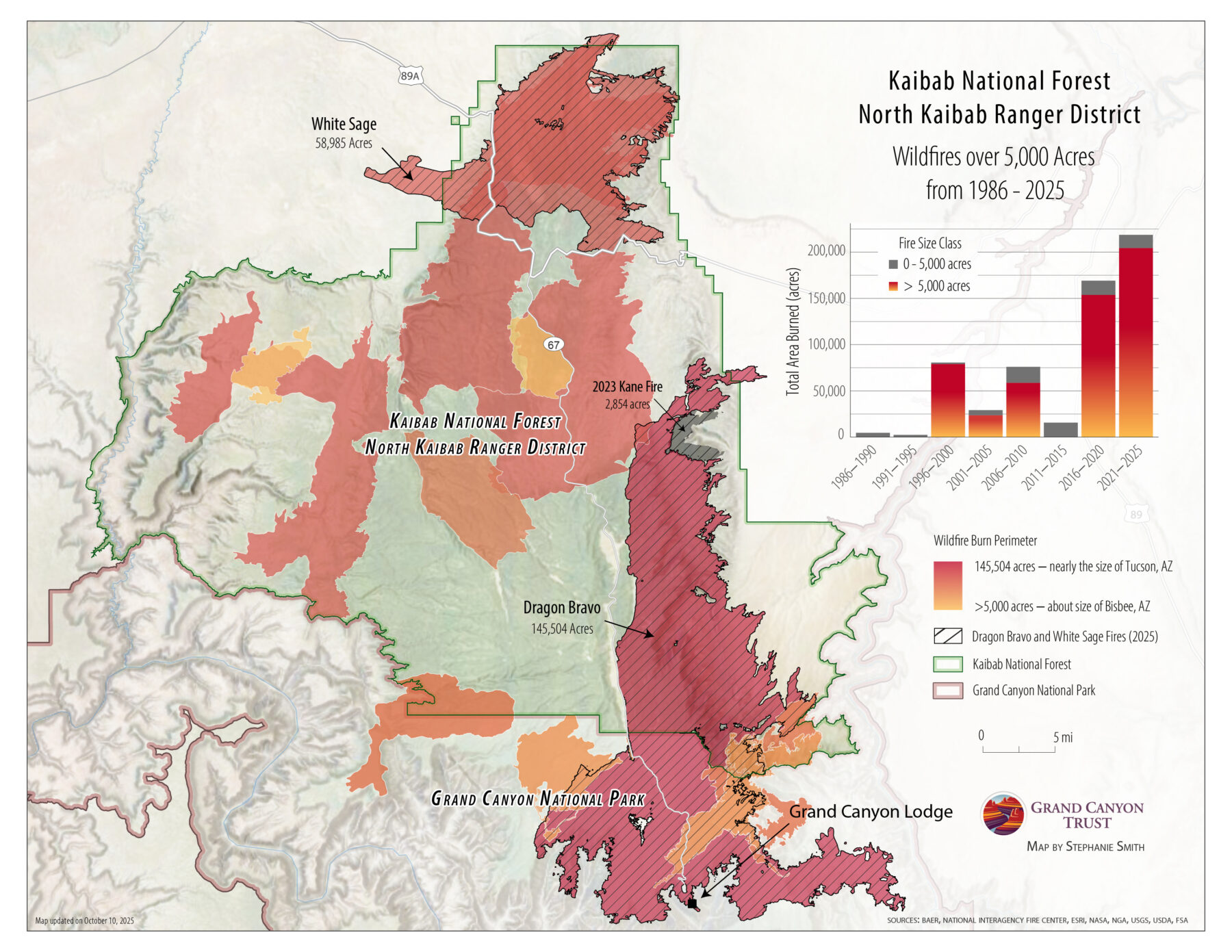
Last summer, the Dragon Bravo and White Sage fires together burned nearly 205,500 acres of North Rim country, primarily on National Park Service and U.S Forest Service lands. Hundreds of residents and visitors evacuated.
More than 1,300 firefighters responded to Dragon Bravo at its peak. One, Hank Hester, died in the line of duty from a heart attack.
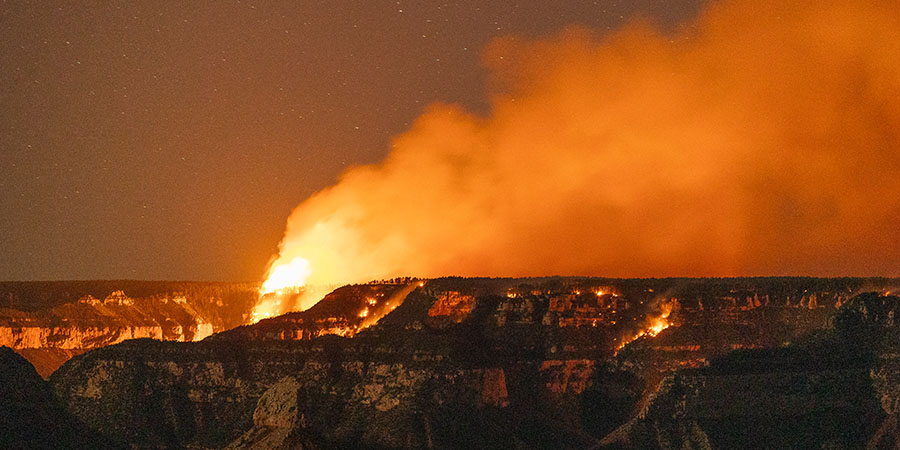
What remains is a changed landscape. “Fire is a natural process and actually necessary for the health of these forests,” Aumack says. “The problem is that climate change and other factors have caused fires to be much larger and more destructive than they used to be. The North Rim fires fit this pattern exactly, unfortunately.”
Among the destruction was the storied Grand Canyon Lodge, which burned to the ground for the second time in its 97-year history. The region’s ecology and economy also suffered. What comes next?
Two fires
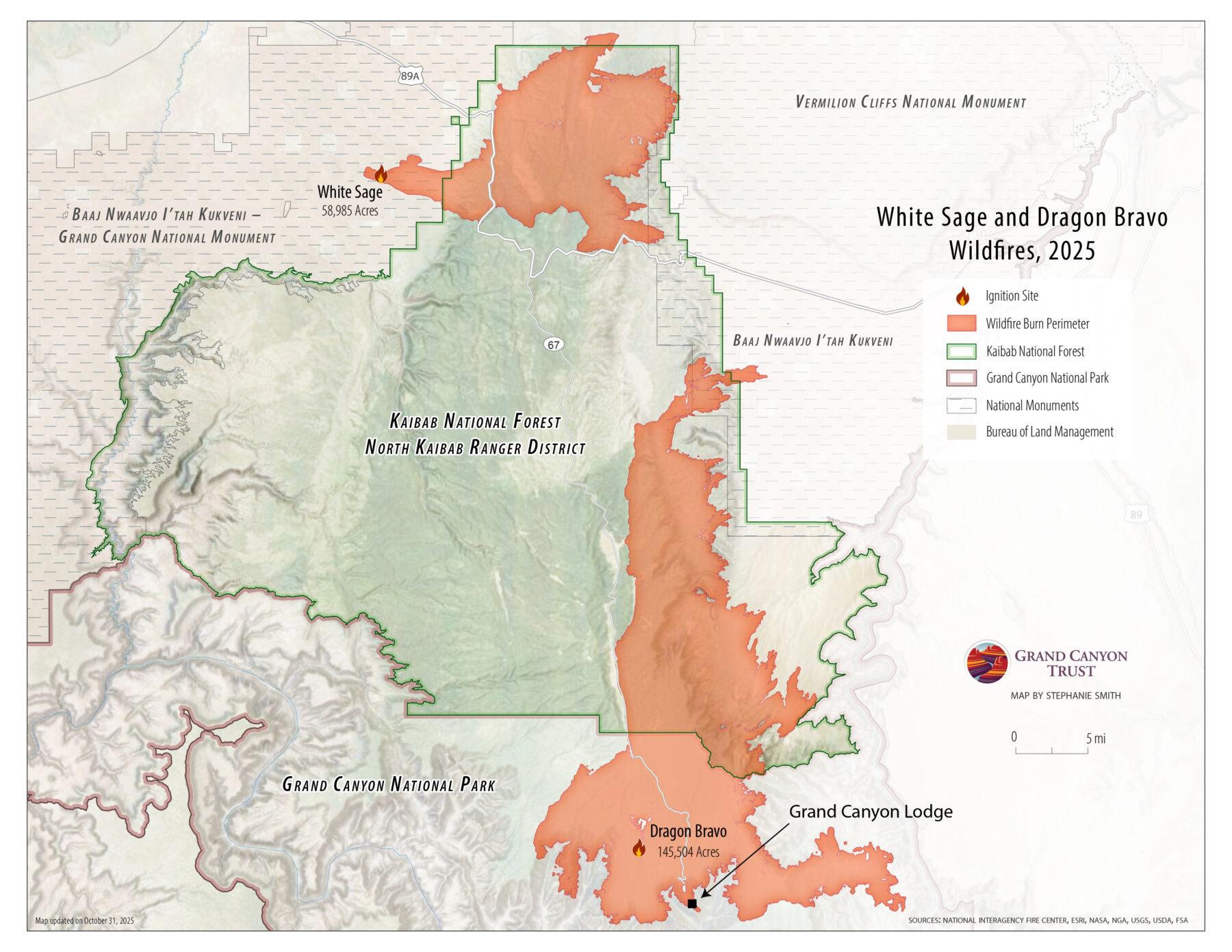 A lightning strike ignited the Dragon Bravo Fire on July 4, 2025. Originally managed by the park service with a “confine and contain” strategy, it grew slowly at first, reaching 59 acres on July 9. That evening, another lightning strike started a fire about 50 miles northwest. Dubbed White Sage, the fire ignited on Bureau of Land Management land and spread eastward onto the Kaibab National Forest.
On July 11, dry, windy weather drove the Dragon Bravo Fire over containment lines. White Sage, threatening Highway 67, had already prompted the evacuation of North Rim tourists and residents. That evening, park service and concessionaire employees also received an alert to leave.
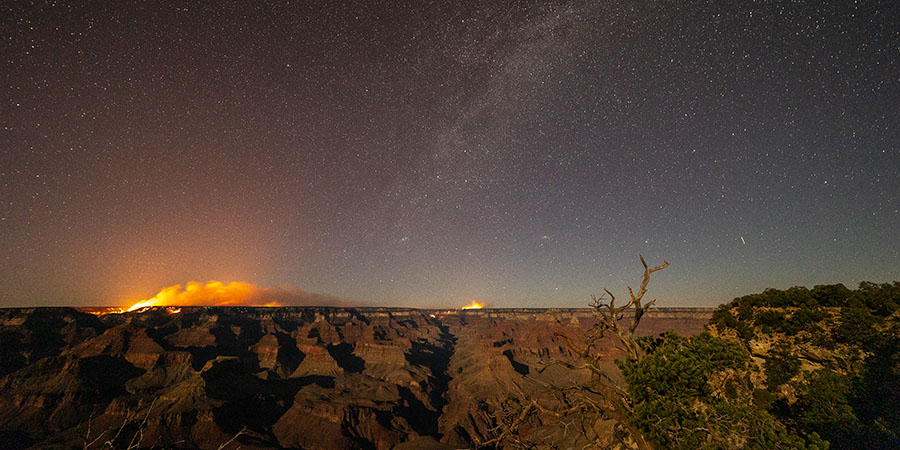
Longtime rancher Justun Jones was among the evacuees. His family homesteads Two-Mile Ranch. “We could sit right there on the front porch and watch the flames,” Jones recalls. The family loaded horses, dogs, a cat, and valued possessions into trucks and “said goodbye to everything else,” Jones says.
It was their second evacuation in five years; the first was during the 2020 Magnum Fire. “You don’t sleep a lot at night,” Jones says. “You don’t know what the fire’s going to do the next day. You’re watching wind patterns you never dreamed you’d pay attention to.”
The Jones’ family home and ranch buildings were spared. But over the weekend of July 12-13, White Sage exploded from 1,000 acres to 40,000, and Dragon Bravo almost quadrupled in size.
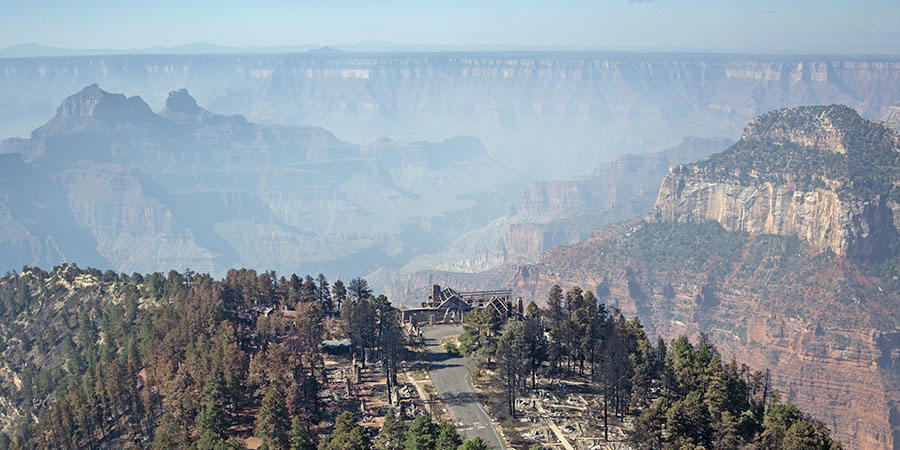
A chlorine gas leak at the park’s water treatment plant forced the temporary evacuation of firefighters and inner-canyon hikers. A mile below the rim, under surreal red skies, Phantom Ranch closed to visitors.
Ultimately 106 park structures burned, including the Grand Canyon Lodge, visitor center, employee housing, and dozens of historic cabins. By the end of July, Dragon Bravo had reached “megafire” status — over 100,000 acres — and was the largest wildfire in the continental U.S.
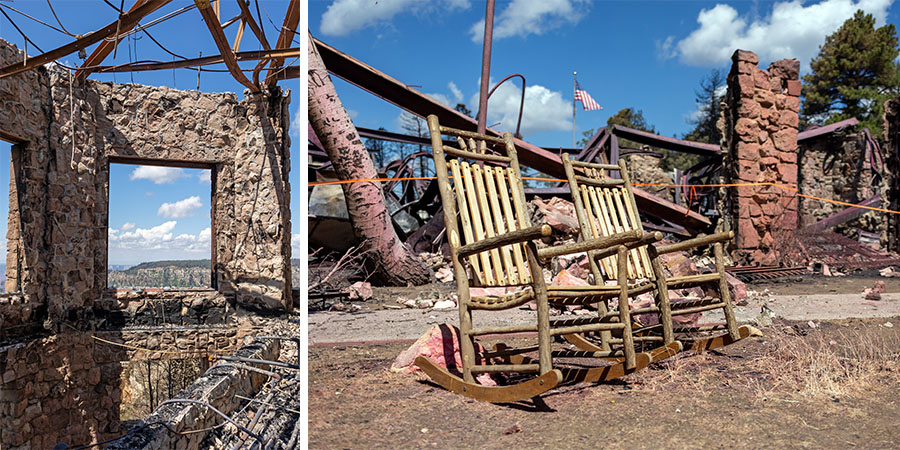
Firefighters contained White Sage in early August at 59,000 acres. Dragon Bravo continued to burn until the end of September.
Assessing the aftermath
Decades of scientific studies show wildfires are essential to forest health. Indigenous peoples have long managed landscapes with fire. Historically, the North Rim experienced light fires every three to five years, judging by scars left in tree rings.
Those fires began to disappear after 1880, in part because total suppression became the goal of land management agencies who sought to protect timber, grazing, and other resources. Today, a combination of historic land management practices and climate change has led to an era of megafires.
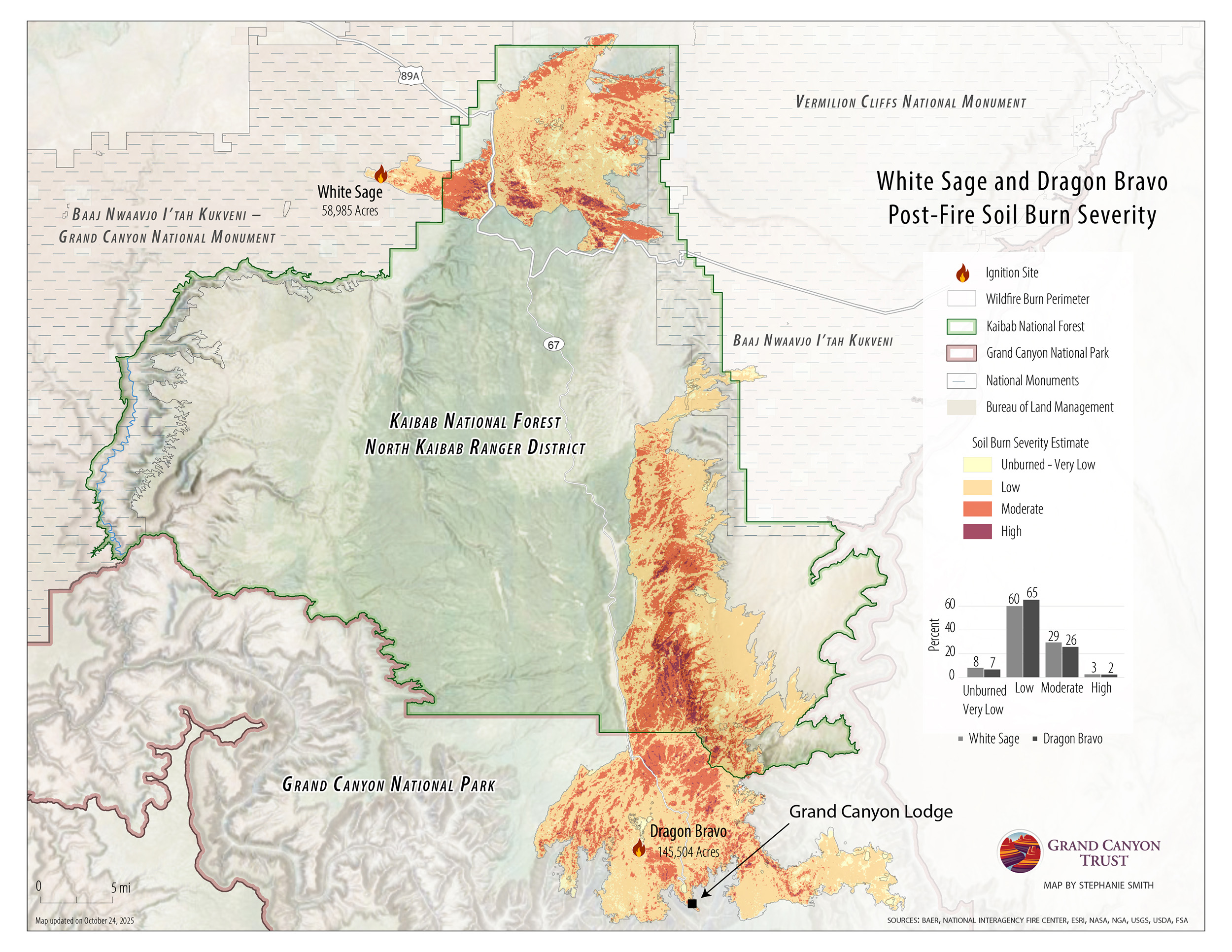
For Dragon Bravo and White Sage, agencies immediately mobilized a group of specialists known as the Burned Area Emergency Response (BAER) team. Reba McCracken, BAER coordinator for the Kaibab National Forest, says it includes biologists, botanists, hydrologists, and soil scientists. “We’ll look at the depth of the ash, the color of the ash, and also things like: how affected were the plants?” she says.
The resulting map shows roughly 70% of the soil in the two fire scars burned lightly or not at all. Two to 3% burned severely. That’s a typical range, McCracken says. In low-severity burns, some plant cover remains on the ground and roots are intact. In high-severity burns, “you’ve lost soil structure almost entirely,” McCracken says. “It feels like dust.”
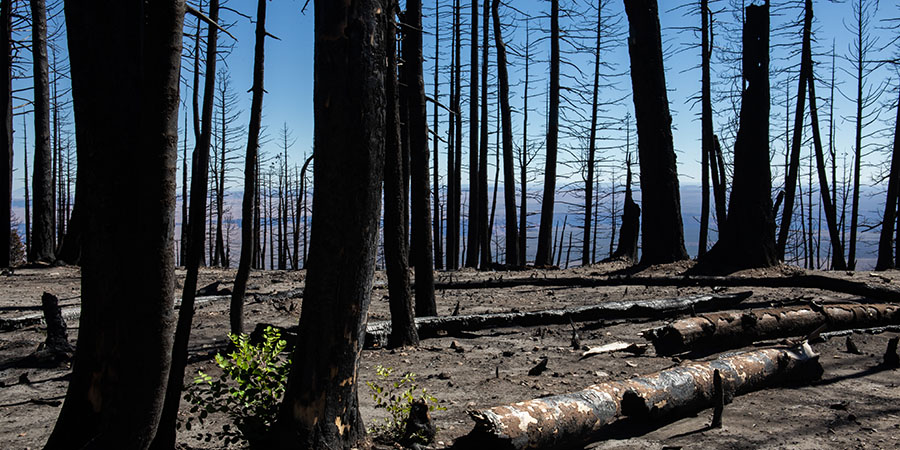
Another survey, RAVG (Rapid Assessment of Vegetation Condition after Wildfire), measures the surviving plant life about a month later. Much of the Dragon Bravo footprint burned under moderate or high severity using this metric. In other words, vegetation died even where soil remained intact.
The bleaker picture shown by this map isn’t a surprise for a fast-moving wildfire, says Patrick Moore, deputy supervisor of the Kaibab National Forest. “A fire can sweep through an area pretty fast and kill all the trees,” Moore explains. “But it went by so fast, it never really sat in one spot and cooked the soil.”
Cerissa Hoglander, the Trust’s Arizona public lands director, says the assessments offer clues to what might regrow after a fire, which depends on multiple factors, such as soil health, seed sources, weather, and what can thrive in the warming climate. She advises closely monitoring invasive plants, such as cheatgrass, and paying special attention to springs and wetlands that might be vulnerable to erosion.
“I’m hopeful,” Hoglander says. “What I’m hopeful for is that in areas of low-to-moderate soil burn severity many of our native species will regenerate.”
Rebuilding the economy
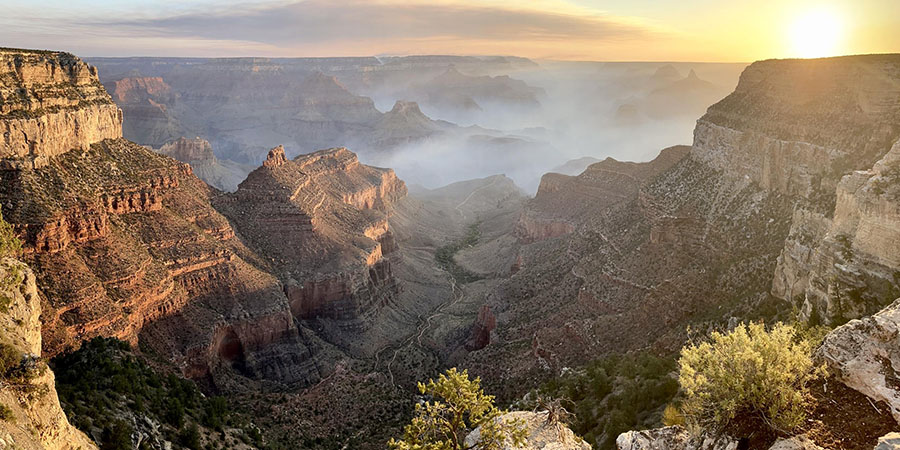
The assessment work is ongoing. Simultaneously, the park service and Forest Service are making plans for restoration and rebuilding.
Grand Canyon tourism dropped 10% in 2025. Park spokesperson Joëlle Baird says the government shutdown and decrease in international tourism were factors, but so were the wildfires, which closed the North Rim for months, halted rim-to-rim hiking, and even discouraged South Rim visitors.
“People saw Grand Canyon was on fire, and they changed their travel plans,” Baird says. “We went from 4.9 million visitors in 2024, and we had about 4.3 in 2025. That was a pretty big loss for us.”
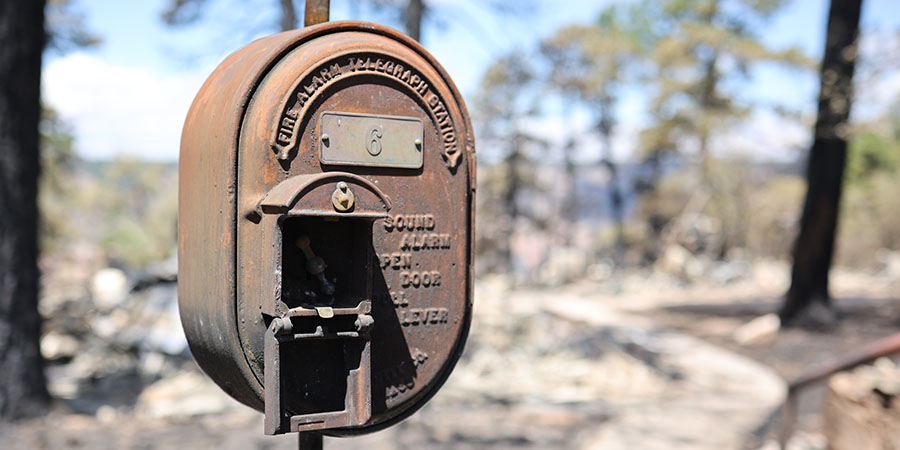
Park officials plan to reopen the North Rim to camping in May 2026. The campground and North Kaibab Trailhead are undamaged. Rebuilding infrastructure, including water and wastewater lines, will take longer.
Baird says the park is considering three scenarios. The first is to rebuild what was lost, “more or less identical buildings” designed for the May-to-October season. The second scenario would make the tourist season year-round, and the third would also enlarge the park’s core footprint.
All of these scenarios will be open for public comment later this year. In the meantime, Baird says, “we’re going to open what we can, when we can, and where we can.”
Jessica Stago, the Trust’s Native America economic initiatives director, says rebuilding opens up possibilities for tribal involvement. “One of the major drivers of people into the region is to experience authentic Native American culture,” Stago says. But the South Rim largely offers outdated depictions of the 11 tribes who have cultural connections to the Grand Canyon.
“You really have to redesign spaces to accommodate a modern version of who we are and that we’re still here in this region,” Stago says. She envisions the revived North Rim could have places designed for ceremony and Native-owned businesses offering Indigenous food and art.
Restoring ecology
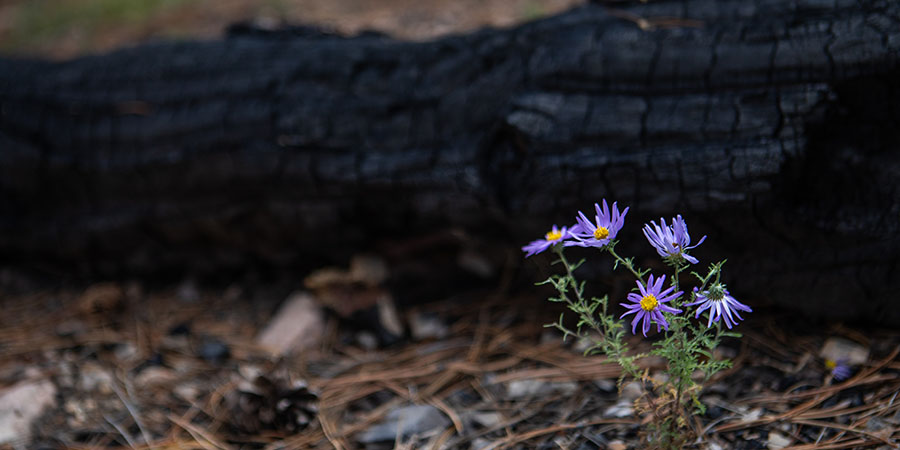
Visitors returning to the North Rim this summer will see a different landscape than they remember. Jones, the rancher, recalls turning a corner and realizing a tree he’d known since childhood was gone. Post-fire floods also reshaped the land. “It changed the wildlife patterns, the cattle patterns, it changed everything,” Jones says. “Not all of it was bad, just different.”
The earliest signs of ecological recovery are often aspen trees. “Recovery is a process that happens naturally in a lot of these systems,” Patrick Moore of the Kaibab National Forest says. “There was smoke still in the air, and aspens were popping up out of the ground.”
Some active restoration projects are planned to assist natural regeneration. A conservation area on the Kaibab National Forest protects a rare, tiny cacti called Pediocactus. Forest Service staff will drop seed on the spot to boost native-plant recovery and keep invasive species at bay. They’ll also repair burned sections of the popular Arizona National Scenic Trail.
On the park side, staff are arranging straw wattles — the natural equivalent of sandbags — in areas with exposed archaeological sites to alleviate flooding.
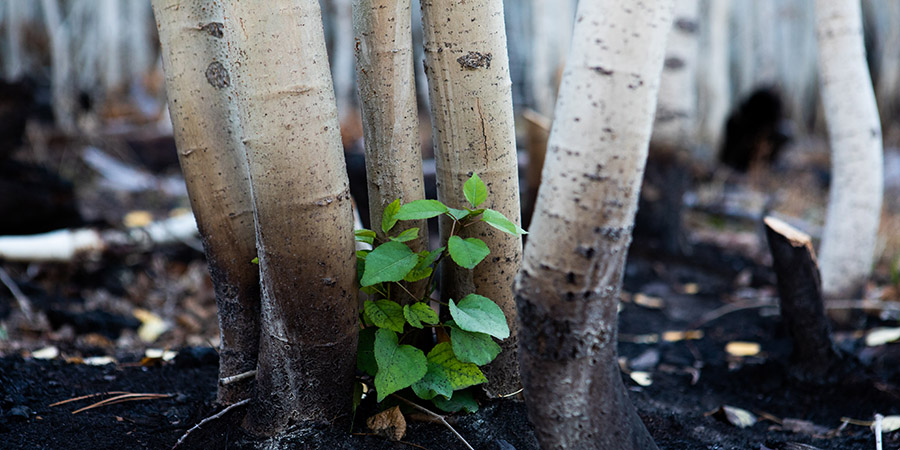
If seed banks aren’t sufficient, land managers can replant trees. It’s a slow process, Moore says. “We have to go out next fall, find trees that are pinecone bearing, climb those trees, get those pinecones, and send them up to our Lucky Peak Nursery in Idaho. Then they’ll grow little baby trees by the millions.”
Some restoration work is done in partnership with nonprofit organizations like the Ancestral Lands Conservation Corps, Grand Canyon Conservancy, and the Grand Canyon Trust. Joëlle Baird says the decision of how and where to rebuild will be shaped by public input.
“We’re listening to these communities,” Baird says. “[They] include municipal governments, but also ranchers and timber industry folks, and folks like the Grand Canyon Trust. They’re at the table with us to help us understand what’s important to them so we can tailor the work we’re doing.”
The future
The irony of wildfire is, in the long run, the best prevention tool is to allow some fires to burn.
“Fires can be, and are in many cases, incredibly destructive,” Ethan Aumack says. “In some cases what’s lost in a fire is lost forever. But fires don’t always create irreversible loss. They’re a natural part of the system.”
As the North Rim recovers, Aumack says it’s worth looking to a future where managed, prescribed, and cultural fires are restored to national forest lands, paired with strategic thinning of trees, done sparingly. It’s complex work that eventually can lessen the risk of catastrophic losses.
“These landscapes are resilient,” Aumack says. “We humans, too, are resilient enough to recover from wildfires and see renewal in ways we couldn’t have imagined.”
Melissa L. Sevigny is a freelance science writer and author of three books, most recently, “Brave the Wild River.”
This story originally appeared in the fall 2025 issue of the Grand Canyon Trust’s Advocate Magazine.