
The CEO of uranium company Energy Fuels bought nearly $1 million in company stock less than a week before Bears Ears National Monument was slashed by 90%.
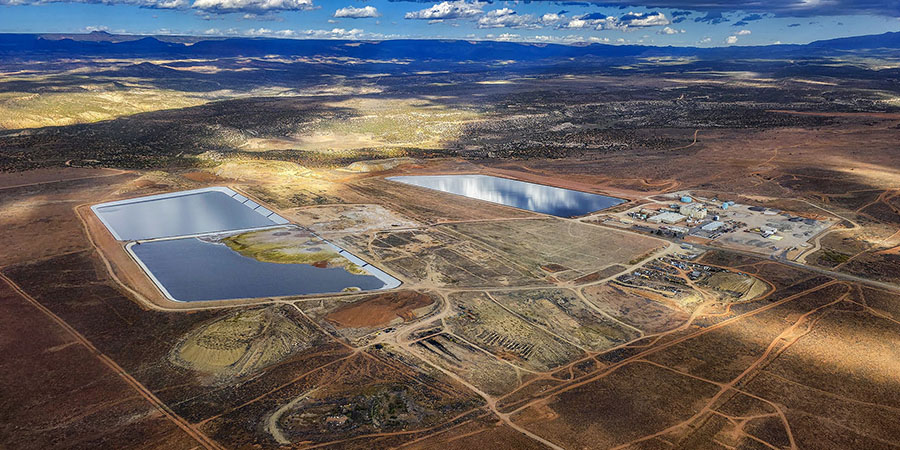
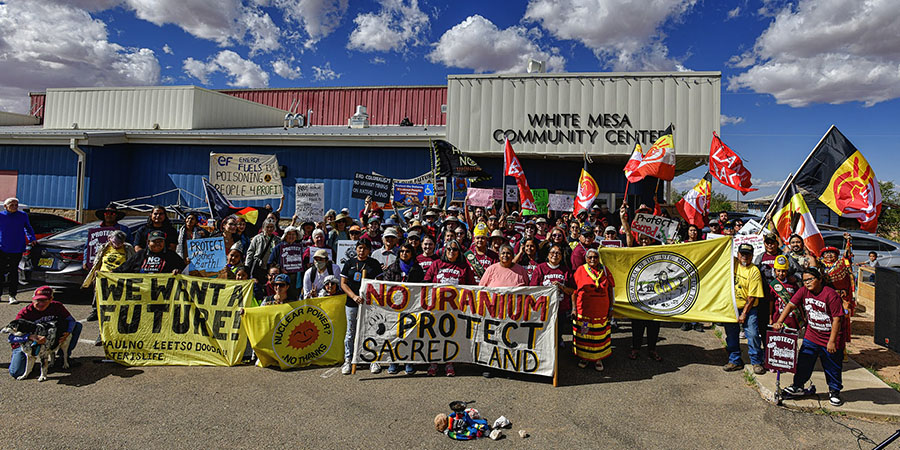
Just one mile east of the (recently reduced) original boundaries of Bears Ears National Monument and just a handful of miles north of the Ute Mountain Ute Tribe’s White Mesa community sits Energy Fuels Resources’ uranium mill. Licensed in 1980, it’s the last operating conventional uranium mill the United States. The original plan was to operate it for 10-15 years, then to close and clean up. More than four decades later, the mill is still operating. Now plans to transform the old mill into a rare earth elements processing plant could keep it up and running for many decades to come.
We’ve written about how when uranium prices crashed, the owners of the mill transformed their business model from uranium ore miller to waste disposal service provider in the 1990s and 2000s. Now Energy Fuels is seeking to morph and grow the mill again as hundreds of millions of pounds of waste sit discarded in the mill’s waste pits.
Riding a wave of investor optimism, favorable federal and state policy, and taxpayer money, Energy Fuels is seeking to build out new rare earth element processing capacity at the mill. This comes as lands unlawfully excised from Bears Ears and Grand Staircase-Escalante national monuments reopen to new uranium mining on September 11, 2026.
Energy Fuels’ history of anti-Bears Ears lobbying
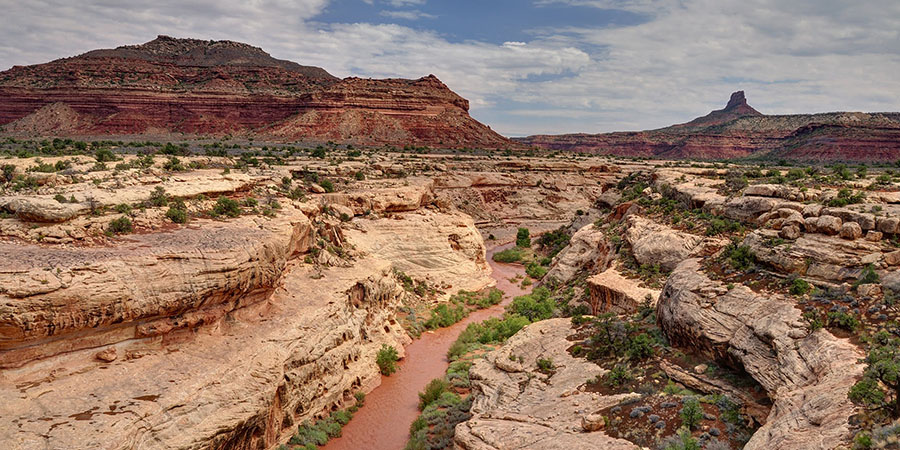
Canada-based Energy Fuels (through its U.S. subsidiary Energy Fuels Resources, USA, Inc.) lobbied for reducing protections for Bears Ears National Monument back in 2017. The company argued that lands within Bears Ears “…could provide valuable energy and mineral resources in the future” and asked that monument boundaries be moved away from its “…existing or future operations.”
Energy Fuels’ 2025 year-end filing with the U.S. Securities and Exchange Commission revealed the company’s concern that “…the Mill could become subject to additional requirements, restrictions and costs…” and “the potential [exists] to significantly impact the Company in the future…” as a result of the 2021 restoration of Bears Ears National Monument’s original boundaries.
As of the end of the second quarter of 2026, Energy Fuels had spent $450,000 lobbying the federal government on “issues related to domestic uranium…” and “…support for critical mineral and rare earth element supply chains.”
Insider trading investigation
Less than a week before the July 13, 2026 proclamation purporting to shrink Bears Ears by more than 90%, Energy Fuels’ CEO, Ross Bhappu, purchased 74,000 shares of the company for nearly $1 million. This represented the largest insider stock purchase in the company’s history and increased his personal stake in the company he runs by more than 40%.
On August 10, 2026, Rep. Jared Huffman, D-CA, and Rep. Maxine Deeter, D-OR , opened an investigation into potential insider trading, writing to Bhappu that “The timing of these stock purchases indicate that nonpublic information was potentially available…”.
Energy Fuels’ rare earth gambit
Energy Fuels has been maneuvering to enter the rare earth element processing, refining, and separation market for at least six years. The company’s plans are now bearing fruit. The new CEO, Ross Bhappu, comes from a rare earth element background, having previously led a company that acquired the Mountain Pass rare earth mine, a facility that has sent lead sulfide sludge for processing and disposal at the mill.
Using a radioactive mineral known as monazite, Energy Fuels has been producing relatively small quantities of an intermediate rare earth product since 2021. This product has to be shipped elsewhere for further refining to separate individual rare earth elements that can be used in electric motors, weapons systems, medical devices, and consumer electronics. The monazite ore the company has been using comes from the southeastern United States, but Energy Fuels has had trouble sourcing enough monazite.
As a result, the company has been seeking to acquire more monazite ore from Australia, Brazil, and Madagascar. Only one of these projects (the Donald in Australia) is under an active contract. The others are still speculative. So far, there has been no opportunity for the public to weigh in on the mill’s rare earth elements ambitions.
Environmental injustice at home and abroad
In Madagascar, Energy Fuel’s Vara Mada Project has been the subject of intense opposition from local communities for years. Detentions, injuries, acts of torture, and even deaths have resulted from government suppression of these protests, attracting the attention of the United Nations Human Rights Council’s special rapporteurs.
The rapporteurs shared concerns with Energy Fuels in a September 2025 letter highlighting human and land rights violations, risks of environmental contamination, and violent repression of public protest.
Local Malagasy communities affected by the proposed project vow to “…never accept the exploitation of mineral sands and monazite on their territory…”. This aspect of Energy Fuels’ rare earth expansion plans has received virtually no media coverage in the English-language press. In June 2026, the affected communities in Madagascar expressed solidarity with Ute Mountain Ute, Diné, and Havasupai communities in the U.S. fighting Energy Fuels’ activities at the mill and the Pinyon Plain and La Sal Complex uranium mines.
Money moves markets
Meanwhile, Energy Fuels has secured private investments totaling $600 million and a separate 20-year $725 million conditional loan from taxpayers backed by the U.S. Department of Defense to secure raw materials and expand its Utah mill.
The company has spent years demonstrating that it can separate small quantities of individual rare earths in the lab, but in order to move beyond the testing phase, Energy Fuels announced in late July 2026 that it had “broken ground” to expand the mill to “bring its rare earth element processing capabilities to a commercial scale.” One Utah regulator characterized the announcement as “a little misleading.”
In fact, the Utah Division of Waste Management and Radiation Control will require that Energy Fuels obtain approval for the expansion. Although the company has filed an application, it has not yet been approved. Details are still emerging, but the expansion will require digging new liquid waste pits, additional storage, and use of chemicals including hydrochloric acid, barium chloride, and caustic soda. Separately, Energy Fuels has applied for a license amendment to accept mixed rare earth concentrates. We still don’t know exactly what those concentrates will contain or where they will come from.
There must be public comment periods on these proposals in the coming months, and we’ll let you know when you can weigh in.
Utah’s nuclear push
All this comes as Utah politicians attempt to position the state as a leader in what they frame as a budding nuclear revival. The Utah legislature and Governor Spencer Cox have been busy boosting new nuclear development and appropriating tens of millions of taxpayer dollars to lure industry to the state.
Utah is a finalist in a national competition to host a “nuclear lifecycle innovation campus” near the Great Salt Lake, which aims to build up the nuclear fuel chain in Utah — from mining and milling to new nuclear power reactors. Agreements to bring new nuclear to the state abound. They include partnering with Valar Atomics and possibly hosting a Canadian test reactor at the recently-conceived Utah San Rafael Energy Lab south of Price.
How will these developments affect frontline communities across the Colorado Plateau who are still dealing with the health and safety impacts from the Cold-War era uranium mining, transport, and milling boom? Shouldn’t hearing community concerns about public health and safety come before committing to expand the Energy Fuels mill? Few are asking these questions, and that’s where your advocacy matters.
Please add your voice to the chorus calling for support of the White Mesa Ute community and protection of the Bears Ears cultural landscape.