
New rules, unresolved water challenges: what it means for the Grand Canyon
The Colorado River will keep flowing through the Grand Canyon for now under the federal government’s new rules for managing the river.
But there are still significant challenges ahead to determine the more important question: What kind of river will flow through the Grand Canyon?
On August 21, 2026, the U.S. Bureau of Reclamation finalized a new plan for managing the Colorado River through 2036. Despite hopes that the rules would help solve the challenges facing the Colorado River Basin for decades to come, the result is a 10-year framework that establishes broad operating parameters while requiring more detailed guidelines to be renegotiated every two years.
The framework is intended in the short term to help the basin navigate severe water scarcity, protect federal dam infrastructure, and encourage agreements among water users. But it leaves many difficult decisions unresolved.
What do the new rules mean for the Grand Canyon?
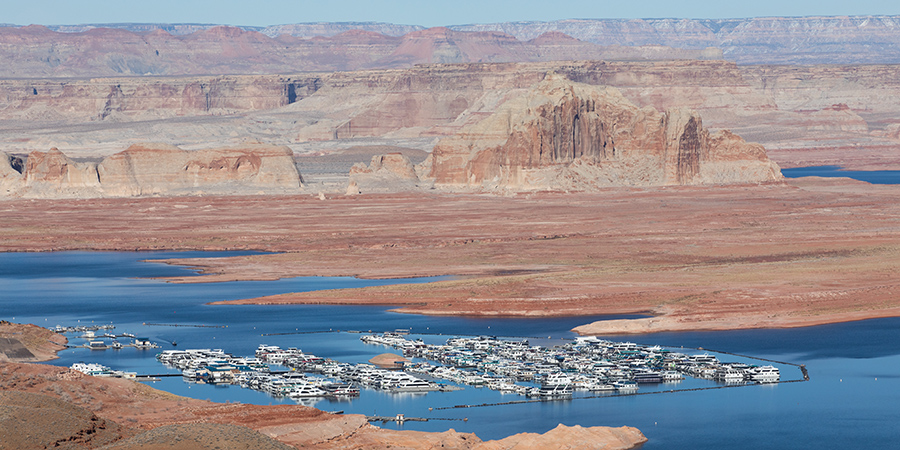
The first set of guidelines, covering 2027 and 2028, puts in place modest water use reductions and reduces releases from Glen Canyon dam to protect water levels at Lake Powell and Lake Mead. Water releases through Glen Canyon Dam will depend on Lake Powell’s elevation, with operations designed to keep the reservoir from falling below 3,510 feet.
For the Grand Canyon, that means that river flows will likely be lower than we’ve seen over the last decade and may be more like flows in 2026 or lower. This is not necessarily bad — low winter flows were common before the dam existed. However, the health of the Grand Canyon ecosystem depends on how and when the river ebbs and flows and the conditions those flows create.
The Grand Canyon needs more than water running through it

Rivers need dynamic high and low flows to function properly. Historically, the Colorado River’s natural flow pattern included high flows or floods in the spring as snow melted, steady but declining flows in the summer and fall, and low flows in the winter.
Since the dam was constructed, high-flow experiments are the only way to recreate natural floods by sending large pulses of water through Glen Canyon Dam, moving sediment, and helping rebuild sandbars and beaches along the river.
Those sandbars are more than scenery. They provide camping beaches and wildlife habitat, help maintain the physical character of the river corridor, and can help protect archaeological resources.
Without high-flow experiments, sandbars throughout the Grand Canyon will continue to deteriorate, leaving beaches, cultural resources, and fish habitat increasingly vulnerable.
The concern is that low reservoir levels and the new operating framework may make these much-needed experiments more difficult (if not physically impossible) to conduct.
Water temperature matters too. The native humpback chub depends on the right river conditions and isolation from nonnative predators, like smallmouth bass, which prey on young fish.
Since smallmouth bass were found below the dam in 2022, water managers have used cold water releases to make conditions too cold for the smallmouth bass to reproduce in the Grand Canyon.
The concern is that the new rules, combined with concerns over less hydropower production at low reservoir elevations, could make it harder to conduct cold water releases, allowing nonnative fish to spread, and further threatening native fish populations.
Is a two-year approach a solution or a delay?
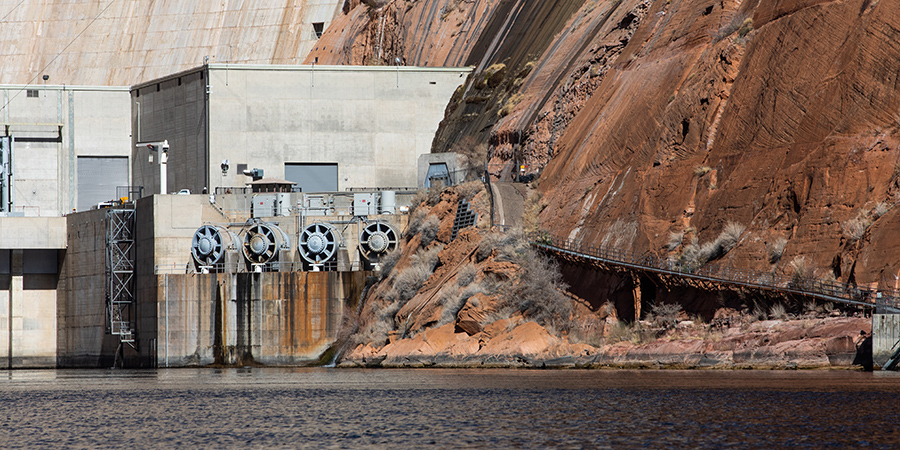
The new framework establishes principles and operating parameters through 2036, along with a process for developing each set of two-year guidelines.
There is a good reason for this flexibility. The Colorado River’s future water supply is uncertain, and hydrologic conditions can change dramatically from one year to the next.
But the underlying problem does not disappear every two years — the basin is using more water than is available.
Water demand still exceeds the river’s available supply in many years, and the reservoirs that once provided a safety net during dry periods remain under significant pressure. The basin must still confront difficult questions: How much water can the Colorado River reliably provide? Who will use less? And how can managers protect the river ecosystem while meeting human needs with a shrinking water supply?
The two-year approach may give water managers time to adapt to changing conditions. But it could also postpone the deeper policy changes needed to make the system sustainable over the long term.
The Colorado River debate isn’t over
Before the ink could dry on the Colorado River’s new rules, Nevada filed a lawsuit challenging the framework and guidelines. The state of Arizona and the Central Arizona Project both filed documents seeking to join the suit. The case is pending in federal court and leaves uncertainty regarding implementation of the new rules.
Meanwhile, communities, water managers, tribes, conservation organizations, and other stakeholders will continue debating how the river’s limited water should be shared and managed.
For the Grand Canyon, that conversation has to include more than reservoir elevations and water deliveries. It must also consider the health of the river itself.
Several questions will be important to watch:
- How can we use the water we have to create dynamic and variable high and low flows in the Colorado River below the dam?
- Will high-flow experiments be possible often enough under low reservoir conditions to provide benefits to Grand Canyon resources?
- What will it take to make cold-water releases available in the short-term to stop the establishment of smallmouth bass and support recovery of native fish?
- How do we bring stakeholders together to protect the long-term sustainability of the Colorado River?
The new rules provide a framework for managing the Colorado River, but they do not resolve the basin’s fundamental imbalance between water supply and demand. The future will require policies that allow the basin to adapt to a shrinking river while protecting the ecosystems that depend on it.