FOR IMMEDIATE RELEASE
Washington, D.C. — Senator Mike Lee’s (R-UT) effort to fast-track an attack on the Grand Staircase-Escalante National Monument Management Plan using the Congressional Review Act (CRA) has failed. The CRA includes a provision that allows the Senate to pass a “joint resolution of disapproval” targeting an administrative action via a simple majority, but it must act within 60 Senate session days after that action is entered into the Congressional Record. Thursday, June 11, was day 60, meaning Senator Lee’s resolution is now subject to the 60-vote filibuster should he attempt to bring it up for consideration. This setback of Senator Lee’s attack on the monument comes the same week as the anniversary of the Antiquities Act, which was used to protect the 1.9-million-acre landscape.
The elected officials leading the effort to attack the Grand Staircase-Escalante National Monument Management Plan, Senator Mike Lee and Rep. Celeste Maloy (R-UT-02), were some of the same members behind the 2025 failed public lands sell-off attempts. Then, as now, their ideas are deeply unpopular and have been fiercely opposed. If the CRA resolution were to pass, the management plan – which sets expectations for how these remarkable public lands will be managed for recreation, camping and outdoor access; collaboration with Tribal Nations; dark night skies; grazing and other uses – would be undone, and the Bureau of Land Management (BLM) would be barred from issuing another plan that is “substantially the same” in the future. This assault on a national monument marked a significant escalation in Congress’ use of the CRA and – if it had been successful – would have led to chaos on the ground.
“Senator Mike Lee’s misguided attack on Grand Staircase-Escalante National Monument has failed. This is a major victory for the millions of Americans who care deeply about the Grand Staircase and for everyone who supports our nation’s wildest public lands and want to see them protected,” said Scott Braden, Executive Director at the Southern Utah Wilderness Alliance. “While together we’ve defeated one major attack, both Grand Staircase-Escalante and Bears Ears National Monuments, as well as the rest of the redrock wilderness in Utah, remain under attack from the Trump Administration and this Republican Congress. The lesson for politicians is clear: Americans cherish their public lands and want to see them conserved for current and future generations to enjoy, not attacked and exploited.”
“Just like the defeat of Senator Lee’s unpopular public land sell-off attempt last year, the dearth of support for this attack on Grand Staircase – Escalante reflects Americans’ fierce love for our public lands,” said Thomas Delehanty, senior attorney with Earthjustice’s Rocky Mountain Office. “No one except extractive industry CEOs wants these special places destroyed. Senator Lee and Representative Maloy should take note.”
“The Utah delegation knows that our national monuments are well-loved by Americans and protecting them is overwhelmingly popular among Utahns regardless of party affiliation,” said Tim Peterson, Cultural Landscapes Director at the Grand Canyon Trust. “The public would not have stood for legislation that gets rid of Grand Staircase-Escalante National Monument outright, so the Utah delegation tried to eliminate the commonsense management plan that affords day-to-day protections to the monument. We’re so grateful that didn’t happen.”
“Sen. Mike Lee and Rep. Celeste Maloy’s failed attempt to overturn the Grand Staircase- Escalante land-use plan was out of step with what Americans want,” said Axie Navas, director of designation campaigns at The Wilderness Society. “The current plan, built on years of engagement with Tribes and local communities, balances the freedom to recreate with traditional uses and conservation in a way that benefits all. The public has made it clear they want these lands protected—and managed—so that future generations may experience Grand Staircase-Escalante as we do today.”
“Grand Staircase-Escalante’s protections are still standing today because people would not let them fall,” said Bobby McEnaney, Director of Land Conservation, NRDC. “This was never really about land management. It was an attempt to make it easier to dismantle every national monument in the country, and that threat has not gone anywhere. Tribes, local communities, and voters saw this attack for what it was and spoke up. We owe it to them, and to the generations who will inherit these lands, to stay in this fight for as long as it takes.”
“While this is a welcome pause, we have no reason to believe Sen. Lee will stop his attack on the country’s national monuments and Grand Staircase,” said Chris Hill, CEO of the Conservation Lands Foundation. “Tens of thousands of people registered their opposition to this particular Congressional power grab–as hundreds of thousands have done over the past several years in support of conserving the country’s public lands. Local communities, business owners, and Tribes support and rely on the balanced management of national monuments and the overwhelming majority of voters in Utah and across western states want their Congress members to protect these places, not sell them off. We are here to make sure that Sen. Lee and other anti-public lands members of Congress cannot ignore the fact that Americans of all political identities don’t want what they’re selling and are fighting like hell to stop it.”
“Today, the Grand Staircase-Escalante National Monument management plan will remain intact, and that’s a testament to the chorus of voices that showed up to protect this incredible landscape from attacks in Congress,” said Cory MacNulty, Southwest Campaign Director for the National Parks Conservation Association. “This management plan is more than a policy document. It reflects years of engagement with communities, Tribes and stakeholders to shape how the monument would be cared for. We know this monument, and all monuments across the nation, still face threats from Congress and the administration. But this is a reminder that public lands should reflect all of us, and people on both sides of the political aisle will continue to show up to protect them.”
“This outcome is bigger than one monument,” said Athan Manuel, Director of Sierra Club’s Lands Protection Program. “Had this effort succeeded, it would have created a dangerous roadmap for dismantling management plans and undermining protections for public lands across the country. Instead, the broad coalition that came together to defend Grand Staircase-Escalante proved once again that Americans will unite to protect the places that belong to all of us. This failed fast-track attack should serve as a warning to anyone looking to weaken our public lands: people are paying attention, and they are prepared to fight back.”
“Veterans and military families understand what it means to protect something that belongs to all Americans. The failure of Senator Mike Lee’s attempt to fast-track an attack on Grand Staircase-Escalante National Monument is an important victory for those who believe our public lands should remain public. Places like Grand Staircase-Escalante are part of our shared national heritage and serve as places where veterans heal, reconnect with their families, recreate, and continue serving their communities. While we are encouraged to see this effort fall short, the broader threats facing Grand Staircase-Escalante, Bears Ears, and other treasured public lands remain very real. Veterans will continue standing up for these places because they are worth protecting for future generations, just as they were for ours.” — Janessa Goldbeck, U.S. Marine Corps veteran and CEO, Vet Voice Foundation
“Lee’s attempt to weaponize the Congressional Review Act to strip protections from Grand Staircase-Escalante National Monument was an affront to all Americans and I’m thrilled he failed,” said Taylor McKinnon, Southwest director of the Center for Biological Diversity. “Like Grand Canyon and Zion, this iconic landscape and its extraordinary animals deserve permanent protection, not to be used as political pawns.”
A compilation of opposition to the use of the CRA on Grand Staircase-Escalante Monument Management Plan can be found here; some highlights include:
- Inter-tribal Coalition members call for stop to proposal to use Congressional Review Act (CRA) to harm Grand Staircase-Escalante National Monument
- The National Congress of American Indians (NCAI) issued a statement and the Navajo Utah Commission of the Navajo Nation Council issued a resolution opposing the use of the CRA resolution.
- Over 40 local businesses in gateway communities like Boulder, Escalante, Tropic, Cannonville, Kanab, and Page (AZ) support the Monument. Local business owners respond in this video montage after Maloy claimed the 2025 Management plan is bad for business.
- Faith Leaders across Utah and the American West oppose the use of the CRA, as do over 125 local, state, and national groups, and over 150 scientists.
- The Salt Lake Tribune, the Grand Junction Sentinel, the Durango Herald, the Las Vegas Sun, the Arizona Daily Star, and the Idaho Statesman have editorialized against the CRA and in support of the Monument. Letters to the editor have gone into papers across the country; particular powerful op-eds include “The strike on Grand Staircase is a strike on my culture and my history” by Autumn Gillard; “Stop Trying to Utah our Nevada” by Dackota York; “GOP leaders say local interests were ignored in the Grand Staircase-Escalante planning process. That’s not what I saw” by Erik Stanfield; “A Utah Monument Comes Under Attack – Again” by Stephen Trimble; and “Congress in gunning for a National Monument in Utah” by Scott Braden.
About Grand Staircase-Escalante National Monument & the Monument Management Plan
Since its establishment, heightened protections for the Monument’s geology, paleontology, wildlife, plant communities, and ancestral sites have succeeded in preserving these unique values for generations to come, and local communities on the Monument’s doorstep have benefited as well. Nearly 30 years later, the numerous benefits of protecting Grand Staircase-Escalante are clear: the Monument preserves a remarkable ecosystem at the landscape level and sets the stage for future discovery about human, paleontological, and geological history on the Colorado Plateau.
On December 4, 2017, President Trump ignored millions of public comments and unlawfully eliminated large swaths of the Monument, slashing it by 47 percent – roughly 900,000 acres. Thankfully, on October 8, 2021, President Biden signed a proclamation restoring Grand Staircase-Escalante National Monument to its full, original boundaries. In 2023, BLM began developing a new management plan for the full Monument. As a part of that work, the BLM engaged in extensive outreach to Tribal Nations, the State of Utah, local governments, stakeholders (including local outfitters, guides, ranchers, and utilities), and the public. During the planning process, BLM received overwhelming support from throughout Utah and the nation for a holistic, conservation-based management plan worthy of this remarkable place.
In August 2023, a Federal District Court Judge in Utah dismissed lawsuits brought by the state of Utah and others challenging President Biden’s use of the Antiquities Act to restore the boundaries of Grand Staircase-Escalante and Bears Ears national monuments. The state and other plaintiffs quickly appealed that decision to the Tenth Circuit Court of Appeals, which held oral argument on September 26, 2024, and may issue a decision at any time. Conservation organizations intervened on behalf of the United States to defend President Biden’s restoration of the Monuments, as have four Tribal nations.
National monuments are overwhelmingly popular. Seventy-five percent of Utah voters support the President’s ability to protect public lands as national monuments. Three in four Utah voters, including a majority of Republicans, want to keep Grand Staircase-Escalante as a national monument.
About the Congressional Review Act (CRA)
The CRA is a federal statute enacted in March 1996 that requires federal agencies to submit “rules” to Congress for a mandatory review period “before they may take effect.” If Congress votes to overturn, or “disapprove,” the rule, it “may not be reissued in substantially the same form. . . .” The BLM has long maintained that its land management plans are not “rules” subject to the CRA. Other federal land management agencies, including the U.S. Forest Service and National Park Service, have similarly not submitted their land management plans to Congress under the CRA.
However, emboldened by a series of non-binding Government Accountability Office (GAO) opinions, Republican members of Congress have embraced the novel theory that federal land management plans are in fact “rules” subject to the CRA. This year, Congress has passed seven CRA resolutions overturning previously finalized land management plans or other types of public lands management decisions. The GAO issued an opinion regarding the Grand Staircase-Escalante Monument Management Plan on January 15, 2026.
- While overturning the Grand Staircase-Escalante Monument management plan would not change the boundaries of the monument or alter President Biden’s proclamation establishing the monument, it is a serious threat with potential implications for all national monuments.
- Monument management plans set expectations for how the land will be managed for wildlife, outdoor access, dark night skies, grazing, and other uses. The Utah delegation’s gambit threatens that certainty. Using the CRA to overturn the Grand Staircase-Escalante management plan disregards years of public input on how these lands are managed for the public, including hunters, hikers, scientists, ranchers, and others who hold permits to use public lands inside the monument.
- Congress is ignoring Tribal Nations. Multiple Native American Tribes are connected to Grand Staircase-Escalante National Monument. The Grand Staircase-Escalante Inter-Tribal Coalition advocates for the conservation of their ancestral lands and for the continued protection and preservation of the cultural and environmental resources found within the monument. Tribes provide deeply valuable perspectives related to the management of Monument lands and cultural resources that tell the story of their peoples, and are integral to the history of the United States, and should be consulted before any changes are made to the Monument’s management plan.
Photos for media use
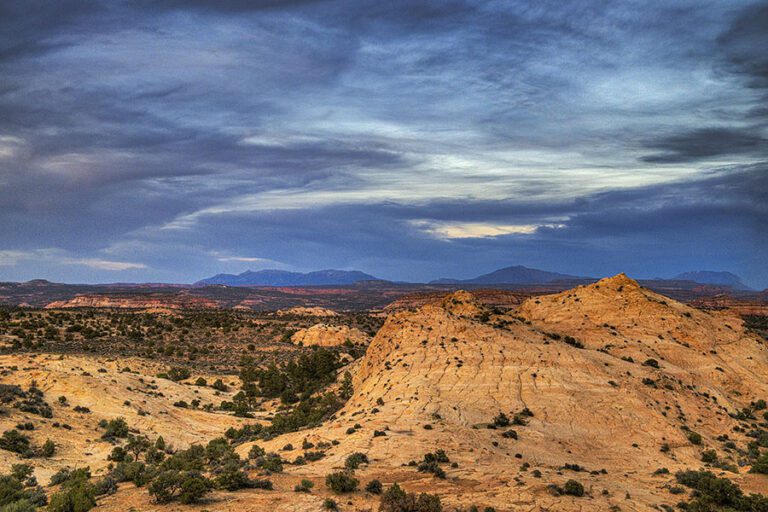
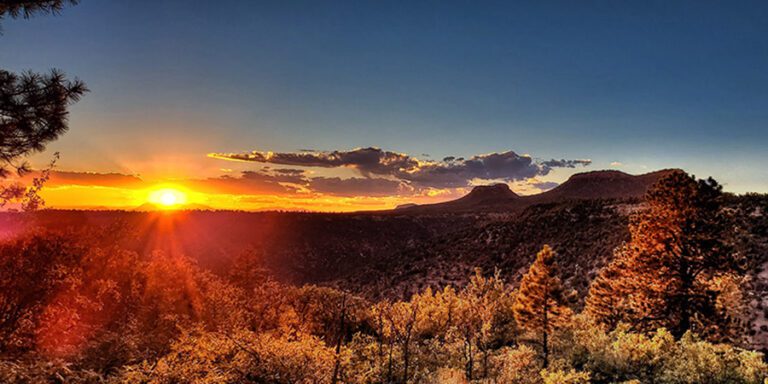
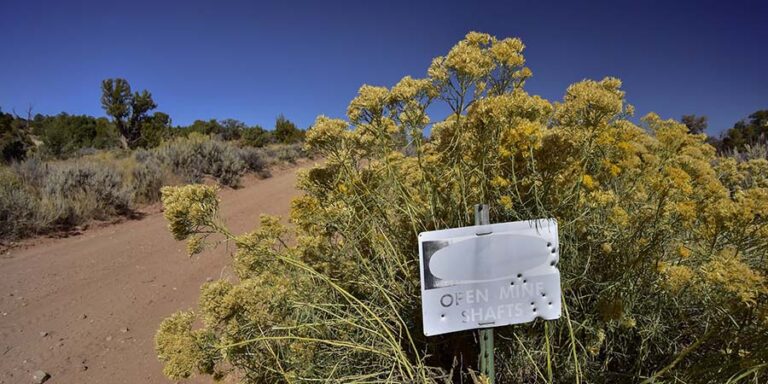
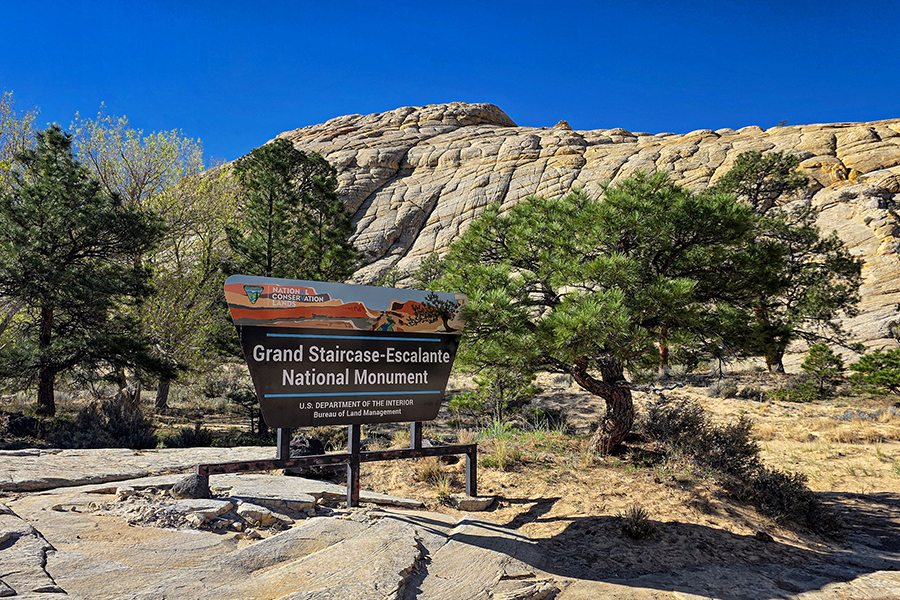
See a photo gallery of Grand Staircase-Escalante National Monument
Images may be used royalty-free by members of the media for reporting on Grand Staircase-Escalante National Monument with proper credit to the photographer.
Additional Information
- March 4, 2026 Press Release – Senator Lee, Rep. Maloy Introduce Joint Resolution to Undo Grand Staircase-Escalante National Monument Management Plan
- February 26, 2026 Press Release – Senator Lee formally begins process to fast-track the destruction of Grand Staircase-Escalante National Monument in Utah
- The Grand Staircase-Escalante National Monument Inter-Tribal Coalition who have spoken against using the CRA on the Monument Management Plan
Contacts
Grant Stevens, Communications Director, Southern Utah Wilderness Alliance (SUWA); (319) 427-0260; grant@suwa.org
Keri Gilliland, Senior Communications Manager, The Wilderness Society; (303) 386-2243; kgilliland@tws.org
Perry Wheeler, Earthjustice, (202) 792-6211, pwheeler@earthjustice.org
Tim Peterson, Cultural Landscapes Director, Grand Canyon Trust; (801) 550-9861; tpeterson@grandcanyontrust.org
Andrew Scibetta, NRDC, (202) 289-2421; ascibetta@nrdc.org
Kris Deutschman, Conservation Lands Foundation, 505-498-0212; kris@conservationlands.org
Brian Willis, Sierra Club; 202-253-7486; brian.willis@sierraclub.org
Caitlyn Burford, Senior Communications Manager, National Parks Conservation Association, cburford@npca.org, 541-371-6452
Taylor McKinnon, Center for Biological Diversity, (801) 300-2414, tmckinnon@biologicaldiversity.org