The U.S. Department of Interior announced a 30-day extension to comment on the Draft Environmental Impact Statement (DEIS) for a proposed ban on all new uranium mining claims within public land watersheds that drain directly into Grand Canyon National Park. If you have not yet done so, please send your comments supporting Alternative B by the new May 4 deadline.
Comments may be sent to: NAZproposedwithdrawal@azblm.org

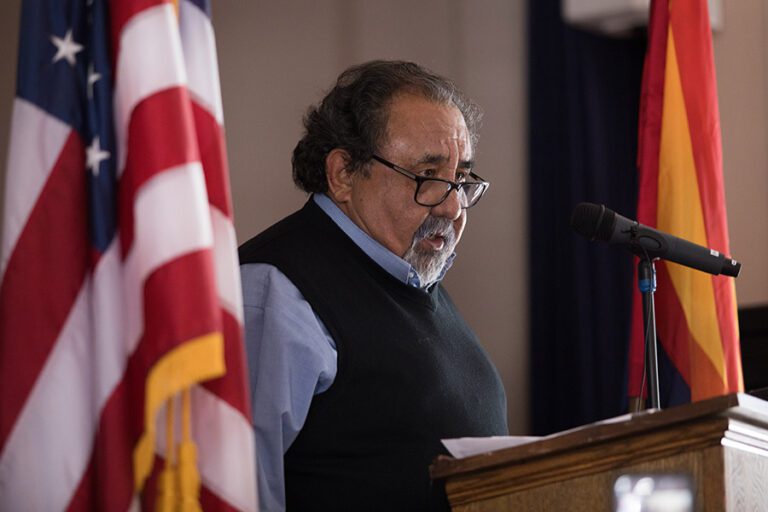
L to R: Roger Clark, Coleen Kaska, Loretta Jackson-Kelly, Hertha Woody, Congressman Raul Grijalva, Edmond Tilousi, Roland Maldonado
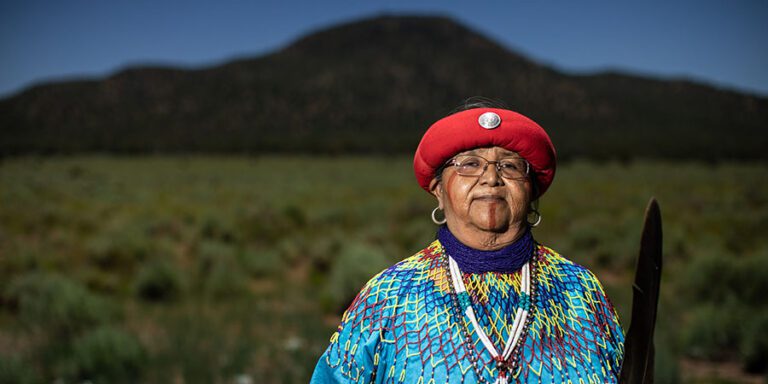
During the week of April 4, the Trust helped organize meetings between tribal leaders and Interior Department officials and legislators. Our purpose was to educate key decision makers about concerns shared by those who have lived in and around the Grand Canyon for centuries. Edmond Tilousi, Havasupai Vice Chairman, and former councilwoman Coleen Kaska spoke about how uranium mining is threatening their sole source of drinking water and destroying sacred sites such as Red Butte, their place of emergence. Loretta Jackson-Kelly, Hualapai Cultural Preservation Director, told government officials that uranium mining conflicts with their tourism enterprises, which are the main sources of revenue for her people. Kaibab-Paiute representative Roland Maldonado said that mining will harm their market for trophy deer and elk hunting.
The group met with Will Shafroth, Acting Assistant Secretary for Fish & Wildlife and Parks, and top officials from the Bureau of Land Management and National Park Service. We also briefed staff of the Senate Committee on Energy and Natural Resources and the offices of Senators Tom (D-NM) and Mark Udall (D-CO), Feinstein (D-CA), Boxer (D-CA), and Bingaman (D-NM). Newly seated Arizona Congressman Paul Gosar (R-CD1), whose district includes much of the proposed withdrawal area, said he needed more time to study the DEIS before taking a stand. In contrast, Arizona Congressman Raúl M. Grijalva (D-CD7) reaffirmed his abiding support for the ban as he warmly welcomed tribal leaders into his office.
Strong letters of support for the proposed ban are rolling into Bureau of Land Management offices (please see Broad-based support builds for 1 million acre withdrawal at Grand Canyon). In addition, the Arizona Game and Fish Commission recently renewed its support for the proposed mining ban. The habitat branch chief for the Department of Game and Fish told commissioners that mining and road building activities could threaten critical habitat for mule deer, pronghorn antelope, elk, and desert bighorn sheep (please see Az Game and Fish Dept. votes to oppose uranium mining near Grand Canyon).
In what stands to be a critically important industry to weigh in, the Arizona Tourism Alliance (ATA) recently sent a letter voicing “…our strong support of your proposal for a 20-year ban on new uranium mining claims on more than one million acres of public lands surrounding Grand Canyon National Park.” The ATA and its partners act as a “catalyst to generate support and understanding of the positive economic impact tourism provides for all citizens of Arizona.” Their letter to Secretary Salazar said: “The Grand Canyon is a World Heritage site and Arizona’s preeminent attraction for both international and domestic visitors. It is also a critical driver for the Arizona economy. Visitation to the Grand Canyon generates more than $687 million annually in direct, indirect, and induced revenues, and provides the foundation for more than 290,000 statewide tourism-related jobs, and 12,000 full-time tourism-related jobs in northern Arizona.” (Please see Arizona Tourism Alliance supports 20-year uranium mining ban).