Home
Become An Activist Donate /
Membership
Sitemap
Help
Email a Friend Print This Page
Join Grand Canyon Trust Donate to the Grand Canyon Trust
Programs
Air Quality and Clean Energy
San Juan Power Plant (Back to Air Quality and Energy Program Index)

San Juan Power Plant
© by Rick Moore
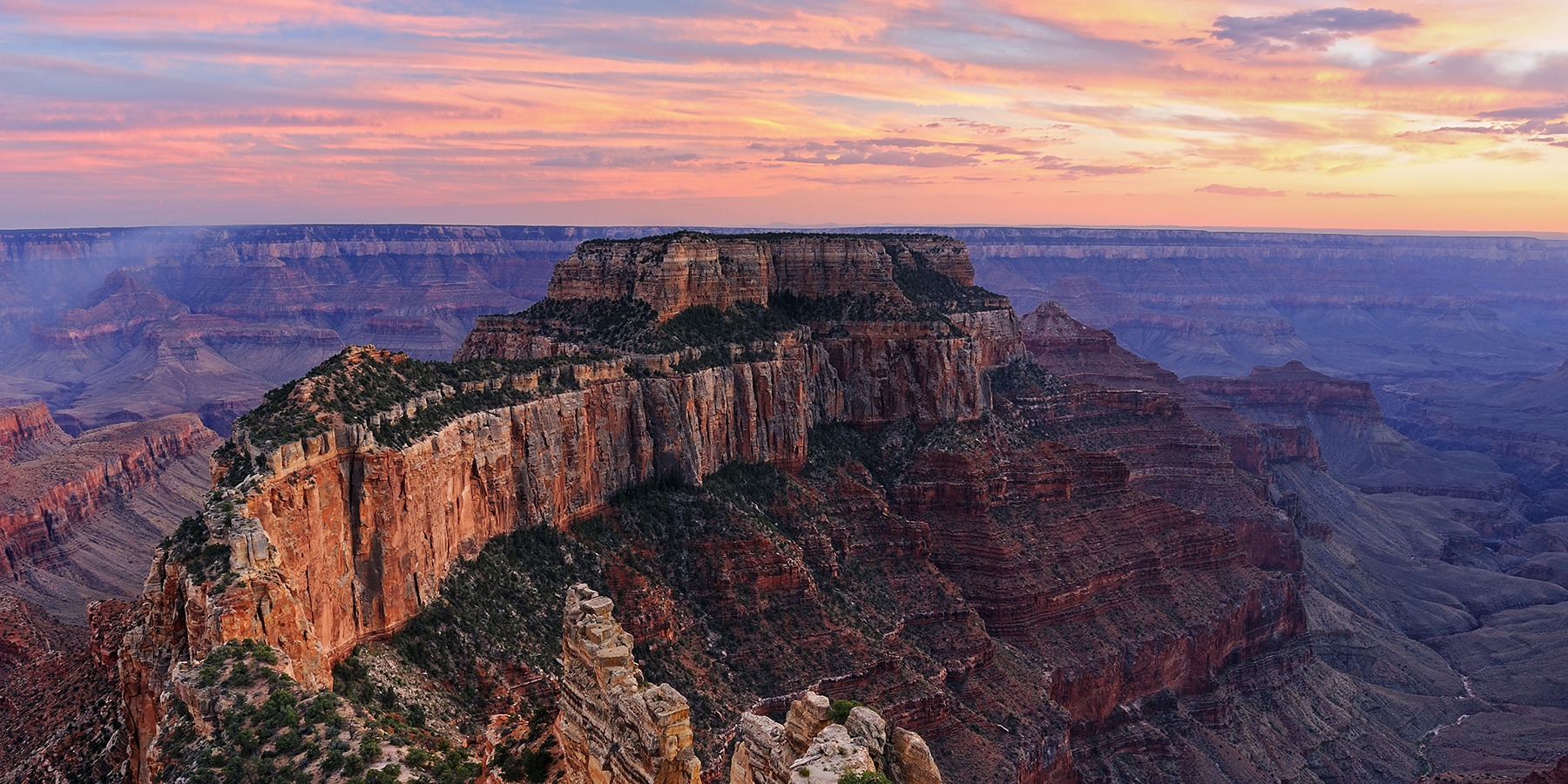
The Four Corners region, where Arizona, Colorado, New Mexico and Utah join, is a spectacular part of the Colorado Plateau. Red, yellow, and white sandstone domes and buttes, black volcanic necks of eroded volcanoes, gray and black badlands, and piñon-covered mesas contrast with a background of towering, snow-capped mountains. Located in the middle of this breath-taking landscape, the San Juan Generating Station--a four-unit, 1,600-megawatt coal-fired power plant--dumps about 14 million tons of carbon dioxide, 21,000 tons of sulfur dioxide, and 28,000 tons of nitrogen oxides and 751 pounds of mercury into the Four Corner's air shed. Combined together, every year the San Juan power plant and the nearby Four Corners power plant emit more than 120,000 tons of sulfur dioxide and nitrogen oxides (2003 EPA data).

Mesa Verde, home of Mesa Verde National Park, Shiprock, sacred to Native Americas, and the La Plata and San Juan mountains are frequently shrouded in a yellowish-brown haze reminiscent of urban areas like Albuquerque, Phoenix, or Salt Lake City. Almost half of the degraded visibility at Mesa Verde National Park is attributable to sulfates and nitrates like those spewed from the San Juan power plant. Incredible as it may seem, the nitrogen oxide pollution from San Juan is roughly equivalent to the emissions from 1.5 million cars.

According to the 2000 Toxic Release Inventory data collected by the EPA, San Juan discharges 751 pounds of mercury into the Four Corner's air every year. One gram of mercury (there are 453 grams of mercury in a pound) can make the fish in a 15-acre lake unfit for human consumption. Research released by EPA in January 2004 found that 630,000 infants--twice the number the agency had previously thought--are born in the United States each year with blood mercury levels higher than 5.8 parts per billion, which is EPA's level of potential concern and the level at which the risk of poor brain development is doubled. The San Juan River, McPhee Reservoir, and Navajo Reservoir, all of which are located in the Four Corners region are under mercury advisories.


San Juan Haze
© by Rick Moore

More problems loom on the horizon for the Four Corners region. The San Juan plant accounts for roughly 23 percent of the nitrogen oxide emissions in the area. The Four Corners power plant contributes an additional 48 percent. Nitrogen oxide is a necessary component for the creation of ozone. In the spring of 2000, the New Mexico Environmental Department (NMED) informed residents that the Farmington area may soon exceed its ozone limits. In fact, NMED monitors indicate that the ozone level in the Farmington area exceeds the level in Albuquerque. Ozone is an irritating, reactive molecule that can damage forests and crops; degrade nylon, rubber, and other materials; and cause respiratory problems including tissue decay, the promotion of scar tissue formation, and cell damage by oxidation. It can also create more frequent attacks for individuals with asthma, cause eye irritation, chest pain, coughing, nausea, headaches, and chest congestion and discomfort.

On May 16, 2002, the Trust, along with the Rio Grande Chapter of the Sierra Club, filed a citizen's lawsuit against Public Service Company of New Mexico for violations of the Clean Air Act at the San Juan power plant. The goal of the action is to significantly reduce pollution from the San Juan by requiring the owners to install modern-day pollution controls, and to also penalize the company for violating the law.

After an initial phase of document review the Trust and Sierra Club filed a motion to establish the groups had "standing" to bring the action. Local members of both groups submitted affidavits to the court explaining how the pollution from San Juan adversely affected their lives. PNM opposed the motion, but on May 1, 2003 the court issued an important ruling finding the groups had standing.

A three-day trial was held in Santa Fe, New Mexico on September 17, 2003, and on February 2, 2004 Judge Black rendered a decision rejecting the illogical argument put forth by PNM that San Juan’s own air pollution monitors could not be used to prove the plant was violating the pollution limits set forth in its permit. PNM’s monitors show that the plant exceeded its opacity limit more than 60,000 times in the past few years. (Opacity is the density of pollution coming from the plant’s smokestacks and it closely correlates with the amount of particles and gases emitted by the plant -- pollutants that have been linked to human health problems.)

PNM argued that although its state-of-the-art continuous opacity monitors were specifically designed to measure the opacity of pollution emitted by San Juan, violations could only be determined by a person “eyeballing” the plume. Of course PNM had only performed one such inspection, for only six minutes, in the last three years.

The court rejected this argument, noting that similar opacity monitors are used to “calibrate” the tester’s eyeballs. The court also relied on a letter from the New Mexico Environment Department that said PNM’s opacity monitors – not visual inspections of the plume – are the appropriate method for determining compliance with the state’s permit.

Based on testimony given at the trial by PNM employees and documents in PNM’s own files, the Trust and Sierra Club’s attorneys identified numerous additional violations, and subsequently sent a notice of intent to file a second enforcement action against San Juan. The April 2004 notice letter contains four allegations:

  • PNM has knowingly purchased and burned coal with an ash content well in excess of the design specifications of the boilers and exceeding the ability of San Juan’s air pollution control equipment to govern the emissions of ash and other pollutants.
  • PNM has knowingly operated San Juan as a “load following” facility, even though it was designed as a “base load” facility, something the plant and its pollution controls were not designed to do and causing an increase in emissions.
  • PNM has continued to violate the opacity limit in its permit after the Trust and Sierra Club filed their complaint in 2002.
  • PNM has violated and continues to violate Clean Air Act regulations by failing to submit true, accurate, and complete annual compliance certifications for the plant.

Soon after the April notice letter was sent, the Trust scored a second major victory when PNM filed a formal statement in federal district court On May 26th acknowledging that San Juan has violated the opacity limit in its air quality permit more than 42,000 times. The admission of the violations by PNM clears the way for the court to determine what the company must do to comply with the Clean Air Act and the amount of a civil penalty PNM must pay fouling the air over the Four Corners region.

In August 2004, the Trust, Sierra Club, PNM and the New Mexico Environment Department (NMED) began negotiations to determine if a mutually acceptable agreement could be reached to resolve the issues in the enforcement action and in a separate draft compliance order issued by NMED. As of late 2004, the second enforcement action contemplated in April notice letter had not been brought.

GCT Links
San Juan Power Plant Pictures

March 10, 2005 agreement press release  (PDF)
February 2, 2004: Court Decision (43KB PDF)*
February 5, 2004: Court Decision Press Release (129KB PDF)
October 16, 2003: Albuquerque Journal: "Air Monitor Data Admissible" (31KB Word Doc)
October 15, 2003: GCT Press Release on Court Ruling
May 16, 2002: GCT Press Release Announcing Lawsuit

Non-GCT Links
Sierra Club
New Mexico Environment Department Air Division
San Juan County Ozone Information
Public Service Company of New Mexico


(Back to Air Quality and Energy Program Index)


More About PDF Files
Depending on how your browser and other software are configured, left-clicking the above link will produce different results. Such a click may result in the file being viewed within a new browser window. To ensure a download, using Windows, right-click (Mac - Command-click) the link and choose 'Save Target As...'. To get Adobe Acrobat Reader software for free, Click Here.


Return to top


Grand Canyon Trust
2601 N. Fort Valley Road, Flagstaff, Arizona 86001
Phone: (928) 774-7488 • Fax: (928) 774-7570
Email: Contact Us

Privacy Policy

Copyright © Grand Canyon Trust. All rights reserved.
Site by Joan Carstensen Design and
indigo8