The American West has warmed 70 percent more than the planet as a whole, according
to a new analysis in a report released today by the Rocky Mountain Climate Organization
(RMCO) and the Natural Resources Defense Council (NRDC). The West’s most pronounced
temperature increase is in the Colorado River basin, which has warmed more than twice as much
as the global average, with effects that put at risk a major water supply for over 30 million
people from Denver to Los Angeles.
According to the report’s new analysis of temperature data, the last five years, 2003 through
2007, in the 11 western states were 1.7 degrees warmer than the region’s 20th century average.
That is 70 percent more than the global increase of 1.0 degree, measured in the same way.
The West’s warming has been greatest in the Colorado River basin, covering parts of seven
states, where the last five years were 2.2 degrees warmer than the 20th century average. That is
the greatest increase in temperatures in the United States outside of Alaska. Across the West, the
increases in temperature are linked to less snowfall, smaller snowpacks, and earlier snowmelt,
affecting the 70 percent of western water supplies that come from snowmelt. Particularly
vulnerable is the Colorado River, which is the major source of water in the West’s arid and semiarid
interior.
“Scientists have been saying that heat-trapping gases will make the West hotter and drier, and
our analysis shows that the changes are already well underway,” said Stephen Saunders,
president of RMCO and one of the report’s principal authors.
“Global warming is hitting the West hard,” said Theo Spencer of the Natural Resources Defense
Council (NRDC). “It is already taking an economic toll on the region’s tourism, recreation,
skiing, hunting and fishing activities. The speed of warming and mounting economic damage
make clear the urgent need to limit global warming pollution.”
The report, “Hotter and Drier: The West’s Changed Climate,”(pdf) also includes similar temperature
analyses for each of the western states, showing that the most recent five years in Arizona was
2.2 degrees warmer than the 20th century average; in California, 1.1 degrees warmer; Colorado,
1.9 degrees warmer; Idaho, 1.8 degrees warmer; Montana, 2.1 degrees warmer; Nevada, 1.7
degrees warmer; New Mexico, 1.3 degrees warmer; Oregon, 1.4 degrees warmer; Utah, 2.1
degrees warmer; Washington, 1.4 degrees warmer; and Wyoming, 2.0 degrees warmer. The
differences in the warming are consistent with scientific projections that the interior West will
warm more than coastal areas.
The report also includes a new analysis showing that the snowpacks that feed the Colorado River
are melting quicker in recent springs.
Drawing on 50 scientific studies and 125 other government and scientific sources, the report
broadly documents that climate change is having a greater effect on the West than on any other
part of the United States outside Alaska, including these additional effects:
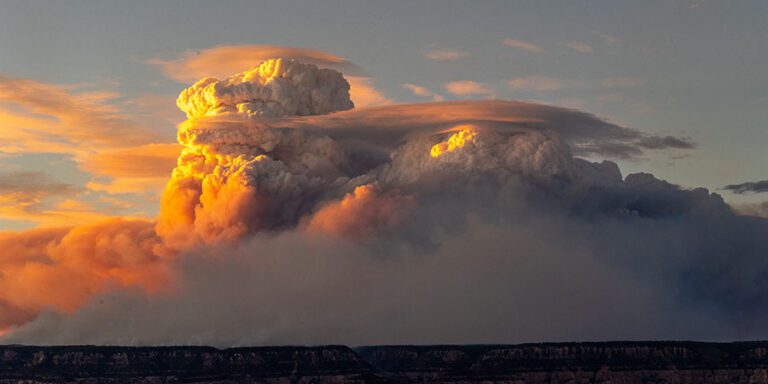
The area being burned by western wildfires has increased 6.7 times in recent years, compared
to earlier years.
Populations of tree-killing bark beetles, historically held in check by low mountain
temperatures, now are expanding their range in unprecedented ways. In Colorado and
southern Wyoming, all mature lodgepole pine forests are predicted to be eliminated within
three to five years.
In an unpublicized report, U.S. Forest Service researchers recently linked the “sudden aspen
decline” that is killing aspens in Colorado to the hotter and drier conditions of a changed
climate.
Glaciers are melting away across the West. In Glacier National Park, where the U.S.
Geologic Survey predicted all glaciers would be gone by 2030, they now are likely to be
eliminated by 2020.
Wildlife is being affected by climate change. In Yosemite National Park, 14 of 50 studied
mammal species can no longer be found in lower-elevation areas they inhabited in the last
century.
Hotter and drier conditions are hurting farmers and ranchers across the West. Nationally, four
of the five worst years for crop losses from drought have occurred since 2000.
In Montana, in eight out of the last 10 years, drought and higher temperatures have led to the
shutdown of fishing in nationally acclaimed angling rivers.
|