What plants and animals are protected within Baaj Nwaavjo I’tah Kukveni national monument?
Hear from Stuart Chavez and Dianna Sue White Dove Uqualla about some of the plants, animals, and medicines found within the Baaj Nwaavjo I’tah Kukveni – Ancestral Footprints of the Grand Canyon National Monument.
Transcript
STUART CHAVEZ: A lot of the plants and animals that are within this region are utilized in many forms. We have, you know, the rabbits, there’s different rabbits that are around here that can be utilized for food. Some of them are storytellers, so it just depends on how you go about the message coming to you, I guess.
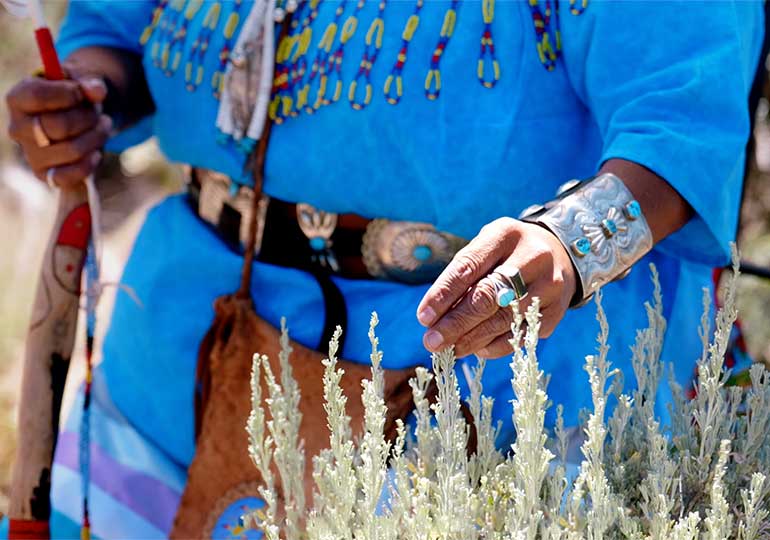
For the plants, there’s many sagebrush medicinal plants that are in this area. Edible roots, vegetables that are within the area as well.
The pinyon tree can be used for sap, can be used for wood over time. And ko’o is the pinyon seeds.
DIANNA SUE WHITE DOVE UQUALLA: This is medicine. How the beauty, the abundance of it. The trees are medicine, the ground, the rocks, the animals. We’re all connected, and none of them are left out. They’re all here for one reason or another.
The land speaks through the winds, it speaks through the snows, it speaks through the rain. Everything you can look at is important. So we should never, ever forget that.