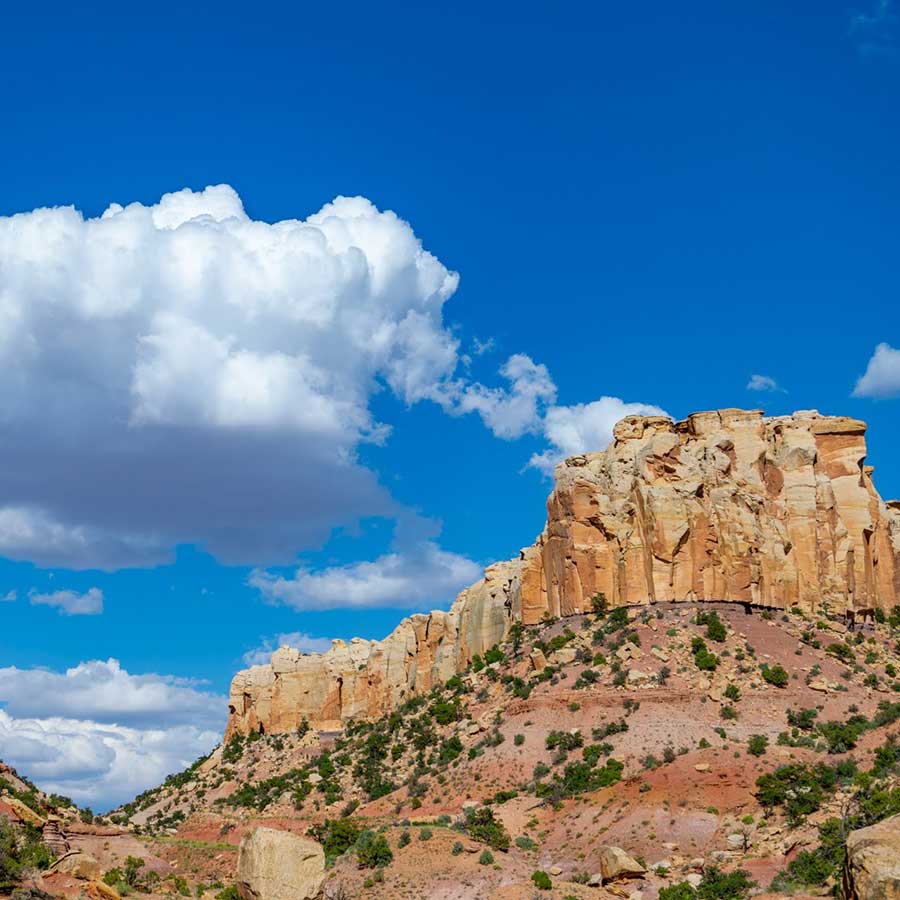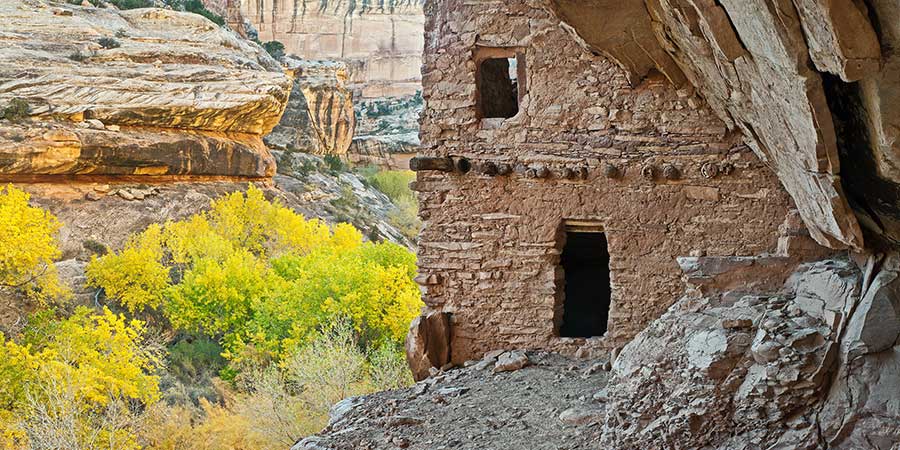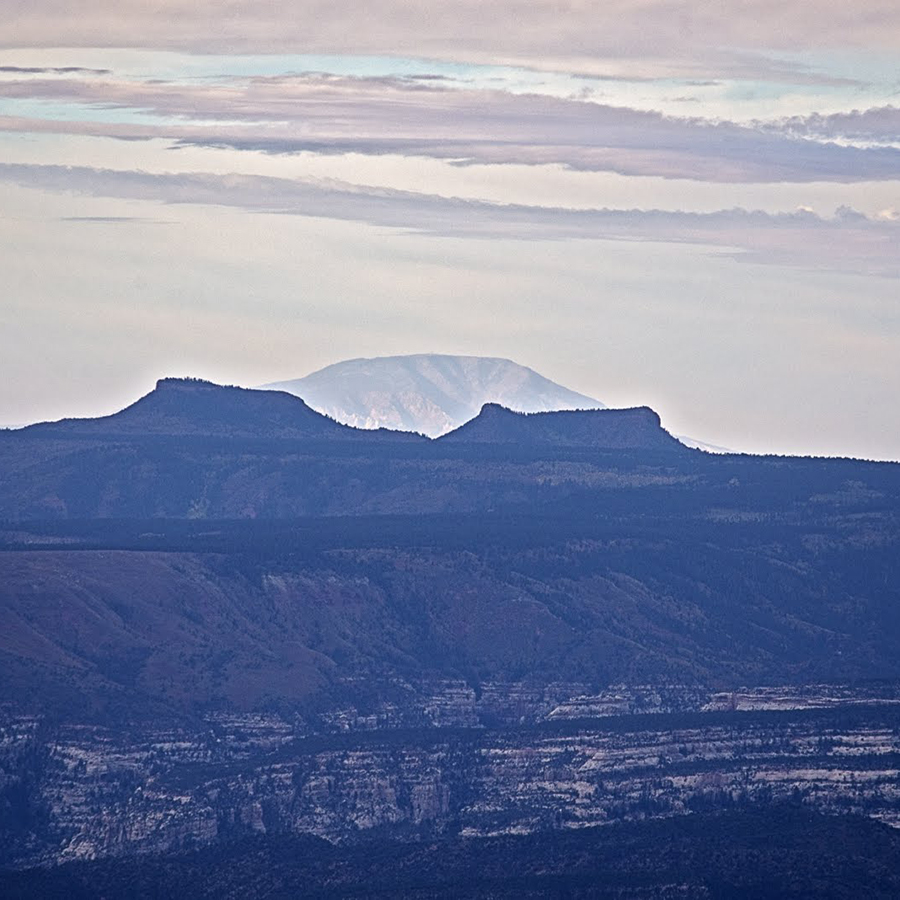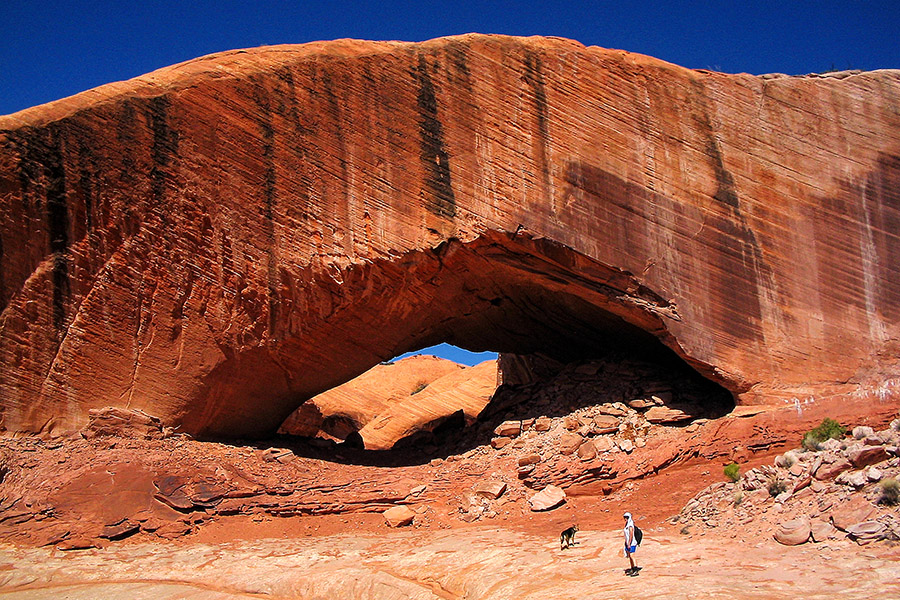
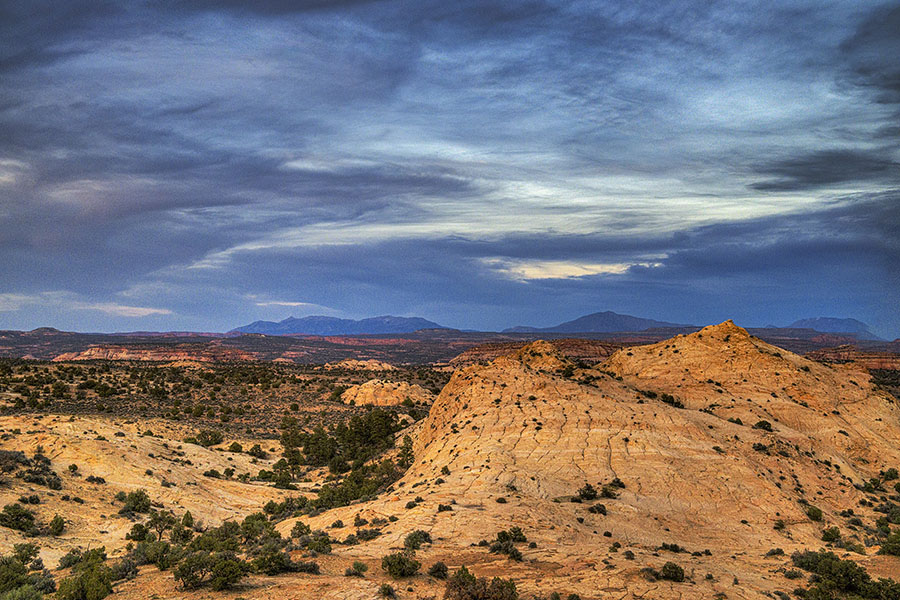
An August 2026 poll shows strong support among Utah voters for restoring protections to Bears Ears and Grand Staircase-Escalante.
FOR IMMEDIATE RELEASE
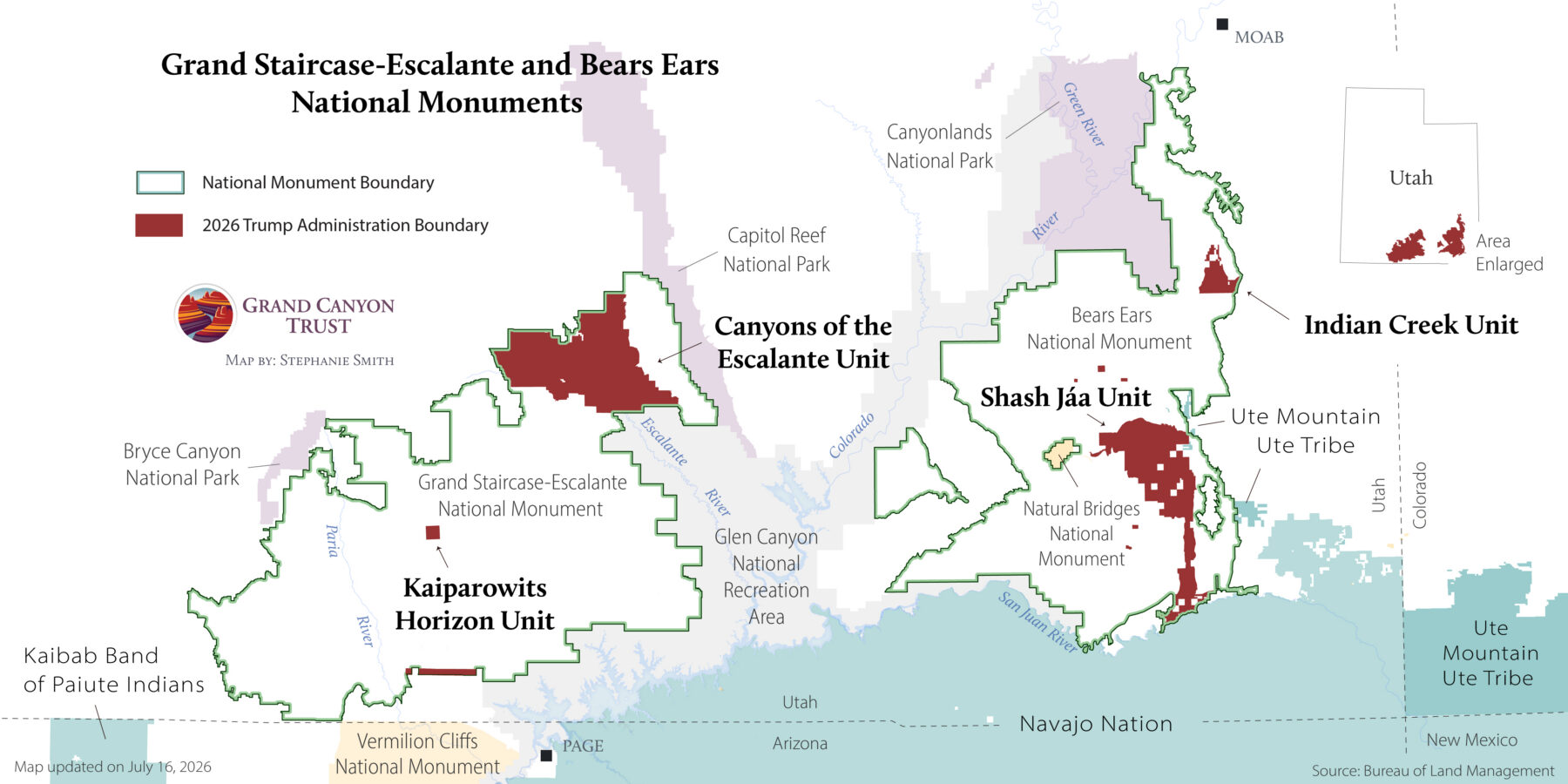
SALT LAKE CITY, UT — Two-thirds of Utah voters support restoring protections to all of Bears Ears and Grand Staircase-Escalante national monuments according to a new poll released September 9, 2026 by public opinion research firm New Bridge Strategy. The poll indicates the Trump administration’s July 13, 2026 attempt to slash the monuments by more than 90% and terminate the Bears Ears Commission is deeply unpopular among Utah voters.
The survey of 500 registered voters across Utah also indicated that a supermajority (82%) support a strong role for Native American tribes in managing their ancestral lands. And, by more than a three-to-one margin, voters say the Trump administration’s attempt to terminate the Bears Ears Commission, representing the five tribal nations of Bears Ears, was a bad idea. The poll also shows that support for presidents having the ability to designate national monuments remains strong, and voters strongly oppose selling public lands to private interests.
Voters rank conservation and protecting Native American places as the most important factors to be considered when thinking about Bears Ears and Grand Staircase-Escalante while oil and gas and mining rank lowest. Only 12% of voters ranked oil and gas and mining as important when thinking about Bears Ears and Grand Staircase-Escalante. Areas cut from the monuments on July 13, 2026 reopen to mining claims and oil and gas leasing on Friday, September 11, 2026.
“Bears Ears and Grand Staircase are not merely boundaries drawn on the map. They are our sacred places, our churches, our medicine cabinets, our grocery stores, and living landscapes where ceremonies, histories, teachings, and relationships with land continue today,” Davina Smith-Idjesa, co-chair of the Bears Ears Inter-Tribal Coalition explained. “Tribal inclusion and co-management is not symbolic participation. It’s about respecting tribal sovereignty, Indigenous knowledge, and the responsibilities tribal nations have carried for these places since time immemorial. The new poll is important because it provides credible, measurable information about how registered voters across Utah view Bears Ears and Grand Staircase-Escalante national monuments,” Smith-Idjesa said.
“These results should be a clear signal to federal officials and Utah’s congressional delegation: Listen to Utah voters, restore strong protections for Bears Ears and Grand Staircase, and make sure tribal nations have a meaningful role in decisions affecting these lands,” said Smith-Idjesa.“For the tribes, that means being engaged early and throughout the process, not after decisions have already been made. Tribal nations are sovereign governments and their knowledge, responsibilities, and connections to Bears Ears and Grand Staircase needs to be respected in any decisions about its future. The public support is there. What we need now is for decision-makers to act accordingly,” added Smith-Idjesa.
The survey found that 66% of Utah voters say greater protections should be restored to all of the area that was previously included in the two monuments. Support for Native American tribes having a meaningful role in managing their ancestral lands is even stronger. A supermajority of 82% of Utah voters say it is important for Native American tribes to have a strong role in managing public lands containing sacred or culturally significant sites. This support was overwhelming across party lines, including 76% of Republicans, 86% of Independents, and 97% of Democrats.
“We would like to see the monuments reinstated,” said Autumn Gillard, coordinator with the Grand Staircase-Escalante Inter-Tribal Coalition. “It is time that Utah congressional delegates really understand that the people of this state, not just the tribal people, support these monuments. They want them reinstated back to their original boundaries, and they want these places protected for future generations of Utahns to visit and to enjoy, but also so that others can come to our beautiful state, and they can understand why so many of us love Utah, love these monuments, and love all these beautiful assets that are referred to as ‘cultural resources,'” Gillard added.
SEE FOR YOURSELF
View a slide deck of the poll’s key findings ›
Read an overview of the poll’s key findings in a memo from the polling firm ›
The new poll’s findings are consistent with another 2024 New Bridge Strategy poll on Utah voter attitudes about national monuments. The 2026 survey found that three-quarters (73%) of Utah voters support president’s ability to designate national monuments. And Utah voters are strongly opposed to the sale of Utah public lands to private interests. More than four out of five (81%) say they are opposed to the sale of public lands, and that support is strong across party lines, including 74% of Republicans, 86% of Independents, and 97% of Democrats.
“People were concerned about what happens next,” said Lori Weigel of New Bridge Strategy, which conducted both the 2024 and 2026 polls. “They were concerned about lands being sold off, open up for mining, drilling, and resource extraction, that it might limit some of the recreational uses of these lands,” Weigel explained.
“We had a majority of Republicans, of Independents, and nearly all Democrats feeling like the greater protections should be restored to the entirety of the area,” Weigel emphasized. “And, importantly, one of the things that is significant about these lands when people think about them — and again, recognizing that people are paying attention to this issue — is the fact that these are sacred areas for many of the tribes. They have cultural significance. That was the most frequently cited rationale for why people said greater protections should be restored,” Weigel said.
“Grand Staircase-Escalante is a living cultural landscape shaped by many generations of human connection and responsibility. Its cultural resources reflect the enduring histories of Indigenous people, as well as the experiences of the pioneer descendants and their communities,” Gillard added. “Protecting historic homesteads, trails, structures, inscriptions, and community places allows descendants to maintain meaningful connections to the lives, hardships, and the achievements of their ancestors. These histories deserve protection alongside Indigenous cultural places, while recognizing that tribal relationships with this landscape extend back thousands of years and remain alive through our language, our oral traditions, our plant knowledge, our ceremonies.”
“For many generations, Indigenous people have cared for this landscape through knowledge, ceremony, stewardship, and reciprocity. That knowledge remains alive,” Gillard stated. “When tribal voices are excluded, land management decisions lose generations of understanding that cannot be replaced by a short study or an administrative review.”
“The data is clear that Utahns support protecting all of Grand Staircase-Escalante and Bears Ears as national monuments, and including input from Native American tribes in the management of their ancestral homelands. Utah’s congressional leaders aren’t listening to their constituents, but other members of Congress should act to protect these important scientific, natural, and cultural landscapes,” said Chaitna Sinha, staff attorney and conservation codirector with the Grand Canyon Trust.
The poll is one of the first major surveys of voter attitudes about national monuments in Utah since the Trump administration’s attempt to cut the boundaries of Bears Ears and Grand Staircase-Escalante on July 13, 2026. New Bridge Strategies conducted interviews from August 10-17, 2026 and the poll’s margin of error is plus or minus 4.38%
Background
- Bears Ears National Monument was designated on December 28, 2016. Read the proclamation
- Protections were restored to Bears Ears National Monument on October 8, 2021. Read the proclamation
- Bear Ears National Monument was cut by more than 90% on July 13, 2026. Read the proclamation
- Grand Staircase-Escalante National Monument was designated on September 18, 1996. Read the proclamation
- Protections were restored to Grand Staircase-Escalante National Monument on October 8, 2021. Read the proclamation
- Grand Staircase-Escalante National Monument was cut by more than 90% on July 13, 2026. Read the proclamation
Map
Contact
Chaitna Sinha, Staff Attorney and Conservation Codirector, Grand Canyon Trust, csinha@grandcanyontrust.org, (970) 399-9565
Photos for media use