
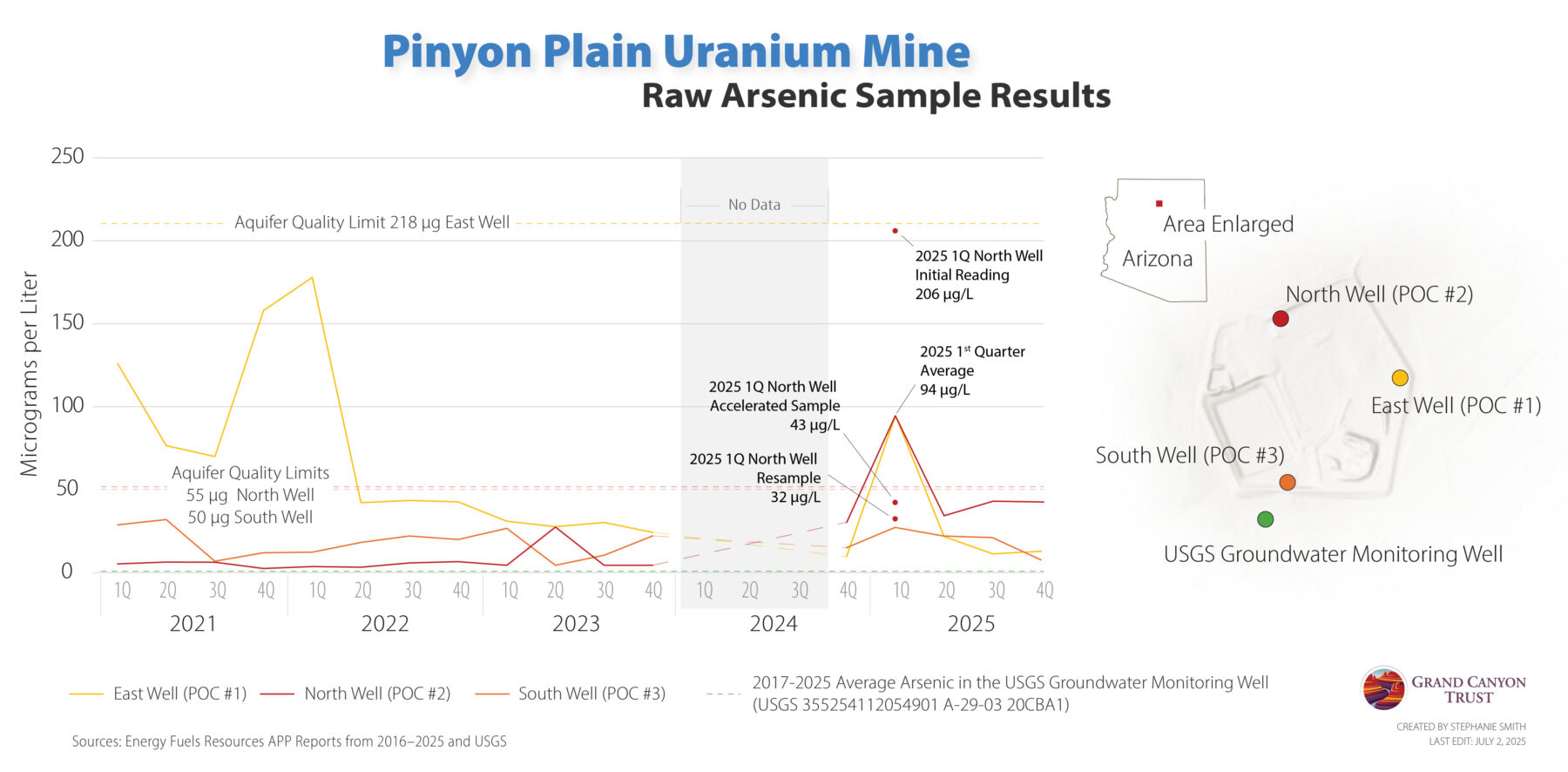
Quarterly arsenic levels in the monitoring wells at Pinyon Plain Mine since 2021:
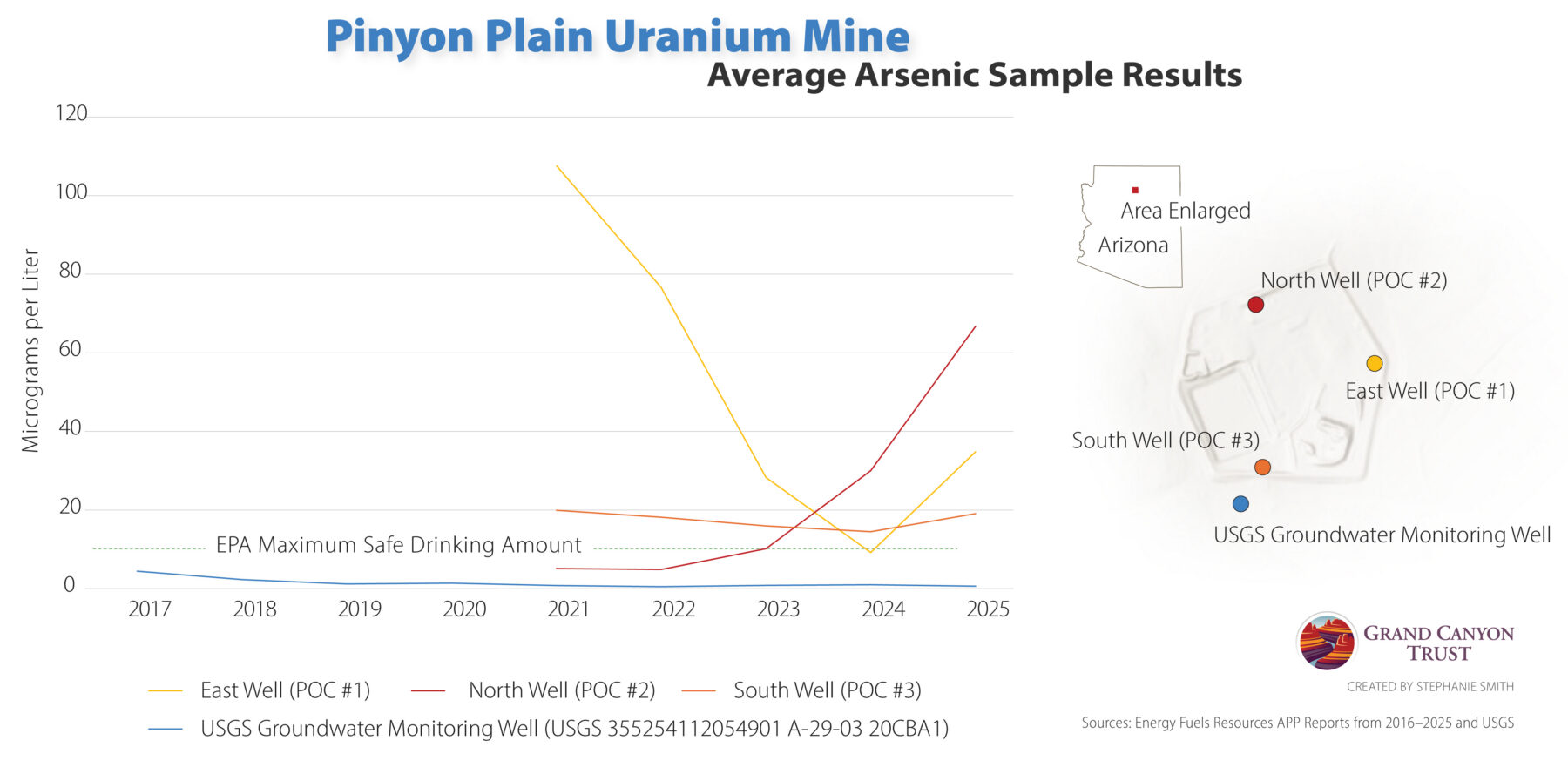
Annual averages of arsenic levels in the monitoring wells at Pinyon Plain Mine since 2021:
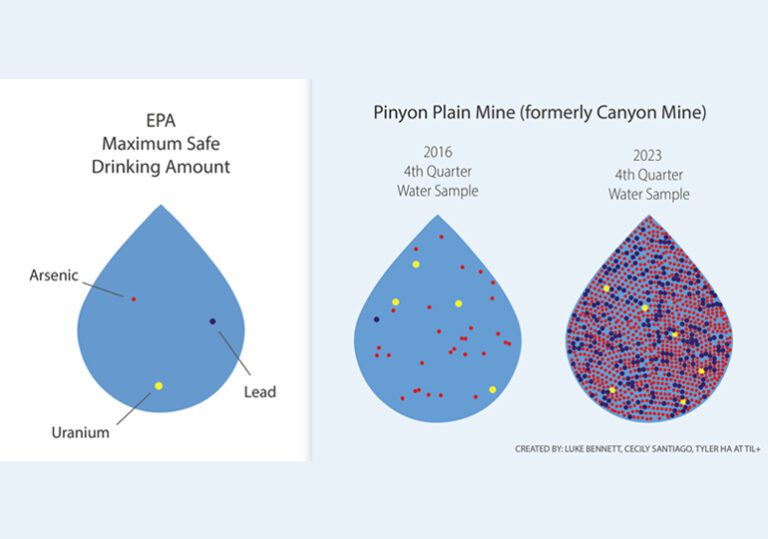
Why is there concern about arsenic levels in groundwater beneath Pinyon Plain uranium mine, formerly Canyon Mine, near the Grand Canyon?
Groundwater systems throughout the Grand Canyon region, with its geology of fractured rock, are complex; water can flow in many directions simultaneously and at speeds ranging from hours to millennia.
Why don’t the graphs show the arsenic levels in the monitoring wells before 2021?
The three Coconino Aquifer monitoring wells on the mine site were not completed until 2020, eight years after mine development resumed (following roughly two decades of no development) and four years after the mine shaft started taking on millions of gallons of groundwater every year.
Since the first readings in 2021, values of arsenic have fluctuated at each well. In the first quarter of 2025, the north well (well #2) rose above the alert level and aquifer quality limits requiring resampling. The east well (well #3) also experienced a spike. From 2022 to 2023, the east well stayed below 50 micrograms per liter but rose to 94.3 micrograms in the first quarter of 2025. Just outside the mine site, the U.S. Geological Survey monitors a Coconino Aquifer well. It has not shown as much variability. It’s average reading from 2017-2025 was 1.8 micrograms per liter.
There is a 9-month data gap between 2023 and the last quarter of 2024, where no data was reported.
What is the EPA safe drinking water level for arsenic?
The EPA standard for arsenic in drinking water is 10 micrograms per liter. Of course, we do not expect someone to drink water from a mine, but we compare monitoring results to drinking water standards because of the concern that this water could reach adjacent or underlying groundwater sources, where experts say contamination likely would be impossible to clean up.