This is a popup dialog that overlays the main content of the page. The popup includes a search form to help you find the information you are seeking. Pressing the close button or using the escape key will close the popup.
Tim Peterson
Protecting Bears Ears: A Visitor’s Guide
Native voices share teachings, cultural perspectives, and tips on how to visit Bears Ears National Monument respectfully.
Planning a trip to Bears Ears? Start here.
Bears Ears National Monument in southern Utah spans canyons and mesas that have sustained Native peoples for millennia. Across these lands, you’ll see physical proof of Indigenous cultures etched in stone, built into cliffs, and painted on canyon walls. Over 100,000 archaeological sites hold memories of the past and stories for the future. Native American tribes today follow in their ancestors’ footprints to hunt, gather herbs, collect medicines, and conduct ceremonies.
If you’re planning a hiking or camping trip to Bears Ears, this guide will help you prepare to visit with care.
You’ll find clear, practical guidance on how to travel responsibly and how to avoid damaging fragile cultural sites like rock writings and cliff dwellings. You’ll also hear directly from Native voices through short videos that explain what respectful visitation looks like from the perspectives of communities who know this landscape best.
What does it mean to visit responsibly?
In Bears Ears, it means staying on established routes, avoiding climbing on or entering structures, and packing out everything you bring in. It means recognizing that even small actions — walking off-trail or moving a sherd of pottery — can cause lasting harm.
Bears Ears is a place of deep history and ongoing stewardship. By learning before you go and making thoughtful choices while you’re visiting, you can help protect Bears Ears for generations to come.
Over 400,000 people visit Bears Ears National Monument each year.
“We’re not against recreation. We want to have those fun times as well. But we also want to have this really good understanding of how to ethically take care of these places.”
Learn about the cultural significance of rock writings.
Rock writings How to view petroglyphs and pictographs respectfully
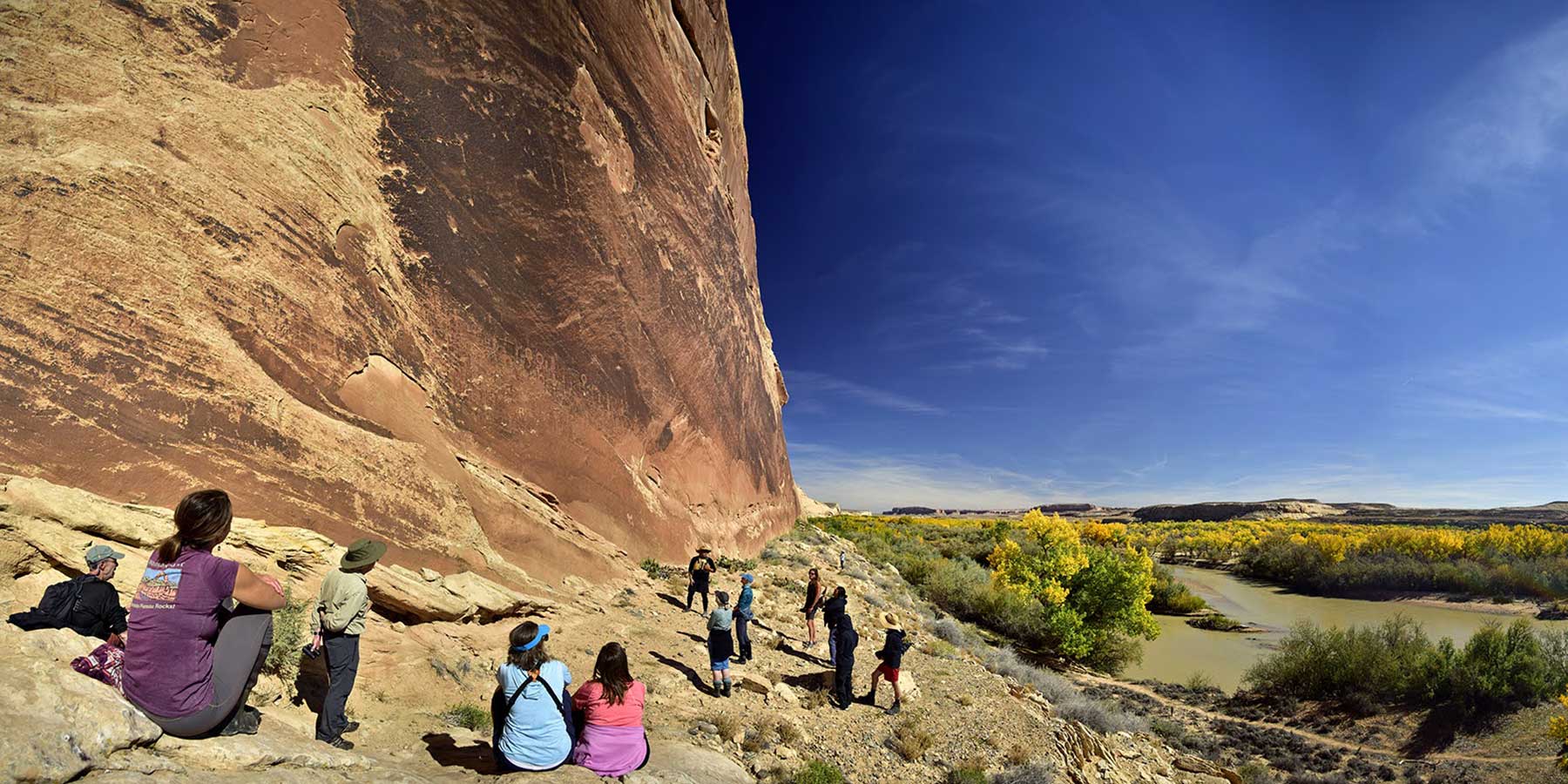
You don’t have to travel far into Bears Ears National Monument to see stories carved on rocks and painted on canyon walls.
Cultural history is everywhere you look. Spirals, human figures, bighorn sheep, and handprints scale sandstone cliffs. These rock writings span hundreds to thousands of years and reflect the different cultures and peoples who have lived and traveled throughout the region.
Watch the video to find out why protecting petroglyphs and pictographs matters to tribes today.
“It’s not just scratches on the rock. It’s our whole history … That information they left behind is the base of us wanting to carry on who we are today.”
Octavius Seowtewa
A:shiwi (Zuni)
Pottery and cultural belongings Leave everything where you find it
Pottery sherds carry traces of the people who made and used them — information that is important to tribes and cultures today.
Pottery may have been left on the landscape as an offering or a ceremony, and moving it disrupts the meaning. Help prevent the loss of cultural history by leaving everything on the land, exactly how you find it.
If you pick up a pot sherd, put it back exactly where you found it.
“The advice I give to people when I’m out guiding is to feel free to pick up that pottery sherd or projectile point, but recognize that its home is there on the landscape. It doesn’t belong to you as an individual. It belongs to those people that first made it, and now it belongs to the landscape. So that’s where it should remain.”
Increasing visitation is eroding fragile architecture across Bears Ears.
rock structures Bring binoculars
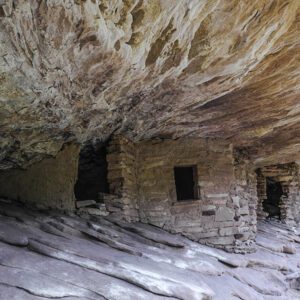
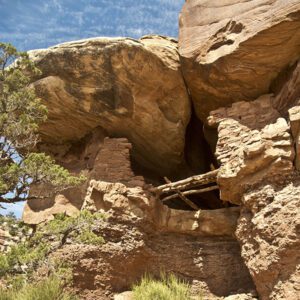
The stone architecture you see across Bears Ears National Monument has weathered thousands of years, but increasing foot traffic is causing walls to crumble.
Cliff dwellings, granaries, kivas, and other rock structures contain valuable information for tribes about how their ancestors lived their lives. These fragile structures require extra care. Stay on designated paths, and view from afar.
“All these sites belong to somebody. They tell a story of someone that was here, that was living, breathing, five-fingered, who had blood running through their core, who had a thought process, who had a beating heart.”